Perfectionist Auto Sound and Security

Alaska's Most Award Winning Auto Customizer

  • About Us
    • Why Choose Us
    • Meet Our Team
    • Our Awards
    • Virtual Tour
    • Community Engagement
  • Signature Products
    • DroneMobile
    • SoundShield®
  • Services
    • Remote Car Starters
      • Vehicle Security
    • Car Audio
      • Sound Deadening
    • Custom Fabrication
    • Driver Safety
      • Bluetooth
      • Blind Spot Safety Systems
      • Camera Systems
      • Navigation Systems
    • Laser And Radar Detectors
    • Lighting
    • Offroad and Marine
      • Motorcycle Audio
    • Custom Interiors
    • Performance
      • Tires and Wheels
      • Suspensions / Lift & Lower
    • PRO Commercial Division
  • Gallery
    • Photos
    • Videos
    • Wallpaper Downloads
  • Contact Us
    • FAQ
    • Feedback
    • Join Our Team

Subwoofer Enclosures, More Than Just a Box

08/21/2016 By John Schwartz

Subwoofer EnclosuresFor decades, there has been discussion after discussion about which of the different subwoofer enclosures are “the best” and why. Let’s take a look at why we need a subwoofer enclosure at all, and how the three popular styles – sealed, vented and bandpass – differ in their design and performance.

Back-Wave Management

If you were to hook any speaker up to an amplifier, hold it in your hand and play music into it, you would find that you don’t hear any bass. That is because the sound coming from the front of the speaker cancels out the sound coming from the back. We need a way to keep the sound coming from the back of the speaker cone from interfering with the sound coming from the front. If you were to cut a hole in the middle of a large, flat piece of wood and mount the speaker in it, you would hear a lot more bass. In fact, until the half-wavelength of the bass frequencies becomes longer than the dimensions of the piece of wood, you will get really good, solid bass. If we put a speaker in an airtight enclosure, none of the sound coming from the back interferes with the sound coming from the front.

Power Handling

Subwoofer Enclosures
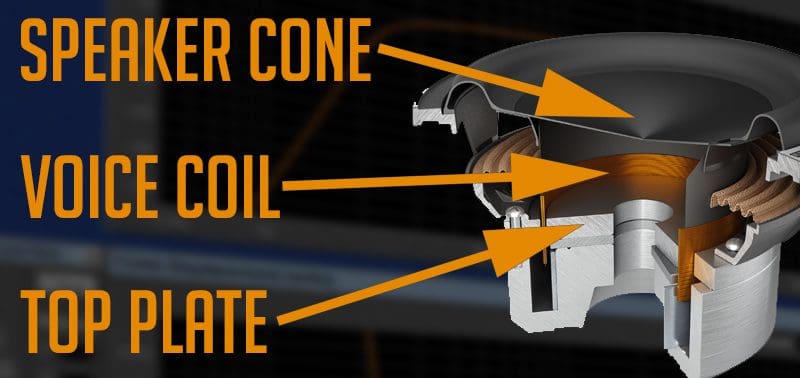
Different parts of the subwoofer determine its excursion and power handling.

The ability of a speaker to use the power produced by an amplifier is limited by two criteria – how far the speaker cone can move and how much heat the voice coil of the speaker can handle. Thermal power-handling limitations are based primarily on the design of a speaker – the size of the voice coil, how airflow is managed around the voice coil and the proximity of the stationary components of the motor assembly to the voice coil are the key contributing factors. The excursion-limited constraints are also part of the speaker’s design – how long the voice coil winding is, how tall the top plate is and how much suspension travel is available are the key factors.

Excursion

When it comes to reproducing bass, a speaker has to move four times as far each time the input frequency is halved. For example, a speaker moving 0.125 inches at 100 Hz has to move 0.5 inches to reproduce the same output level at 50 Hz and 2 inches at 20 Hz. You can see that, for the lowest of frequencies, cone excursion limitations are significant – very few speakers can move 2 inches without significant distortion.

When we put a speaker in an enclosure, the combination of the enclosure and the speaker create a high-pass filter. We are effectively decreasing the low-frequency output of the speaker. Why would we want to do this? The benefit of an enclosure is that we can control the motion of the speaker cone. Looking at a simple acoustic suspension (also known as a sealed) enclosure will be the simplest illustration of this explanation.

Compliance

Each and every speaker – from the biggest of subwoofers to the smallest of tweeters – has a springiness to the cone. We call this the compliance. We measure compliance by comparing it to a volume of air with the equivalent springiness. We call this characteristic of the speaker Vas. In general terms, a speaker with a very small Vas specification has a tight suspension, and a speaker with a large Vas has a softer suspension. There is a lot more to it than that, but for the discussion of enclosure features and benefits, that’s all we need to get into for now.

Subwoofer EnclosuresWhen we put a speaker in an enclosure, we stiffen the suspension. When you push in on the speaker cone, you are pushing against the speaker’s suspension (which wants to center the cone) and you are trying to pressurize the air in the enclosure. When the cone tries to move outward from rest, you are putting the air in the into a vacuum state – it wants to pull the cone back to its resting position. We do sacrifice low-frequency output, but we gain significant power handling and control over the motion of the speaker cone. For the latter, the combination of the air in the enclosure and the speaker suspension helps to stop the speaker cone from moving once an electrical signal starts it in motion.

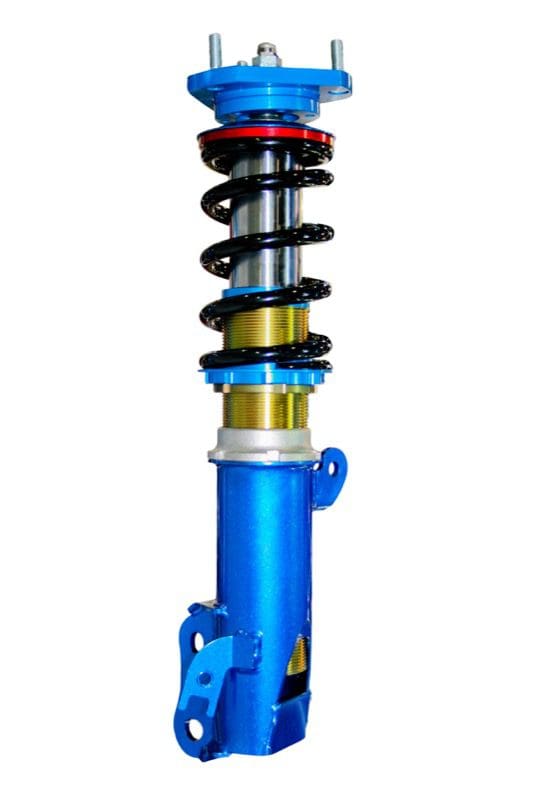
Think of it like a shock absorber on a vehicle. You can see that having an enclosure is critical.

Acoustic Suspension Subwoofer Enclosures

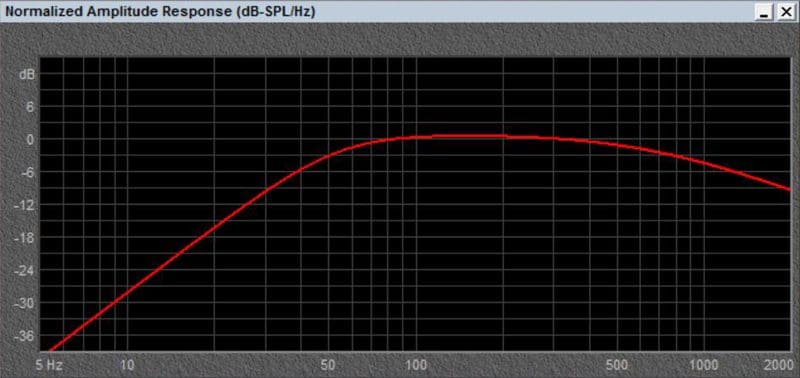
The simplest of enclosures is called an acoustic suspension or sealed enclosure. In these enclosures, we are putting the speaker into an airtight box. When we put a speaker in an enclosure, the system resonates at a specific frequency that – we call this Fc. Below that frequency, the output is reduced at a rate of -12 dB per octave. If the system has a resonant frequency of 50 Hz, the output will be 12 dB quieter at 25 Hz.

Subwoofer Enclosures
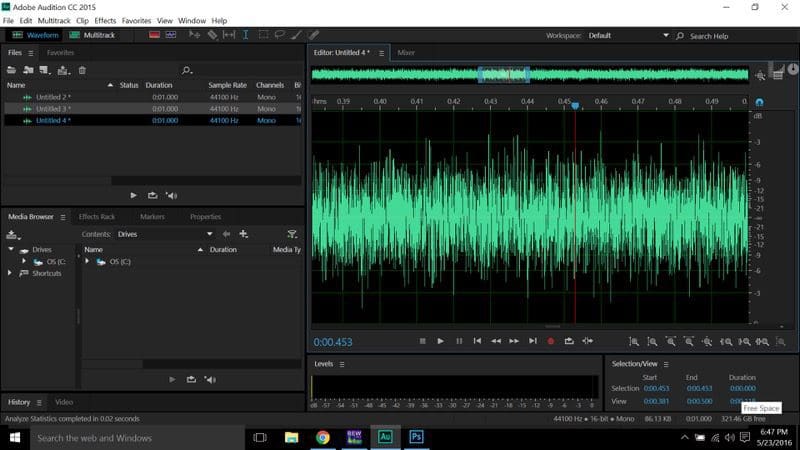
Here we see the smooth response of the sealed enclosure.

Acoustic suspension enclosures are amongst the smallest of the different enclosures we will discuss. They are also the easiest to construct, and most forgiving regarding calculation error. If you combine the roll-off of the enclosure and speaker system with the increase in efficiency you get from the relatively small air volume of the vehicle interior (often called transfer function or cabin gain), you can get a very flat in-car response with good infrasonic output. Bass from an acoustic suspension enclosure is very tight and controlled, thanks to excellent transient response.

There is a down side. If you are looking for loud bass, then you need a driver that has a lot of excursion capability, and you need a reasonable amount of power to move the speaker cone back and forth to get the level of output you want. There is another drawback that isn’t talked about as much, and that is distortion. As a speaker increases in excursion, the amount of distortion it creates increases. Likewise, distortion increases near the resonant frequency of the speaker. So, what can you do?

Bass Reflex Subwoofer Enclosures

A bass reflex (also known as ported or vented) enclosure uses a vent to increase low-frequency output by making use of the speakers back-wave energy. The vent, often a round tube or sometimes a rectangular slot, has an area and a length. The specific area and length of the vent and their relationship to the total volume of the enclosure cause the column of air in the vent to resonate at a specific frequency when excited by the speaker. We typically tune bass reflex enclosures quite low to emphasize the bottom octave or so of the audible frequency range. They can be tuned higher to increase efficiency for high-SPL applications. There is always a sacrifice, though – when we tune the enclosure higher, we sacrifice low-frequency performance.

Bass reflex enclosures are typically larger than sealed enclosures. There is no hard-and-fast rule to associate with the size relationship, but 25–50% large is common. The trade-off for that extra volume is two-fold – more efficiency in the tuning frequency and more power handling, at some frequencies.

When the subwoofer used in a bass-reflex subwoofer enclosure produces frequencies around the resonant frequency of the vent/enclosure combination, the driver excursion is reduced to almost nothing and all the “work” is done by the vent. Put more succinctly, around the tuning frequency, most of the music is being produced by the vent. The benefit to this is that power-handling problems caused by cone excursion limitations are dramatically increased. Since the cone is barely moving, very high sound pressure levels can be achieved. Around the tuning frequency, power handling is limited by the thermal capabilities of the subwoofer.

As we mentioned earlier, one factor that contributes to loudspeaker distortion is cone excursion. With a bass reflex enclosure, the driver moves significantly less than with an acoustic suspension enclosure design. As long as the vent itself has enough area and a smooth transition at both openings, the distortion produced by a properly designed bass reflex enclosure can be impressively small.

Subwoofer Enclosures
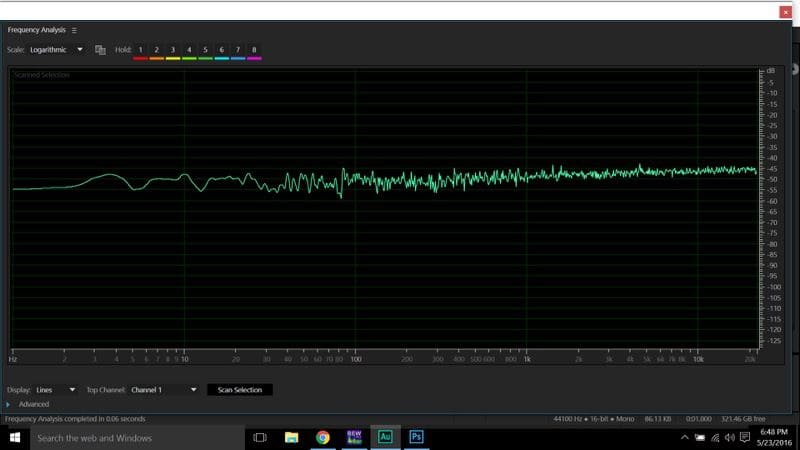
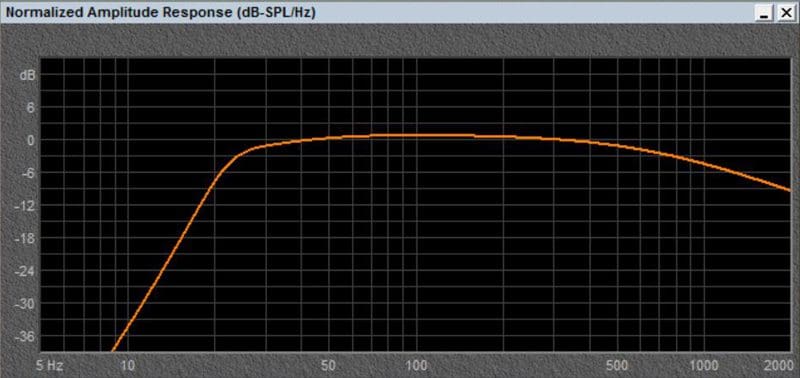
Notice the rapid dropoff of the low end response (on the left) of this vented enclosure graph.

Nothing is free, is it? A factor in deciding to use a bass reflex design is how fast the output decreases below the tuning frequency. Where an acoustic suspension enclosure rolls off at -12 dB per octave, a bass reflex enclosure rolls off at 24 dB per octave. Below the tuning frequency, the vent acts more and more like a hole in the enclosure, offering increasingly less back pressure as frequency decreases. Designing for, and managing, driver excursion is a fundamental part of bass reflex enclosure design.

Bandpass Subwoofer Enclosures

We will quickly touch on bandpass enclosures to wrap up this article. There are several different designs for bandpass enclosures. Some use a sealed enclosure, and some a vented one. Independent of whether the rear chamber is sealed or vented, the output of the subwoofer plays into a vented enclosure. This enclosure acts as a low-pass filter. Why would we want to design a bandpass enclosure?

Subwoofer Enclosures
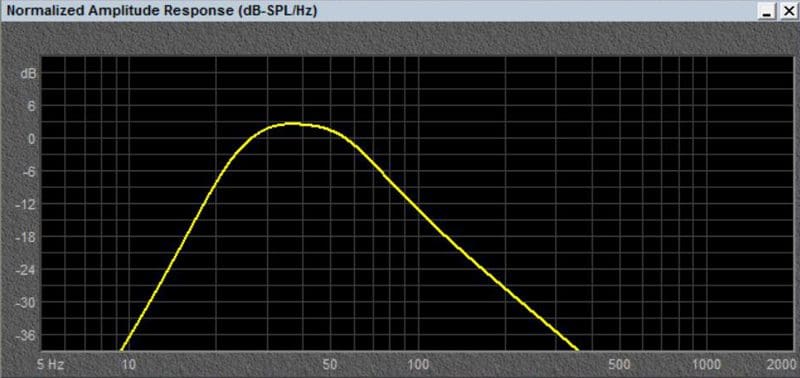
The reason for the name “bandpass” is easy to see when one looks at the response curve of the bandpass enclosure.

First and foremost, all of the output of the enclosure is produced by the vent or vents. This allows a creative designer to build an enclosure in the trunk of a vehicle and have the vent opening play through the rear parcel shelf. There have been some amazing bandpass enclosures build in the front storage area of mid- or rear-engine vehicles. The vent allows the bass to enter the interior of the vehicle. Bandpass enclosures can also offer impressive gains in efficiency over acoustic suspension and bass reflex enclosures, but they do so at the sacrifice of bandwidth and enclosure volume.

A bandpass enclosure has two resonant frequencies – one for each of the enclosures. The resultant management of cone excursion can allow a great deal of bass to be produced from limited excursion drivers. While the speaker cone itself does not move a great deal, the amount of work done by the motor assembly is still significant. You are still putting power into the speaker, and work is being done. Because the front chamber of the enclosure acts as a filter, it can also be very difficult to hear when the speaker is distorting.

Regarding the complexity of design, and forgiveness of construction error, bandpass enclosures are the most complicated to execute perfectly. Unlike an acoustic suspension or bass-reflex design, bandpass enclosure designs must be tailored exactly to the speaker they are being used with. Never trust the concept of a “generic” bandpass enclosure.

Lastly, because a bandpass enclosure includes an acoustic low-pass filter, it has to be used with good-quality, appropriately sized midbass drivers. If not, the bass can sound lost or disconnected relative to the rest of the music.

For More Details On Subwoofer Enclosures, Visit Your Local Specialist

As you can see, there are many ways to install a subwoofer – or any speaker, for that matter. Navigating the available space in the vehicle, as well as different speaker sizes and designs, can be tricky. The design and construction of an enclosure can be complex, especially when complex shapes are involved. Visit your local car audio specialist retailer to explore different enclosure options for your vehicle.

This article is written and produced by the team at www.BestCarAudio.com. Reproduction or use of any kind is prohibited without the express written permission of 1sixty8 media.

Filed Under: ARTICLES, Car Audio, RESOURCE LIBRARY

Adding Navigation to the Factory Color Screen in Your Vehicle

08/14/2016 By John Schwartz

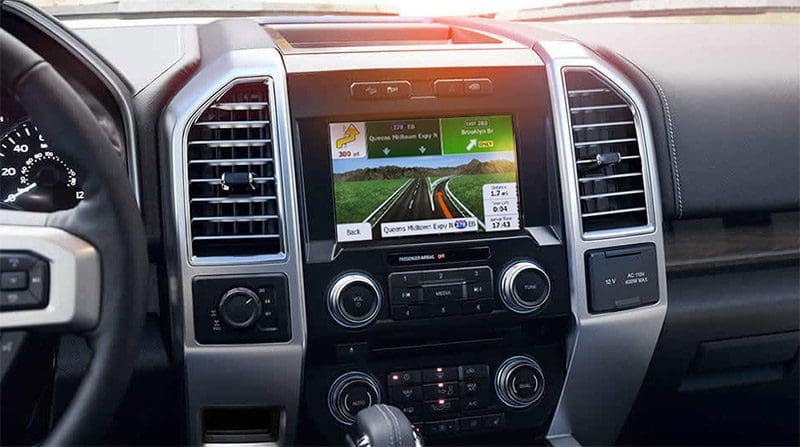
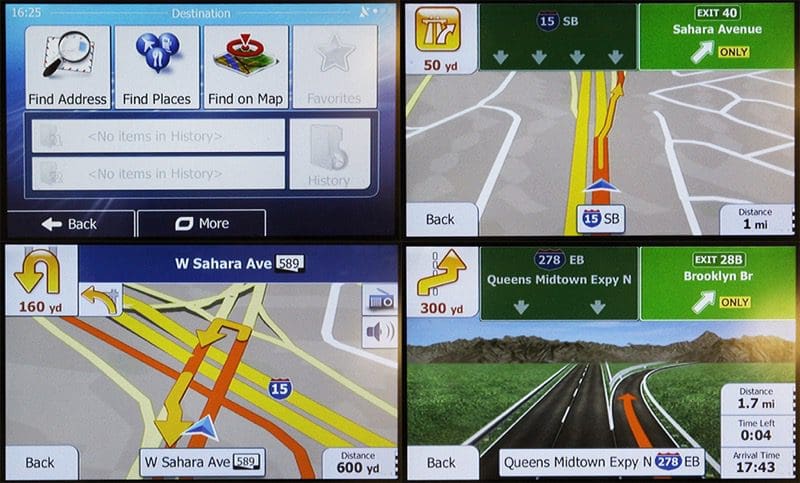
Adding NavigationLet’s say you purchased a brand-new Dodge Journey, Chevy Silverado or Ford F-150. The vehicle has a big color display for the audio system, and it may even show the heating and air conditioning controls on the same screen. But alas, it would have cost several thousand dollars to add the factory navigation system because the option package it was in included features you didn’t want. A sunroof, leather upholstery or automatic climate controls are all great options – but if adding navigation is what you want, then why pay for options you don’t need? Fear not – your local specialist car audio retailer can help you out.

Add-On Navigation Systems

Adding Navigation
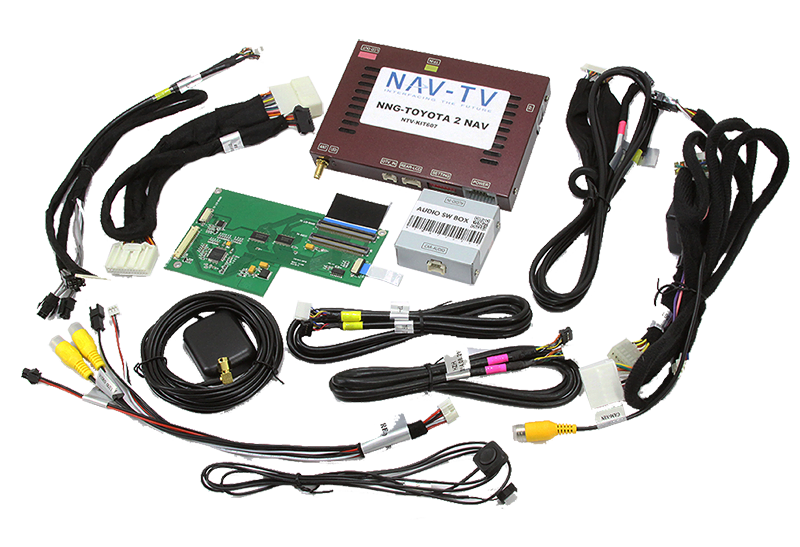
The NTV-KIT607 Toyota Navigation Kit From NAV-TV.

Companies like NavTV and Advent have developed add-on navigation systems that work with factory radios and their color displays. The systems include a navigation computer and an integration module that allows graphics to be displayed on the factory screen. Many vehicles with a factory touchscreen can have those input commands fed into the navigation module. There are also some navigation kits that include their own touchscreen overlays for vehicles that don’t include a touch interface.

Expert Installation Required

The installation of these systems is plug-and-play. That being said, a great deal of vehicle disassembly is often required to make all the connections to the factory screen. Some vehicles require the touchscreen panel itself to be taken apart. Taking your new car apart is not something that should be done by someone without extensive experience. Panels can easily be scratched or crack if they are not maneuvered properly. It is best to seek out the assistance of a trained and experience installation technician. He or she will also need to locate the GPS antenna, connect to the factory audio system wiring for voice prompts and tap into the vehicle CAN bus.

Benefits Of Navigation

Adding Navigation
iGo offers enhanced safety and convenience while driving.

Navigation is more than just an intelligent mapping system. If you are traveling in an area that you are not familiar with, having maneuver prompts before having to turn or exit an interstate is not only convenient, but can reduce the chances of having to make a sudden and potentially dangerous lane change. It has also been proven that navigation systems save fuel by reducing the chances of getting lost or missing an exit.

Navigation Software

Adding Navigation
Full-Feature controls are offered by the iGo navigation systems.

Different manufacturers use different navigation software applications – Garmin and iGo are amongst the most popular. The mapping in the systems can be upgraded in the same manner as an aftermarket navigation radio: with downloads available from a manufacturer’s website. These systems include street addresses as well as Points of Interest (POI) information, so you can search for the name of a restaurant or hotel.

Want To Learn More About Adding Navigation?

If you have a vehicle from Ford, Chrysler, GM, Nissan, Honda or Toyota and would like to find out if you can add navigation to the factory screen, visit your local BestCarAudio.com specialist. They would be happy to research availability for the make, model and trim level of your vehicle. They can provide an estimate to supply the product, as well as install it for you. Give them a call today.

This article is written and produced by the team at www.BestCarAudio.com. Reproduction or use of any kind is prohibited without the express written permission of 1sixty8 media.
Filed Under: ARTICLES, Navigation, RESOURCE LIBRARY

Power Wire: OFC versus CCA

08/07/2016 By John Schwartz

Power WireWhen it comes to high-current wiring in a vehicle, there are two types of stranded power wire available: solid copper and copper-clad aluminum. This article looks at the differences between each kind of wire, and explain the challenges of ensuring your high-current device gets the power it needs to do the job you want done.

Car Audio Power Wire: Background

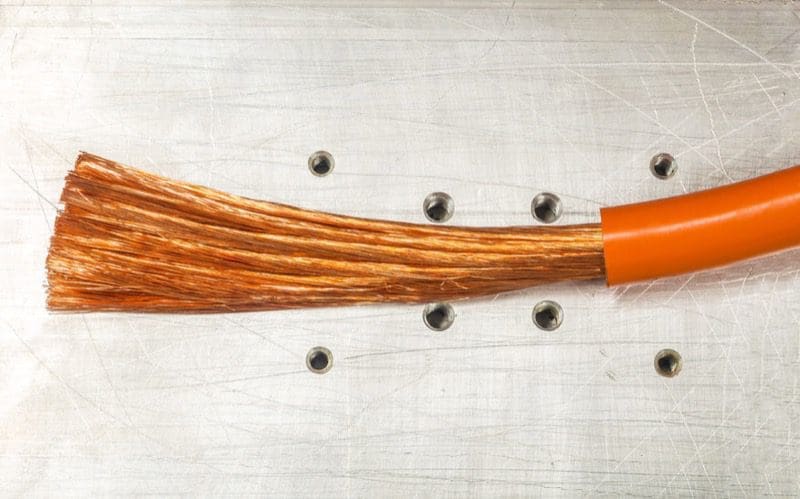
Power WireIn mobile applications, or anywhere that a conductor may be exposed to movement or vibration, it is recommended to use only stranded conductors. Solid conductors (like single-strand house wiring) may offer slightly more conductor area for a given wire diameter, but over time, the solid wire can work-harden, become brittle and eventually break from repeated back-and-forth motion. Imagine using large-gauge solid copper wires in the wire boot in a door jamb or to your trunk or hatch lid. That is a recipe for disaster.

The term OFC (oxygen-free copper) has become abused and is used synonymously with solid or all-copper conductors. In actuality, OFC is a type of solid copper. When molten copper is cast and drawn into a conductor, the process to make an OFC conductor reduces the oxygen content of the wire. If all is done perfectly, the copper-oxygen content is around 42 parts per million (PPM) vs. a conventional copper with content that is roughly six times that amount.

In the mobile electronics industry, there is no way to know if the solid copper conductor you are purchasing is oxygen-free or not unless you can witness the casting process in person. Everyone in the industry uses “OFC” for a piece of wire that is not copper-clad aluminum (CCA).

Looking at the alternative, we have CCA conductors. In these conductors, the core of the wire is a cylinder of aluminum and around it is a layer of copper. From the side, it looks like copper, but if you cut off a piece and look at the end, you can see the gray aluminum content.

There are further variations. Some companies manufacture all-copper strand wire but coat the outside of each strand with a thin layer of tin to help prevent corrosion.

Car Audio Power Wire: Size

When it comes to flowing electricity, or, more specifically, flowing electrons, the most important thing to consider is wire size. In the mobile electronics industry, we use the American Wire Gauge (AWG) standard. This sets a specific diameter for a conductor. It’s not a debatable number – the conductor either meets the standard or it doesn’t.

Here is where the games begin. There is a second term used in our industry: gauge. In the steel sheet industry, gauge is an important tool for specifying material thickness. In car audio, it means nothing. If you have been around the industry for any amount of time, you will have seen wires that claim to be 0 gauge but have a conductor area equivalent to a 6 AWG. If a wire is labeled as 4 gauge, then sadly, you have no way of knowing how big it is, other than attempting to measure it.

Cutting a wire and looking at the area also doesn’t always tell the story. Some wires are wound quite loosely. This makes the wire very flexible, but does so because there is space around the strands. You sacrifice effective cross-sectional conductor area for flexibility.

Car Audio Power Wire: Materials

Power WireIn solid copper stranded wire, we ideally want everything to be pure copper. That said, pure copper is quite expensive, even though the cost of pure copper has come down over the past few years; it currently sits at around $2.00–$2.25 a pound on the commodities market. When a manufacturer wants to purchase wire, there are many options: strand count, how the strands and bundles are woven, how tightly they are woven, and so on. Manufacturers also have a choice in the “kind” of copper they make the conductors with. It could be pure copper, recycled copper or a copper alloy. Again, you have no way of knowing unless you are witness to the process.

Don’t let the variations in copper scare you. A solid copper conductor always outperforms a CCA conductor. The biggest challenge with car audio CCA wiring is that it does not, and will not, specify the ratio of copper to aluminum. There are publically displayed measurements of different CCA wire samples where a smaller-diameter wire outperforms a slightly larger wire because it has less aluminum and more copper. Unless you measure it yourself, you just don’t know.

On its own, pound for pound, aluminum has about 60% more resistance to the flow of electricity. When we talk about CCA wire, there is some copper in there; in most cases, the difference diminishes to 30 to 40%.

Car Audio Power Wire: The Challenge

Power Wire
This Audison Connection Power Kit Features OFC Copper wire.

When you look at car audio wiring, there is no way to know what you are getting with a CCA amp kit or roll of wire. Some manufacturers make CCA wire that functions nearly as well as solid copper. In fact, one company makes an oversized CCA that has less resistance per foot than solid copper. The downside is that the wire doesn’t fit into a lot of connectors or terminal blocks. Overall, unless you want to take the time to measure the properties of the kit you are buying, it is better to stick to solid copper.

From the standpoint of long-term benefits, solid copper wire resists corrosion much better than CCA wiring. In climates where road salt or brine is used in the winter to keep surfaces clear of ice, we have seen instances where unprotected CCA power wires have failed completely in less than two years. Why risk the performance of your audio system, when you can simply choose the solid copper wire?

How do you know if you are getting something good? The Consumer Technology Association (formerly the Consumer Electronics Association) has developed a standard for wiring. It is called CTA-2015 (formerly CEA-2015) specification. It describes the minimum standards for wiring for use in mobile electronics applications. The standards include that the wire must be stranded solid copper, the minimum number of strands for a given AWG wire size, and the area of the wire and its maximum resistance. If you stick to the brands that support the CTA-2015 standard, you should never have any problems.

This article is written and produced by the team at www.BestCarAudio.com. Reproduction or use of any kind is prohibited without the express written permission of 1sixty8 media.
Filed Under: ARTICLES, Car Audio, RESOURCE LIBRARY

What Is Android Auto?

07/31/2016 By John Schwartz

Android AutoWhen it comes to staying in touch with your family and friends while behind the wheel, we all know that it’s best to keep your cellphone in your pocket or purse. What do you do when you just have to communicate? Do it intelligently and safely with a smartphone integration system like Android Auto. Let’s look at the functionality of this unique communication solution.

What Is It?

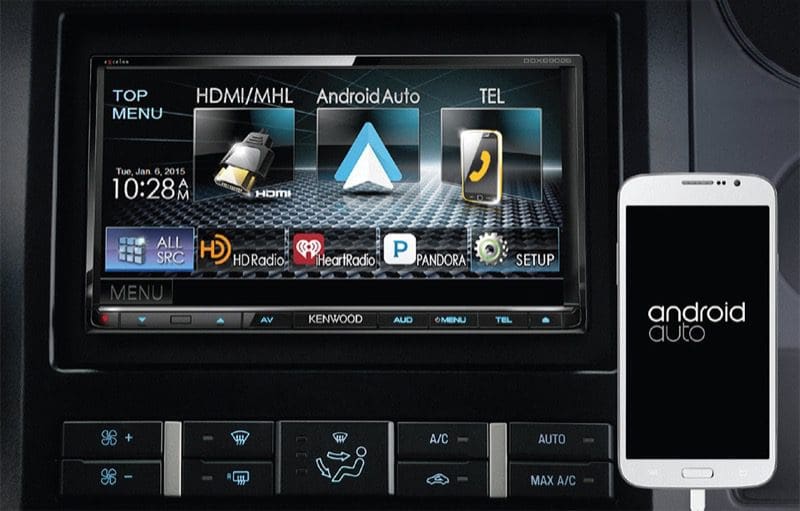
Android AutoAndroid Auto is a software suite that runs on a multimedia source unit. Android Auto will work with most Android-based cellular phones running version 5 (Lollipop) or newer of the Android operating system.

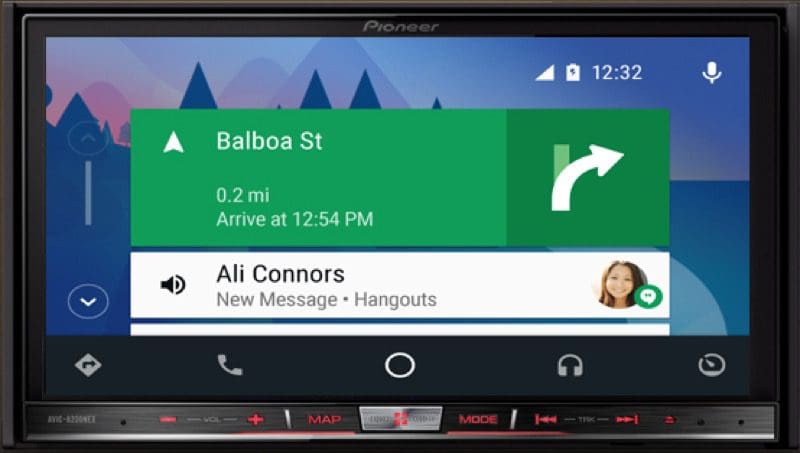
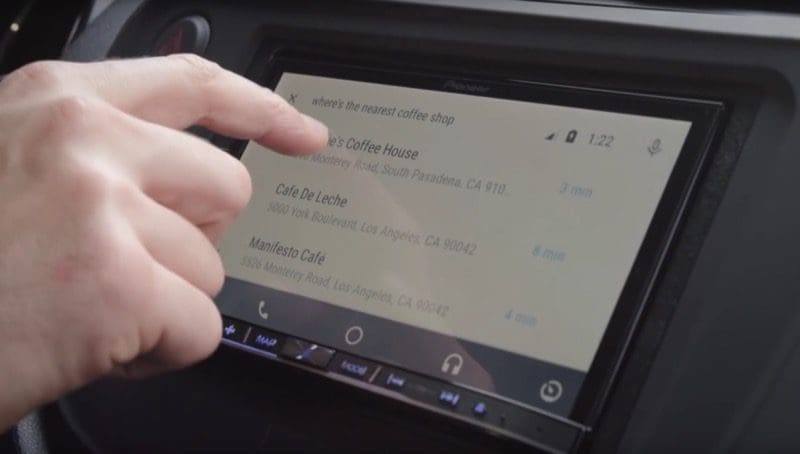
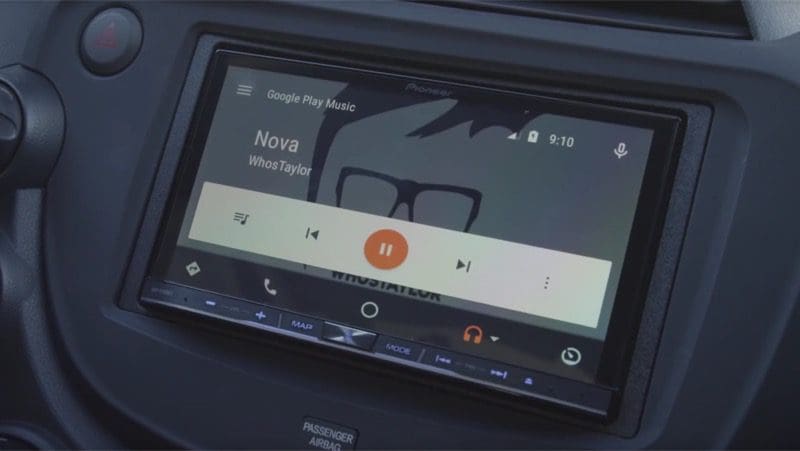
Android Auto provides users with an intuitive and easy-to-use interface that allows them to make phone calls, send and receive text messages, play music, and use Google Maps for GPS-based navigation. The entire interface was designed specifically to be used while in the car. The icons are large and easy to read, and you can use Google’s voice recognition interface to execute commands for most functions.

How Do I Use It?

Android AutoIt’s very easy to use Android Auto. Start by downloading and installing the Android Auto application on your smartphone from the Google Play store. Pair your phone to the radio over Bluetooth. Plug the USB cable into your phone. Depending on the model of your source unit, Android Auto should launch automatically or may require that you should press the Android Auto button. From there, you will see the home screen with information such as recent navigation searches and weather information. All you have to do to start using Android Auto is press the microphone button and talk. If you prefer to press buttons, there is a row of smart keys at the bottom of the screen.

What Can I Do?

Android AutoLet’s say you get stuck in traffic and you need to call someone with whom you have an appointment. Press the voice button and simply say, “Call Sam Smith” or “Call 321-555-1234.” The radio and phone will take care of the rest. The same goes for sending a text message; simply press the voice button and say “Send Sam Smith a text message.” The system will respond by asking what you want to say, to which you can reply, again verbally, “Hi, Sam, I’m stuck in traffic. I will be 20 minutes late. Please accept my apologies.” Google will send your text message. If and when Sam responds, you can ask Android Auto to read you the reply message.

Picking a song from the music stored on your phone is just as easy. Press the voice button and ask it to “Play Lorde” or anything else you have available.

Android AutoYou can use the voice recognition system to select a navigation destination just as easily. Simply press the voice button and say, “Take me to the nearest gas station” or “Find me an Italian restaurant” or “Plot a route to 555 Renegade Road in Bismarck.” There are several benefits to using Google Maps to assist in planning your route. You have access to the latest destination information from the inconceivably massive Google database. You always have the latest mapping. There is never a need to buy anything. Google provides real-time traffic flow information to help plan your route efficiently.

Additional Android Auto Applications

Android AutoAndroid Auto has released a development kit to allow third-party companies to create applications that will integrate with Android Auto. These apps include Pandora, iHeartRadio, Spotify Music, TuneIn Radio, Skype and many more. You also get access to Google Play Music for free for 90 days when you first start using Android Auto. That’s 30 million songs, right at your fingertips.

If you have an Android phone and are looking for a safe way to stay in touch, be entertained and get the best driving directions available, all while driving, then drop into your local car audio specialist retailer. Bring your phone along – chances are they will have a unit on display that you can try out.

This article is written and produced by the team at www.BestCarAudio.com. Reproduction or use of any kind is prohibited without the express written permission of 1sixty8 media.
Filed Under: ARTICLES, Car Audio, Integration, RESOURCE LIBRARY

Guide to Choosing Car Audio Speakers

07/24/2016 By John Schwartz

Car Audio SpeakersThere is no component more important to the sonic performance of your vehicle’s sound system than the car audio speakers you chose to install. You may own the best radio and amplifier in the world, but without great speakers, none of that great sound can get to your ears. Let’s look at why speakers are so important and a few suggestions on how to pick the best ones for your system.

Different Designs of Car Audio Speakers

Every car audio speaker is engineered to operate well within a specific range of frequencies. As a generalization, subwoofers are best at playing those frequencies below 80 Hz. Most midrange speakers can play from 80 Hz to 4 kHz, and tweeters typically play from 4 kHz and up. The size and weight of the speaker cone or diaphragm and the stiffness of the speaker’s suspension components (the spider and the surround) all affect the frequency response of the speaker. We need different-sized speakers to cover the entire audible range of audio.

Car Audio Speakers

For the speakers in your vehicle, you have two design choices – component or coaxial speakers. In a component speaker set, the midrange and tweeters are separate pieces. The midrange is often installed in the factory door or dash speaker location, while the tweeter is mounted high in the door, on the dash or in the A-pillars. This higher location helps make the sound appear to come from in front of you rather than from down by your legs. Coaxial car audio speakers still have two separate drivers. The tweeter is physically mounted to the midrange – typically, on a post that extends up through the center of the speaker. Coaxial speakers are easier to install, because there are only two pieces, not four. Both designs can sound very good, but typically, the best of the best speakers are designed as components.

A common trait among high-quality car audio speakers is high-quality passive crossover networks. Every tweeter needs some method of limiting what frequencies are being sent to it. In better systems, the output of the midrange that would normally overlap where the tweeter was playing is also filtered out. Passive crossovers can include tweeter level controls to help provide some basic system tuning.

Listen To This

Car Audio Speakers
Image Courtesy Of Cartronix

Listening to speakers has been described as “personal preference” for decades. That being said, a speaker that is very accurate and free from distortion will always stand out from a speaker that has design issues. The best way to audition speakers is in a vehicle. Some companies put extra effort into the design of their speaker systems to make them sound better in a vehicle as compared to on a display board. Retail display boards have the benefit of letting you quickly compare the performance of several different models. Listening to both a demo vehicle and display can be the best solution for helping you pick a great set of speakers.

Car Audio Speakers
Bring your favorite music and take some time to listen.

When you go to listen to speakers, bring your favorite music. It should be something that you have listened to many times on as many different sources as possible. Pick out and listen to different portions of the performance one at a time. If you are comparing speakers on a display, you can switch back and forth as you listen to different pieces of the performance.

Listen for vocals to sound natural. If there is too much high-frequency information, then S, T and P sounds will be over-emphasized. If there is an unwanted resonance in the midbass region (a very common problem with lower-quality speakers), then M and B sounds may be pronounced and sound unnatural. Some speakers sound nasally, some sound harsh. Either can be a sign of a distortion caused by the speaker design. Keep looking if you hear that.

Listen to high-frequency sounds like the ring of a cymbal or high-hat. It should have clarity and detail. Listen for the speed of transients – drums are a great test of a speaker’s ability to reproduce a wide range of frequencies while demonstrating smooth frequency response and lack of distortion. Drums should sound tight and controlled, with great definition.

Size Matters

When it comes to reproducing music, the size of your speakers has a dramatic effect on what you hear. A speaker with more area can move more air for a given amount of power – we refer to this as efficiency. The design of the speaker’s voice coil and the magnet structure also affects efficiency. In most cases, a larger speaker also produces more bass than a small speaker. This has to do with the weight of the speaker cone and the flexibility of the speaker’s suspension components.

Finally, how far the speaker cone can move will determine how loud the speaker can play. Don’t forget; you need amplifier power to move the speaker cone – don’t skimp on power.

Choosing Car Audio Speakers By The Numbers

Car Audio Speakers
A peek inside a aftermarket speaker to see what makes it tick.

One thing that an experienced car audio retailer rarely talks about is power handling. While this is important if you are looking for sheer system volume, power handling is in no way a quantifier of the quality of a speaker. There are speakers rated at 50 watts that sound exponentially better than speakers rated at 200 watts. Just as with amplifiers, manufacturers play many games when it comes to speaker power ratings. The only number that matters is the continuous power handling, sometimes referred to as RMS power handling. If you see a speaker with a CEA-2031 Power Rating, that is the best number to use. Max and peak power numbers start to make assumptions about the energy content of music, and it’s best to avoid assumptions. But don’t forget, power handling does not relate to sound quality in any way.

Drop in at your local specialist and have a listen to a few different car audio speakers in the appropriate size for your application and your price range. It may even help to make some notes as you listen. Your installer can offer suggestions like new wiring and sound deadening that can further improve the performance of your speakers once they are installed in your car. Don’t be afraid to ask questions and most importantly – have fun listening to your music! That’s what a great car audio system is all about!

This article is written and produced by the team at www.BestCarAudio.com. Reproduction or use of any kind is prohibited without the express written permission of 1sixty8 media.
Filed Under: ARTICLES, Car Audio, RESOURCE LIBRARY

  • « Previous Page
  • 1
  • …
  • 38
  • 39
  • 40
  • 41
  • Next Page »

801 EAST 82ND AVE
ANCHORAGE ALASKA 99518
907-563-8112

Copyright © 2026 | Site design by award-winning creative agency D'zine Alaska , with site support by 1sixty8 Media and Modern Media Geeks.