We’re back in the lab and working on a few more articles about amplifier specifications in order to wrap up this series. This time, we’re going to talk about the amplifier stereo separation specification. In a nutshell, the stereo separation, or crosstalk, number tells us how much of an audio signal leaks from one channel of an amplifier to the other. Of course, for the number to exist, you need to be looking at a stereo amplifier and in most cases, one that will drive a full-range signal.
Understanding Amplifier Stereo Separation
 The stereo separation specification is supplied in decibels and describes the amplitude of the signal produced in the adjacent channel. For example, if we have a stereo amp, and we feed a sine wave into the left channel, some of that signal will be reproduced by the right channel. The stereo separation specification tells us how much quieter the signal will be. A good number would be something about 70 dB.
A criterion required to better explain the application of this stereo separation value is to specify at what frequency the signal is tested. In most cases, you’ll see 1 kHz as the specified test frequency. The reason that the frequency needs to be specified is that some amplifiers, in fact, most amplifiers, have more crosstalk (signal leakage from one channel to the other) at higher frequencies.
Why Is Stereo Separation Important?
 When trying to recreate a musical experience, one of the many criteria that people will quantify subjectively is stage width. If you are using an amplifier with a poor stereo separation spec, content from the left channel will be reproduced on the right output and vice versa. This has the effect of making the signal more monaural and effectively reducing the width of the soundstage. If you switch to an amplifier with amazing separation performance, the stage may seem to be wider.
Measuring Stereo Separation
To give you an idea of how a good amplifier compares with an inexpensive solution, we set up our QuantAsylum QA401 on the bench and took some measurements.
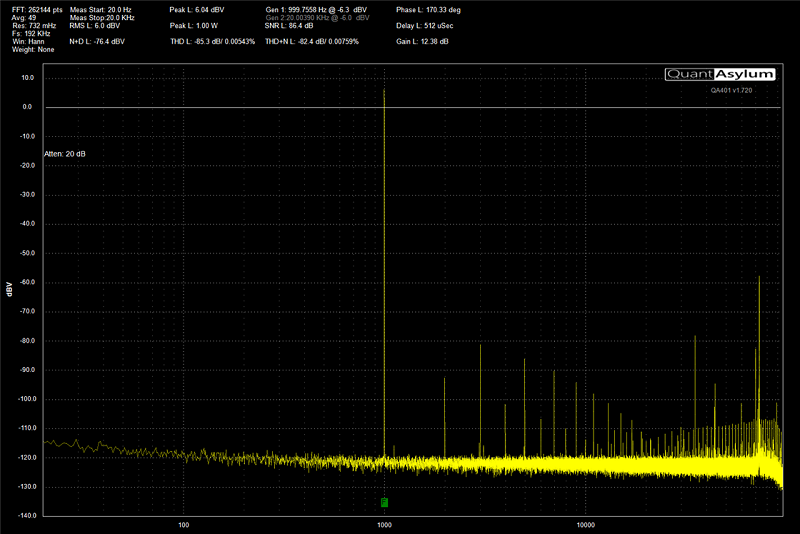
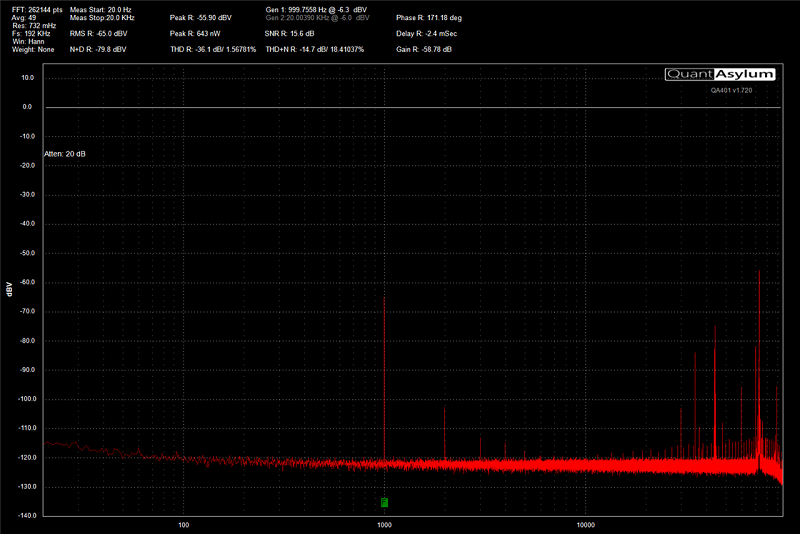
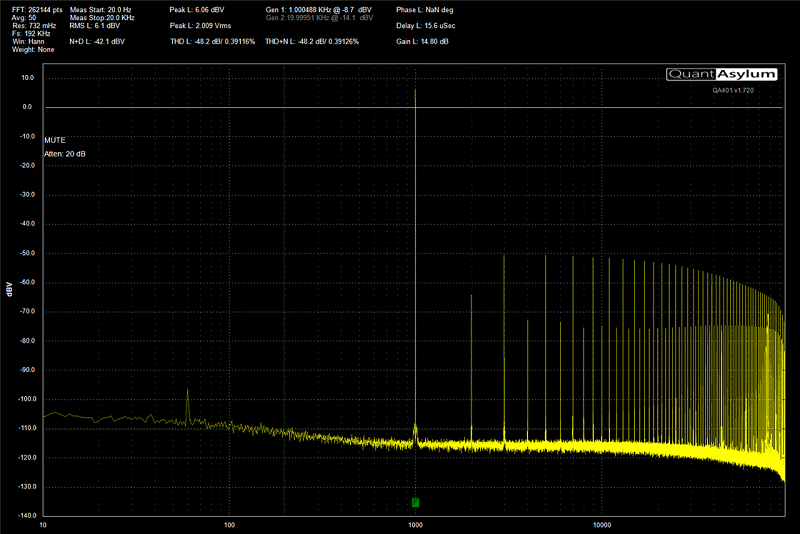
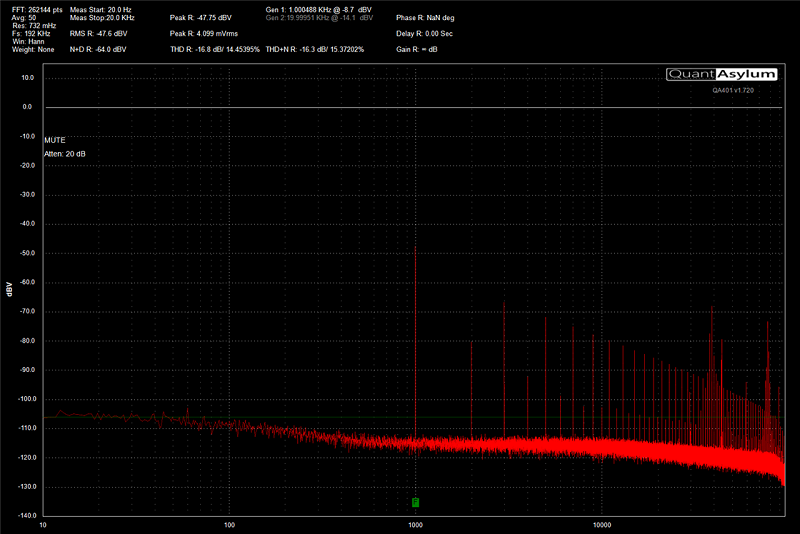
Stereo Separation and Frequency
As we mentioned, crosstalk and channel separation get worse as frequency increases. We took a series of measurements for each of the amplifiers in this test and plotted their channel separation versus frequency in the chart below.
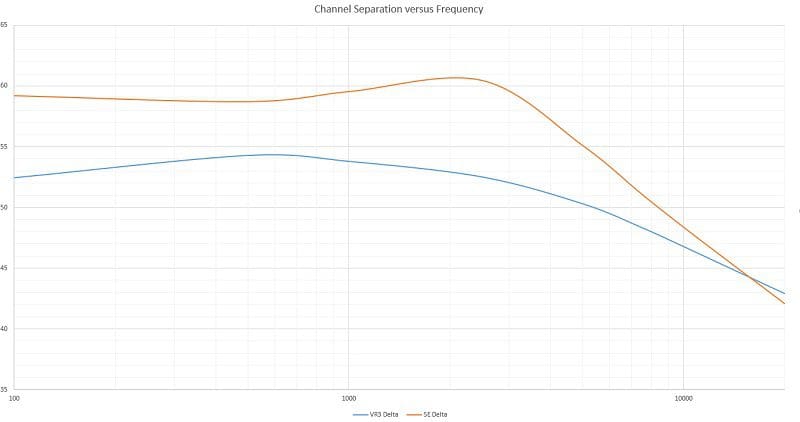
The graph clearly shows that the signal leakage from one channel to another is very dependent on frequency. At 20 kHz, our low-quality amplifier outperforms the good amp. Since we can’t hear 20 kHz, this isn’t an issue.
What to Look for When Shopping for a Car Audio Amplifier
Very few manufacturers publish an amplifier channel separation specification. If you do find a spec, the higher the number, the better the amp will perform in terms of creating a wide soundstage in your vehicle. Your local mobile electronics retailer can help you choose a great amplifier solution and install it for optimum performance and reliability.
This article is written and produced by the team at www.BestCarAudio.com. Reproduction or use of any kind is prohibited without the express written permission of 1sixty8 media.
 If you want to upgrade your car stereo or outfit your truck with a new set of
 Unlike a credit card, loan or financing that charges you interest, Acima is a leasing program. They charge a lease fee on top of the price we quote you on your upgrade. We can help you complete the simple application process and establish your eligibility, usually in a few minutes. Best of all, no credit history is required to qualify! Most applicants qualify if they have an income of $1,000 or more each month, can demonstrate at least three months of history with their current employer, and have maintained a checking account in good standing for 90 days .
 In the simplest of terms, Acima buys the products we’ve helped you choose to upgrade your car or truck. Once you complete the payment schedule or select to pay off the lease, the products become yours.
 If you own a truck, van or SUV, then a set of side steps or nerf bars from
 Side steps come in a wide variety of styles. There are the typical one-piece tubes or extrusions that run the length of the cab. These may have an integrated rubber or perforated step pad that improves traction when your boots are wet, snowy or muddy. Fabricated steps are based on either a tubular or welded main chassis and many feature welded or bolt-on step extensions. Fabricated steps and nerf bars with integrated steps can be similar in design. Powder-coated, chrome, anodized and
 We carry popular brands like N-FAB, Iron Cross Automotive, Westin, AMP Research, Aries, Go Rhino and Dee Zee to ensure we have a fitment and style that works with your vehicle. Most companies offer vehicle-specific designs that locate the step platforms perfectly for regular, extended, quad and mega-cab applications. We can often provide matching truck bedside and rear steps to make loading and unloading cargo easier. Most of the solutions we offer are designed to bolt directly to the frame or chassis of your vehicle with no modifications or drilling required.