Perfectionist Auto Sound and Security

Alaska's Most Award Winning Auto Customizer

  • About Us
    • Why Choose Us
    • Meet Our Team
    • Our Awards
    • Virtual Tour
    • Community Engagement
  • Signature Products
    • DroneMobile
    • SoundShield®
  • Services
    • Remote Car Starters
      • Vehicle Security
    • Car Audio
      • Sound Deadening
    • Custom Fabrication
    • Driver Safety
      • Bluetooth
      • Blind Spot Safety Systems
      • Camera Systems
      • Navigation Systems
    • Laser And Radar Detectors
    • Lighting
    • Offroad and Marine
      • Motorcycle Audio
    • Custom Interiors
    • Performance
      • Tires and Wheels
      • Suspensions / Lift & Lower
    • PRO Commercial Division
  • Gallery
    • Photos
    • Videos
    • Wallpaper Downloads
  • Contact Us
    • FAQ
    • Feedback
    • Join Our Team

Understanding Replacement Automotive Headlight Bulb Color

06/27/2021 By John Schwartz

Headlight Color

Upgrading the headlight bulbs in your car or truck can dramatically improve your safety and the safety of other drivers, pedestrians and cyclists. Your local mobile enhancement retailer may offer high-quality HID or LED bulb upgrade kits in a variety of color temperature options. These colors typically vary from 3,000 to 12,000 K. The question is, what do these color ratings mean and how do the numbers affect useful light output and style? Keep reading to find out.

What Does Headlight Bulb Color Temperature Mean?

Headlight ColorBulb color temperature, or more accurately, correlated color temperature describes the spectrum of energy released by a light bulb and is rated in kelvins. In the simplest of terms, color temperature is related to the physical temperature of the light source, and correlated color temperature is an equivalent spectral description for HID and LED bulbs.

Let’s consider a standard incandescent light bulb as an example. When a small amount of voltage is applied, the filament will glow with a dull red appearance. When supplied with its full rated voltage, the filament temperature increases and the energy output is whiter. The same happens as you heat a metal like steel. It glows red, then orange, yellow and white as you increase its physical temperature.

Headlight ColorTo give you an idea of how color temperature numbers work, a match flame has a color temp of approximately 1700 K, a standard residential incandescent lamp is around 2400 K, cool white fluorescent lamps are around 5000 K, and vertical daylight (when the sun is directly above you) is around 5700 K. Calculating color temperature gets complicated quickly and in most cases, the labels on the packaging of the bulbs you choose are rough estimates that give you an idea of whether the bulbs are on the yellow (3500 K), white (6000 K) or blue (9000 K) ends of the spectrum.

Headlight Bulb Light Output
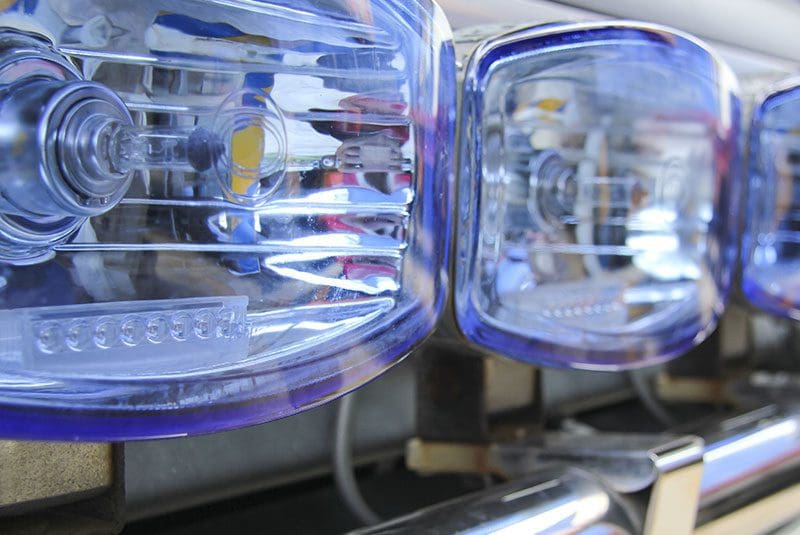
Headlight ColorThe standard measurement for light output is the lux or lumen. The term lux describes how much illumination is produced by a light source at a given distance. It stands to reason that any lux rating should include a distance at which the measurement was taken. If you are browsing a LED light bar website, you will often see lux ratings taken at a distance of 10 meters. The often-misused term lumen describes the total light available from a light source. In most cases, these measurements need to be performed in laboratory conditions and more importantly, for consumers, the information typically applies to a bulb design, rather than the effective illumination ability down the road.

Color Temperature versus Light Output
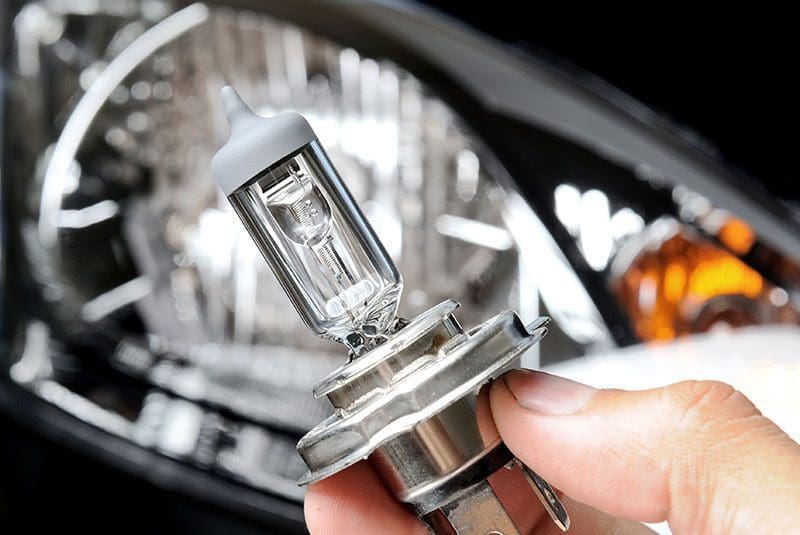
Headlight ColorIs there a direct correlation between the color of light that a bulb assembly produces and how much usable light is put on the road? When aftermarket HID kits started to gain popularity, light output was inversely proportional to color temperature. This relationship means that a yellowish to white bulb produces more light than a white to bluish bulb. The reality is that there are so many variables among bulb designs and suppliers that an accurate comparison is nearly impossible. That said, here is a real-world example we found on one headlight retrofitter supply website:

Color Temperature Description Bulb Output
4500 K Warm White ~3500 lumens
5500 K Pure White ~3400 lumens
6500 K Cool White ~3200 lumens

What Headlight Bulb Color Is Best?

Headlight ColorOur eyes react very differently to different light colors. Blue to purple light has shorter wavelengths than orange and yellow light and can cause eye fatigue. If you wear glasses, you may have seen “computer user” coatings with a brownish tint. This brown tint reduces how much blue light is passed and can ease eye strain.

Most factory-installed lighting systems use bulbs with a color temperature in the 5000 to 5500 K range. This temperature strikes an excellent balance between light output and appearance. The bulbs look MUCH whiter than any clear halogen design.

As a note, certain jurisdictions have very specific laws about headlight colors. Be sure to find out what is legal in your area before choosing something that varies too far from pure white.

Upgrade Your Headlights for Improved Safety

Ensuring that you can see safely down the road is crucial to your safety while driving. Upgrading your headlights with new bulbs is an easy and relatively inexpensive way to increase the distance you can see ahead of you. Your local mobile enhancement retailer can help you choose an LED or HID upgrade solution and color that will offer added performance and cool looks!

This article is written and produced by the team at www.BestCarAudio.com. Reproduction or use of any kind is prohibited without the express written permission of 1sixty8 media.
Filed Under: ARTICLES, Lighting, RESOURCE LIBRARY

How Does a Car Audio Amplifier Work? – The Input Stage

06/20/2021 By John Schwartz

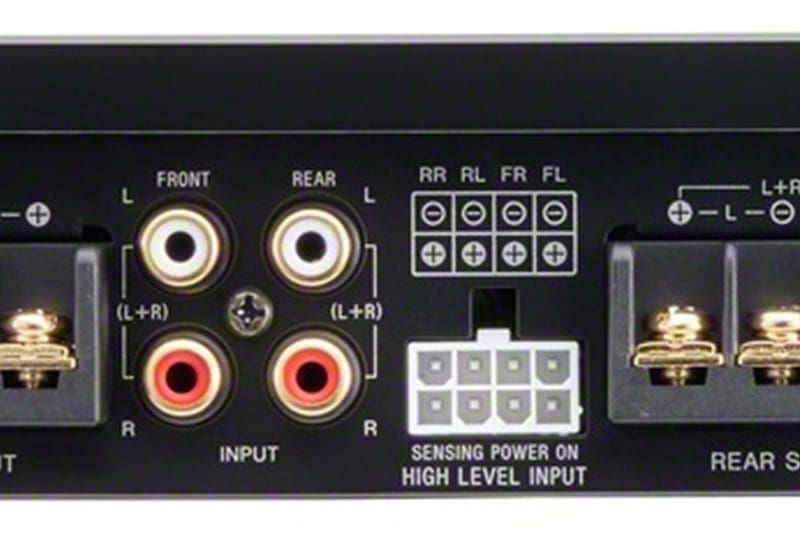
Amplifier Input Stage

It’s time to look at the input stage of how a modern car audio amplifier works. The input stage is responsible for interfacing with your radio and provides features like the gain control, crossovers, bass boost, remote level control and signal summing that your installer will use to make your stereo system sound great and function reliably. While we don’t need to get into the specifics of the components in this part of your amp, understanding the importance of the features is crucial in picking the right solution for your applications.

RCA Preamp and Speaker Level Inputs

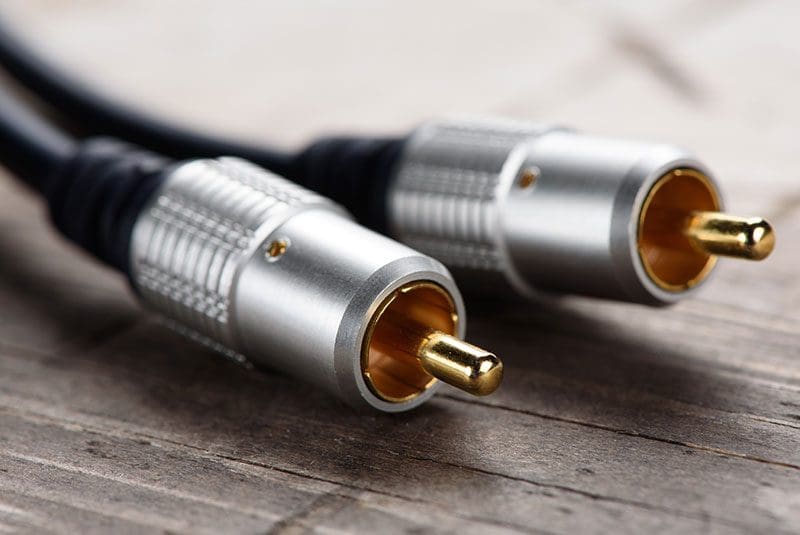
Amplifier Input StageYour amplifier can’t amplify an audio signal if you can’t connect the amp to your radio. Almost every amplifier on the market has RCA input jacks that allow your installer to connect an aftermarket radio quickly and easily. We say “almost” because some amplifiers are designed exclusively for integration with factory-installed audio systems. These amps may have a set of wires on a pigtail harness to accept signals.

In most cases, speaker-level signals are no different than a preamp signal other than they are usually higher in voltage and, because they have already passed through an amplifier stage (in the factory-installed radio or amp), may contain a little more distortion.

Amplifier Input StageWhether the amp uses preamp or speaker-level signals, it should have a feature called Balanced Differential Inputs, or a variation of those words. This simple circuit compares the signal (or noise) on the center conductor and the shield of an RCA interconnect and uses an Op-Amp (a small integrated circuit that can be configured to compare or combine two signals into a single output) to remove anything common to both conductors. If you are using twisted-pair interconnects, EMI or RFI noise should be common to both conductors and thus will be reduced or eliminated by this circuit. When shopping for an amp, Balanced Differential Inputs are one of the first things you should ask the salesperson about.

Signal Processing Features

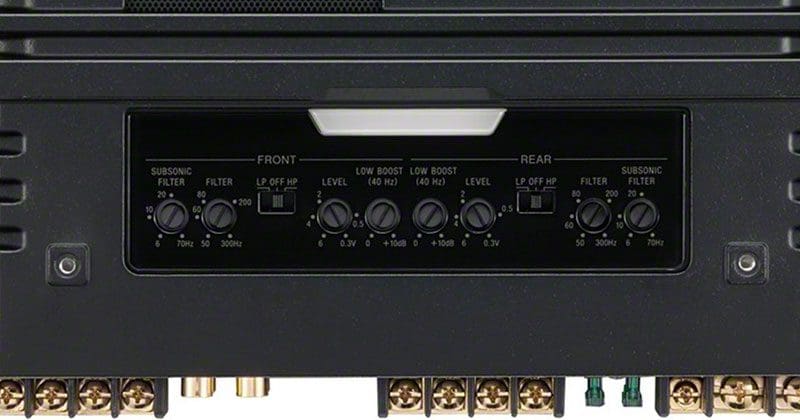
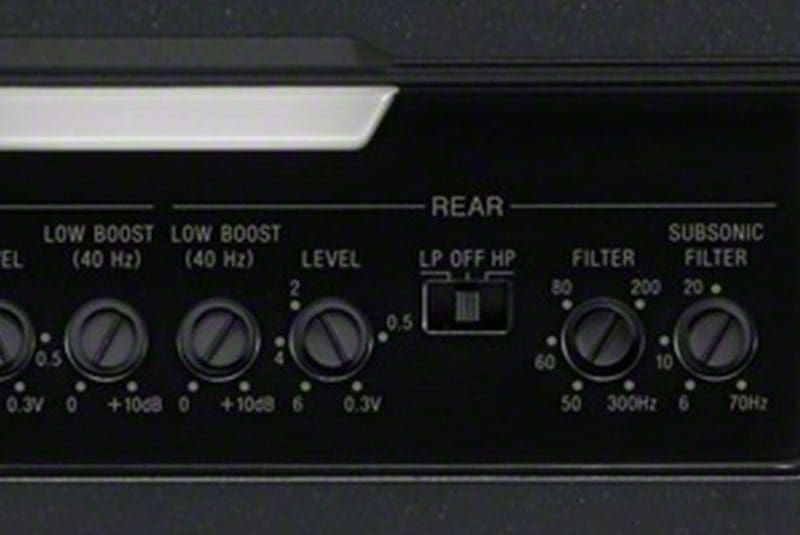
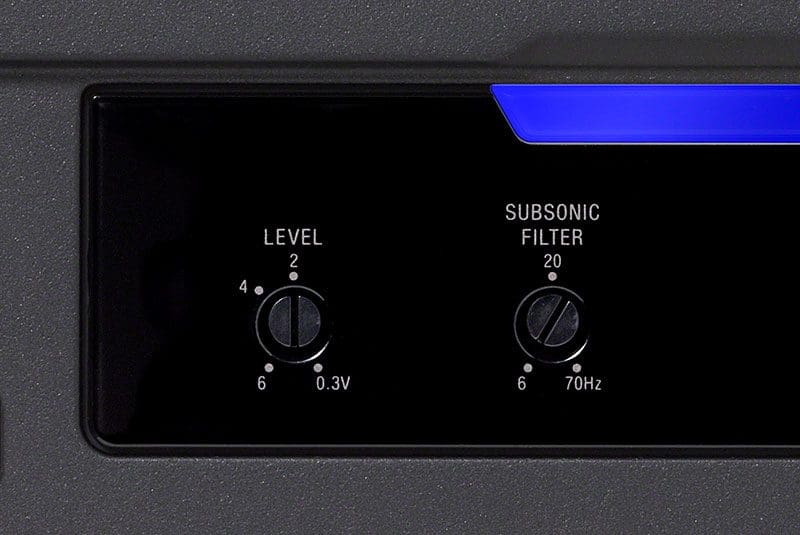
Amplifier Input StageThe next important feature in any amplifier is the sensitivity or gain control. This adjustment allows your installer to configure the amp to produce maximum power for a specific voltage that matches the maximum undistorted output of your source unit, or your power requirements based on the design of your audio system. The gain control is something that should be set once using an oscilloscope and a real-time analyzer (RTA), then not touched again unless the design of the system changes.

Most modern amplifiers include some form of electronic crossover that limits the range of frequencies that pass from the inputs to the outputs. A high-pass crossover only allows frequencies higher than the crossover point to pass and would be used on midrange and high-frequency speakers. A low-pass crossover allows audio signals lower in frequency than the crossover point to pass through the amp. This type of crossover would be used for woofers and subwoofers. Depending on the design of your audio system and the features of your amplifier, your installer may choose to combine high- and low-pass crossovers to create what is known as a band-pass crossover. This crossover would be used on midrange or midbass drivers to cut out low- and high-frequency information.

Amplifier Input StageMany amplifiers have a bass boost control. This control operates as a single-band equalizer that the technician installing your sound system can use to reinforce a narrow band of frequencies being sent to a subwoofer. In reality, adding a narrow-bandwidth boost to your audio signal, from a purist perspective, makes no sense. Most systems sound better with proper DSP equalization to deliver smooth and predictable response across the entire operating range from 20 Hz to the upper limit of your sub around 60 or 70 Hz. A peak at any particular point will sound unnatural.

Remote Level Controls

Most high-quality subwoofer amplifiers come with a remote level control or remote bass boost control that can be installed in the front of the vehicle. This control allows the driver to turn the bass up or down to suit the music he is listening to or his mood. When shopping for an amp, look for units that offer a level control as opposed to a bass boost. As we mentioned above, adding emphasis to a narrow band of frequencies doesn’t sound as natural as turning as adjusting the overall output of the subwoofer.

Amplifiers with Integrated DSP

Amplifier Input StageA friend of ours was in charge of developing a series of high-end amplifiers for one of the well-known head-unit manufacturers. The goal was to include as much flexibility as possible in terms of crossovers and signal summing. The complexity of the amp grew to a point where it was becoming difficult to fit all the switches and adjustments on the side of the amp. To provide their clients with the features they wanted, the company decided to remove all the controls and implement a digital signal processor (DSP) to handle everything. Now, the installer could combine signals from multiple sources, set crossovers very accurately and equalize the signal to deliver a smooth and predictable response from the speakers. Sure, your technician will need to connect a computer to the amp, but the results will be fantastic!

Great Features and Great Design

Amplifier Input StageAs important as the features of the amplifier you choose are, the design and component layout of the input stage of a car audio amplifier can have a huge effect on the performance of the amp. Keeping these components away from noisy sections of the amp like the power supply and output stage can dramatically reduce the signal-to-noise ratio of the amp. For this reason, larger amplifiers often sound and perform better than their compact counterparts. As with any design, the electronics engineers and technicians who develop the circuits and lay out the components have to balance performance, features, cost and size.

Find the Latest Car Audio Amplifiers at Your Local Car Stereo Shop

When it’s time to shop for a new amplifier for your car, truck, motorcycle or boat, make some notes about why you need an amp and what you want it to do. Armed with that information, the product specialists at your local stereo shop can help you find a solution that will meet your requirements quickly and efficiently and ensure that your mobile audio system sounds magnificent.

This article is written and produced by the team at www.BestCarAudio.com. Reproduction or use of any kind is prohibited without the express written permission of 1sixty8 media.
Filed Under: ARTICLES, Car Audio, RESOURCE LIBRARY

Product Spotlight: Compustar CSX7905-A Premium Car Alarm System

06/15/2021 By John Schwartz

Compustar CSX7905-A

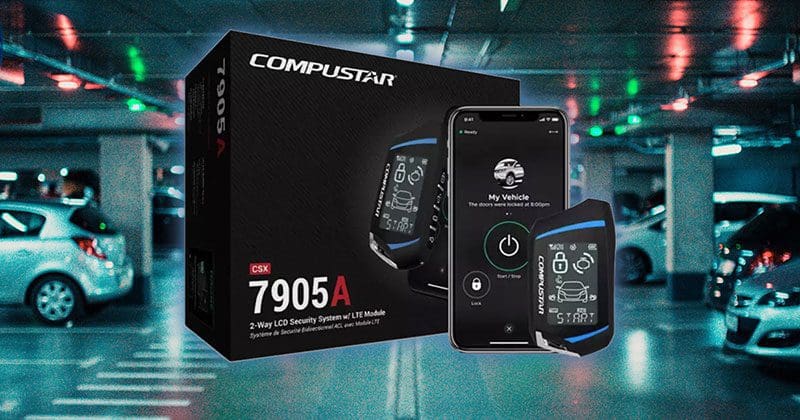
Protecting your car or truck from theft or vandalism requires constant monitoring. While sleeping in your vehicle all night might be one solution, it isn’t really an option. The Compustar CSX7905-A vehicle security system includes a long-range two-way RF remote control and the Drone X1-LTE with the DroneMobile App so that you know what’s going on – whether you’re six blocks or 60 miles away. Let’s delve into the features of Compustar’s flagship car alarm system and why it’s the best way to protect your investment.

Communication Enables Easy Monitoring

With the CSX7905-A, you have two ways of knowing if someone is tampering with your vehicle. The system includes a two-way T9 LCD remote control that offers up to 3,000 feet of range. The remote features an LCD screen that provides details on the security system status. Should the alarm go off, the remote will beep, and an icon will show you what zone triggered the alert.

Compustar CSX7905-A
The two-way T9 remote includes an LCD screen that will let you know when the security system has received and executed commands from the remote.

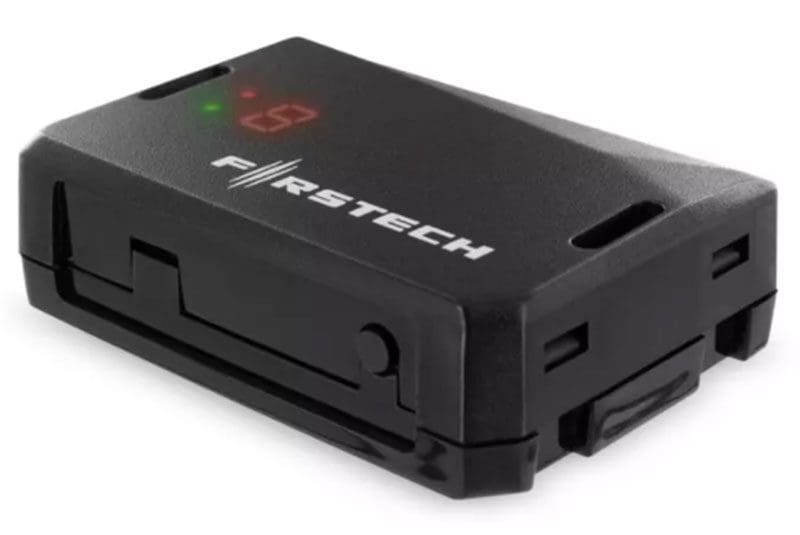
Even if your apartment is 15 floors up, or you work in a large factory or a building like a hospital, then the included Drone X1-LTE Smartphone Telematics module is the perfect solution. The Drone hardware uses the cell phone data network to relay information to the DroneMobile app on your phone and commands from the app back to your vehicle. If the shock sensor is triggered, a door opens or even something as simple as the ignition turns on, you get a notification on your Apple iOS or Android-based smartphone in a second or two. Based on those alerts, you can decide to check on your vehicle or alert the authorities.

The Drone X1-LTE module includes a high-sensitivity GPS receiver that adds a second level of protection. If someone were to drag your car or truck onto a flatbed, you’d get a tow alert on the DroneMobile app that lets you know your vehicle was moved without authorization. You can track its location and notify the police. In many cases, vehicles stolen this way are returned in a few hours instead of being shipped out of the country, never to be seen again. Your Compustar retailer can help you choose a DroneMobile subscription service that offers the communication and security features to suit your needs.

Compustar CSX7905-A
The DroneMobile system will relay alerts from your CSX7905-A and the optional DAS-II to your smartphone so you can monitor your vehicle from anywhere that you have internet access.

On-Board Security Features

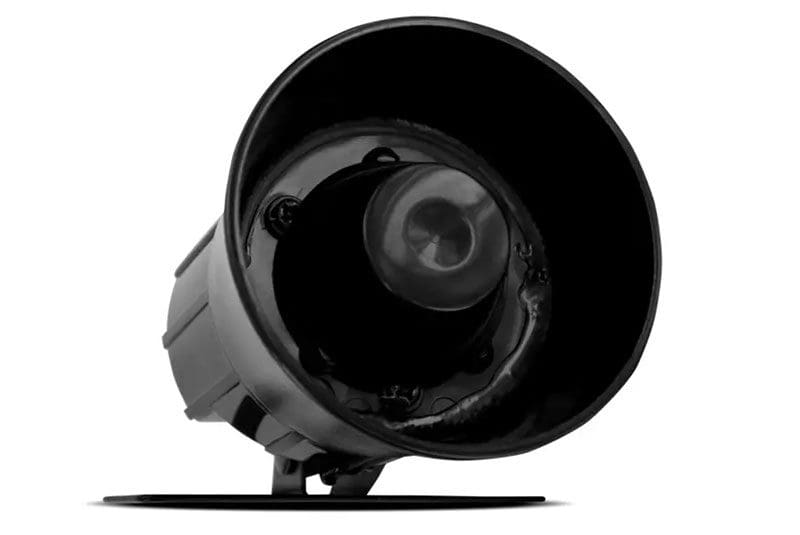
The CM2400 security module at the heart of the CSX7905-A monitors door, hood and truck pins and includes a two-stage analog shock sensor. Compustar includes their E-Lock starter disable relay that prevents hot-wiring of your ignition system. Of course, Compustar includes a dash-mountable warning LED to let would-be thieves know they are up for a challenge. The included 105+ dB siren draws attention to the vehicle should a persistent thief decide he or she wants in.

Compustar CSX7905-A
The CSX7905-A includes one of Compustar’s 105+ dB sirens that will help warn thieves that a high-quality security system protects your vehicle.

The flexibility of the CM2400 allows your installer to add upgraded security features for advanced protection. Perhaps the most popular upgrade is the DAS-II sensor. This four-zone security module includes a two-stage digital shock sensor, a motion and tilt sensor and a microphone calibrated to monitor glass breakage. The optional FT-KP2 keypad works like the number pad many vehicle manufacturers include by the door handle on some vehicles. By entering a user-selected code, you can disarm the security system and unlock the vehicle. The FT-KP2 keypad mounts on the inside of the windshield. Touch the glass on the outside to enter the code and arm or disarm the system.

Compustar CSX7905-A
The optional DAS-II sensor adds digital shock, motion and tilt detection along with glass-breakage monitoring to help protect your vehicle.

Another upgrade option is the Drone X1-MAX. The X1-MAX hardware includes a built-in backup battery. If a thief cuts a battery cable in hopes of disabling your security system, the X1-MAX will continue to send you alerts and allow you to monitor the vehicle location. The X1-MAX also includes a shock, tilt and glass-breakage sensor.

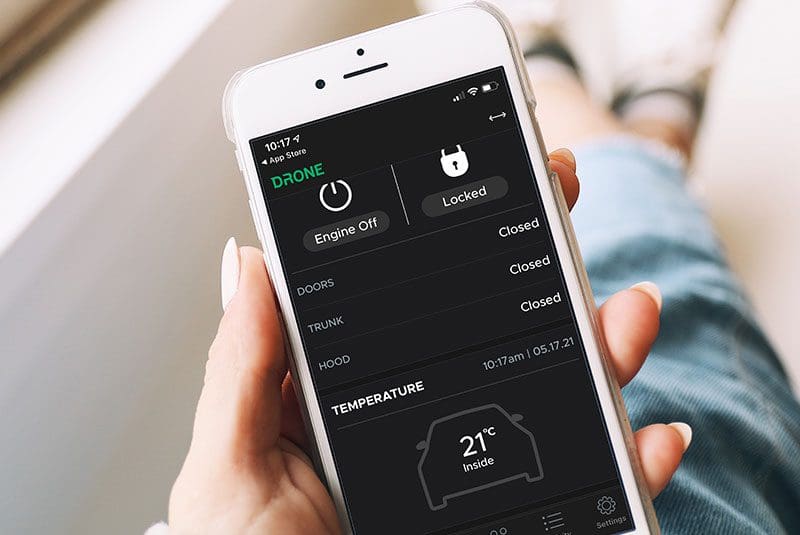
Of course, all Drone solutions let you monitor the temperature inside the vehicle and its battery voltage. You can lock and unlock the doors and pop the trunk or tailgate if your vehicle has an electronic release option.

Compustar CSX7905-A
DroneMobile will let you check the temperature inside your vehicle and ensure that the doors are closed and locked.

Protect Your Vehicle With the Best Car Alarm Available

If you’re worried about theft or vandalism, visit a local authorized Compustar retailer today to learn more about the CSX7905-A and how it can keep your vehicle safe and secure. You can find a retailer near you by using the Dealer Locator on their website. To learn more about Compustar car alarm systems, follow the brand on Facebook and Instagram, and be sure to visit their YouTube channel.

This article is written and produced by the team at www.BestCarAudio.com. Reproduction or use of any kind is prohibited without the express written permission of 1sixty8 media.
Filed Under: ARTICLES, PRODUCTS, Remote Car Starters, RESOURCE LIBRARY Tagged With: Compustar

Why Can’t I Turn the Volume on My Factory Radio All the Way Up?

06/13/2021 By John Schwartz

Radio Volume

Whether the sound system in your car or truck is bone stock or upgraded with premium amplifiers, speakers and subwoofers, the system’s maximum volume may not directly coincide with turning the knob up all the way. The short and sweet of why this happens is something called gain overlap. This conscious and deliberate design decision ensures that any signal source can be played at the maximum volume level as determined by the system’s amplifiers. Are you confused? Fear not! As always, we’ll explain.

What Determines How Loudly a Car Stereo Can Play?

Radio VolumeIn most cases, the maximum output capability of your car stereo is determined by the power available from the amplifiers to drive the speakers. When you run out of power, the signal produced by the amp distorts heavily, and the sound becomes garbled and unpleasant.

In some systems, the limiting factor may be the quality or configuration of the speakers used in the vehicle. If the speakers aren’t operating in their optimal range, you may hear a snapping sound as the voice coil former smashes into the back plate. This is a rare occurrence but it does happen.

Audio System Gain Structure

Radio VolumeWhen you have an amplifier connected to a radio, most people think that the installer (or system designer, in the case of a factory-installed sound system) should configure the amplifier so that it makes full power when you crank the volume to its highest setting. This simple 1:1 ratio works great for music that is recorded loudly.

There is a significant drawback to this configuration. What happens when you have an audio source that is quiet? A good example of this is the release of the Dire Straits’ 2005 album, Brothers in Arms. This (admittedly amazing) album is recorded with a wide dynamic range and a relatively low average volume level. Scientifically speaking, the track “Money for Nothing” has an average amplitude of -22 dBFS (decibels referenced to the maximum recording level), even if the peaks are recorded at the maximum allowable level on the CD. By comparison, the Daft Punk track “Give Life Back to Music” has an average level of -17dBFS. You need about five dB more gain in your system to make Mark Knopfler and Company appear to be performing at the same average volume level.

What Happens When Full Volume Isn’t Enough?

Radio VolumeAudio system designers include something called gain overlap in the system to allow these quiet musical passages to be played at the same level as tracks that are recorded loudly. The drawback of this (very common) feature is that your system will distort heavily if you play loudly recorded music at full volume.

In these situations, the person operating the sound system (you) needs to know when you have maxed out the capabilities of your amplifier and stop turning the volume up. Many mobile electronics specialist retailers will tell you that a volume setting of 27 out of 30 may be as high as you can turn up the system. This limit is determined using test tones recorded at high volume levels. Following this guideline ensures that your system will never distort. With that said, if you have selected a source that isn’t as loud, whether it’s Bluetooth, files on a USB stick, a quiet compact disc or the 1/8-inch auxiliary input, having a few notches left over to turn the volume up a little higher is very welcome.

What Happens When You Exceed Maximum Volume?

Radio VolumeAs we mentioned at the beginning of this article, in most cases, audio systems are limited by the power available from the system amplifiers. When you reach this limit, the amp will “clip.” Clipping adds large quantities of harmonic distortion to the output signal and dramatically increases the energy delivered to high-frequency speakers. This extra energy can cause mids and tweeters to fail prematurely.

If your upgraded audio system is configured to include some amount of gain overlap, work with the person who tuned the system to understand its limits. You are getting all the performance possible from your audio system, even if the volume on the radio isn’t at full. Your local mobile enhancement retailer can provide specifics about the limits of your factory source unit and explain how they can improve the detail, accuracy and emotional impact of your car stereo system.

This article is written and produced by the team at www.BestCarAudio.com. Reproduction or use of any kind is prohibited without the express written permission of 1sixty8 media.
Filed Under: ARTICLES, Car Audio, RESOURCE LIBRARY

How Does a Car Audio Amplifier Work – The Power Supply

06/06/2021 By John Schwartz

Car Audio Amplifier

We’ve talked about car audio amplifier features and specifications at great length, but up to this point, we haven’t discussed how a car audio amplifier works. In this article, we’ll provide a simple overview of how the power supply in your mobile amplifier can take the 12 volts supplied by your electrical system and convert it into a much higher voltage to drive your speakers.

Making Power for Your Speakers

To supply enough power to your speakers to produce music at realistic listening levels, we need a lot of voltage. For standard 4-ohm speakers, it takes a peak-to-peak voltage of almost 60 volts to deliver about 100 watts to your speaker. In most amplifiers, this voltage is configured as +30V and -30V, relative to the ground reference voltage of your vehicle chassis. So, how in the world do we get plus and minus 30 volts from 12? That’s the job of the power supply.

Car Audio Amplifier
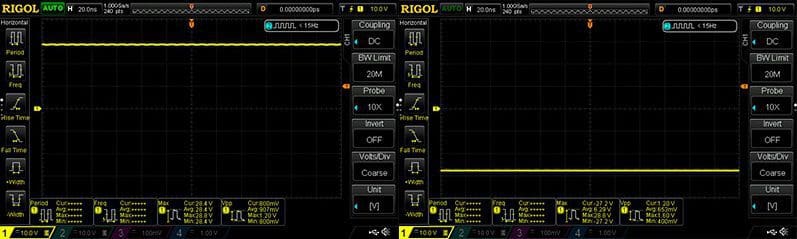
The positive and negative rail voltages of a modern car audio amplifier. In this case, we have +28.4V and -27.7V.

How a Transformer Works

Power supplies couldn’t be created with any reasonable amount of efficiency without a transformer. A transformer is a simple device that increases or decreases alternating current (AC) voltages using two coils of wire wrapped around a magnetically conductive iron core. If you have a 1:2 transformer and feed 12V of AC signal into the primary, you get 24 volts on the output. The big green boxes out on your curb or the cylinders on the power poles near your house are step-down transformers that convert the 16kV feed that enters your neighborhood into 120- and 240-volt feeds to your home.

Car Audio Amplifier
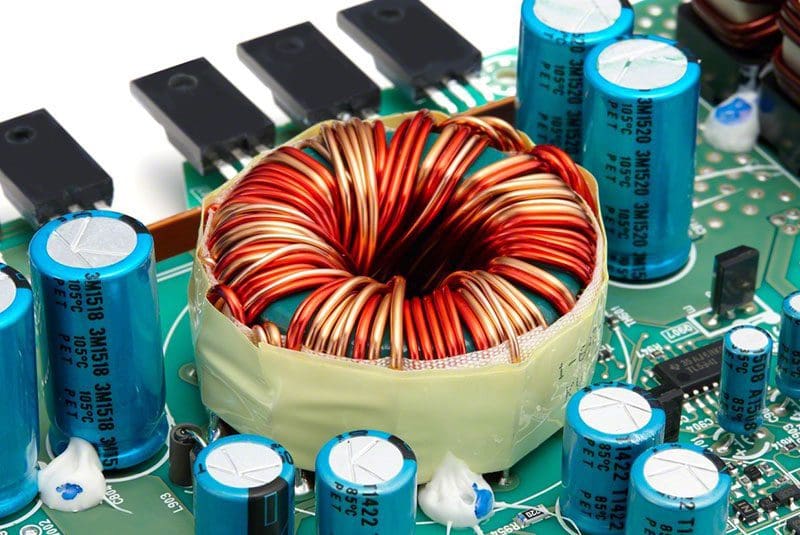
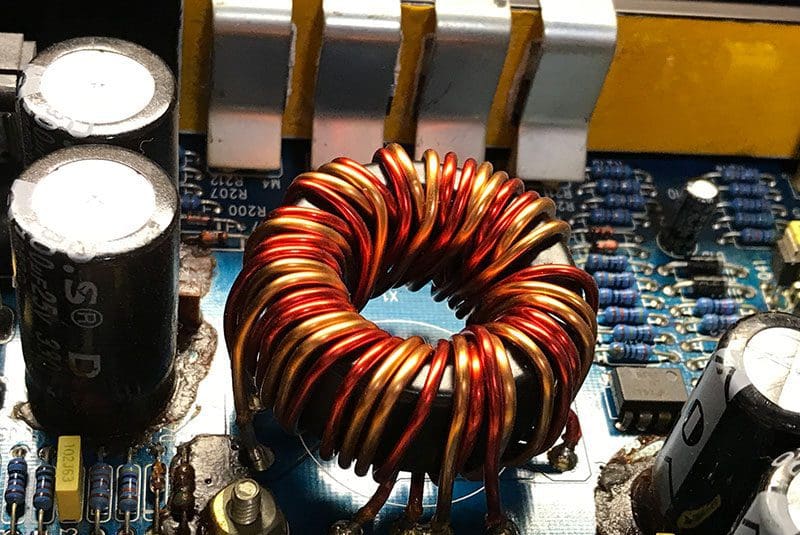
The toroidal power supply transformer in a good-quality car audio amplifier.

How Do We Get AC Voltage in a Car?

As you may (or should) know, the power supplied by the battery and alternators in our cars and trucks is direct current (DC). Left in that state and fed into a transformer, we’d see a small voltage spike when the signal was first connected, then nothing. The steady current flowing through the primary winding would simply heat it up and not produce anything on the output side of the transformer.

Car Audio Amplifier
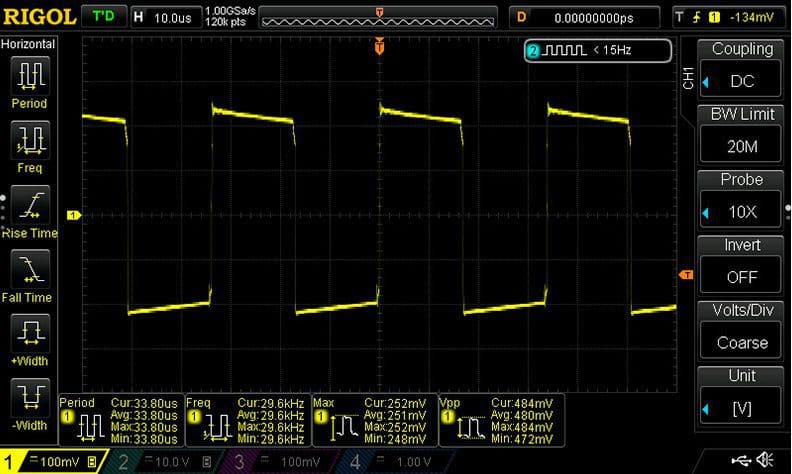
The pulse-width modulated output signal from the power supply switching devices.

Since we need an AC signal, modern amplifiers use a pulse-width modulator to create a series of square waves that turn on a bank of MOSFETs (electrically controlled high-current switches) that pulse the supply voltage on and off very quickly. Many high-quality amplifiers have power supplies that switch at more than 300kHz.

Car Audio Amplifier
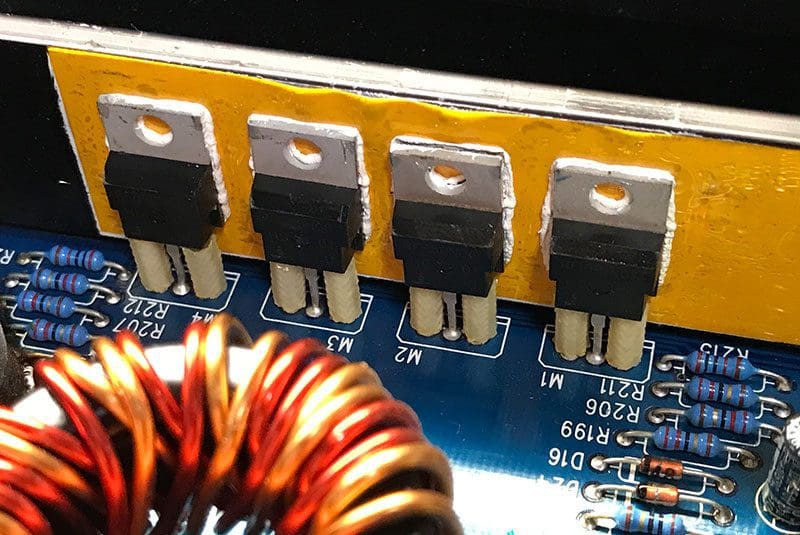
The power supply MOSFETs switch the 12V feed from our batteries and alternators on and off at high speeds to create an AC signal that feeds the transformer.

In the simplest of terms, by switching the connection from the battery to the input of the transformer on and off very quickly, we create an alternating current signal. The voltage of the pulsed signal is increased through the transformer and then fed into a set of diodes and capacitors to smooth it back out to what we call the rail voltage. The rails are the positive and negative power supply sections of the amp that are connected to the output devices.

In application, the circuit is far more complex, but this is the basic operation of the system.

Energy Storage and Power Delivery

As the output voltage of a car audio amp increases, so to does the amount of current flowing to the speaker. The pulse-width modulation controller that manages the power supply can change the relative “on” to “off” time in order to increase the current supplied by the amp. More “on” time means that more current is fed to the transformer, which results in more voltage being produced on the output. Regulated back down to the required rail voltage, this extra voltage ensures that we maintain stable rail voltages.

If you look inside an amp, you will almost always see a toroidal transformer and a bank of energy storage capacitors. These large capacitors help smooth the output of the transformer and diode rectifier stage, and store large amounts of energy so that the amp can keep up with the current demands of the audio signal.

Car Audio Amplifier
4,000 microfarads of energy storage on the output rails of our amplifier.

Learn How a Car Audio Amplifier Works

You should now have a basic understanding of how your car audio amp converts the 12V feed from your alternator into much higher voltages for the rails. In the next article, we’ll talk about the front end or input stage of a car audio amplifier and discuss crossovers, gain controls and the features and functions that make it easier for your installer to configure your car audio amplifier for optimum performance in your car or truck.

This article is written and produced by the team at www.BestCarAudio.com. Reproduction or use of any kind is prohibited without the express written permission of 1sixty8 media.
Filed Under: ARTICLES, Car Audio, RESOURCE LIBRARY

  • « Previous Page
  • 1
  • …
  • 7
  • 8
  • 9
  • 10
  • 11
  • …
  • 82
  • Next Page »

801 EAST 82ND AVE
ANCHORAGE ALASKA 99518
907-563-8112

Copyright © 2026 | Site design by award-winning creative agency D'zine Alaska , with site support by 1sixty8 Media and Modern Media Geeks.