A new client who was referred by a friend brought his 2015 Volkswagen GTI to us to add a high-power LED light bar to it. He wanted to dramatically increase the light output for late-night driving to increase both visibility and safety.
Our technicians got right to work and removed the front bumper to provide access to where we were going to mount the light bar. We fabricated custom brackets to mount it in position, and then put the front bumper back on the GTI. The position of the light bar behind the grille protects it from damage and keeps it cleaner. We also flush-mounted a switch on the dashboard so he can turn it on or off whenever necessary.
For all your vehicle lighting upgrades, Perfectionist Auto Sound and Security has you covered. Stop by to see our team at the shop — we would love to customize your vehicle to fit your style.
 Welcome to our new series about understanding product specifications. Our goal in these articles is to help you understand what the
 Without a doubt, the most popular specification that consumers look at when purchasing a
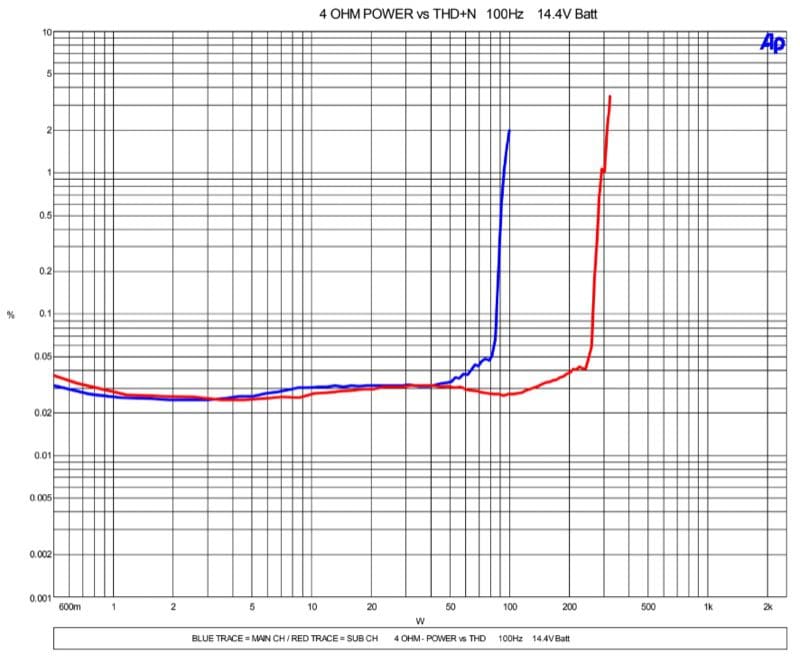
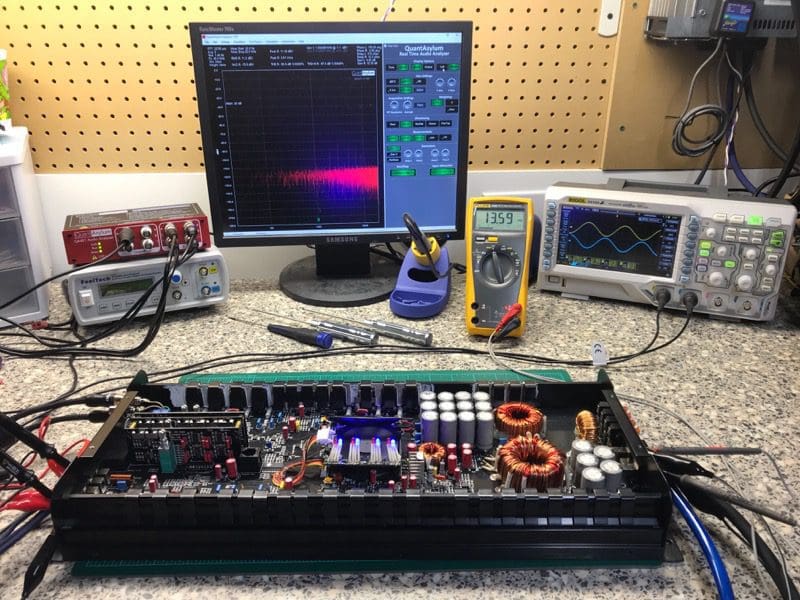
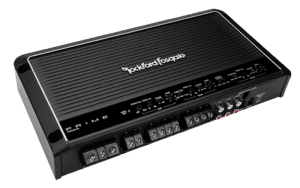 In layman’s terms, the amp must perform as well producing bass as it does high-frequency information, and the specified power rating cannot include large amounts of distortion. While the 14.4V rating is somewhat high, it establishes a level playing field from which consumers can compare results.
 If you don’t see the CTA-2006 logo associated with a product you are considering, there are several ways that the numbers may not be directly comparable with other options. One easy way to inflate numbers is to increase the supply voltage to the amp. Depending on the design of an amplifier’s power supply, each additional volt provided to that power supply could theoretically increase the amplifier’s output by about 0.6 dB. That would be like a 100-watt amp being able to make about 115 watts.
 If you are shopping for an amplifier, the power rating does nothing to tell you about the quality of one amplifier compared to another. You don’t need 100 watts to drive your tweeters and you certainly won’t be happy with a 25-watt amp driving a subwoofer in your car.


 If you are an avid
 Before we dive into the differences between conventional car audio speakers and high-efficiency speakers, let’s take a quick look at the definition of speaker efficiency and what design features change this value.
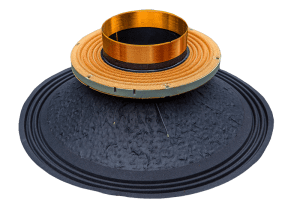 Several technical design details determine speaker efficiency. One of the biggest factors is the weight of the cone and voice coil assembly. A lightweight cone assembly is easier to move and typically produces more output with less power. The drawback of this low-mass design is that the resonant frequency of the speaker will be higher and the driver won’t produce anywhere as much bass. This is the basic trade-off between conventional car audio speakers and pro-sound drivers.
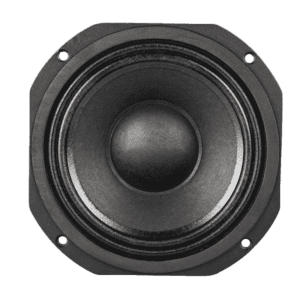
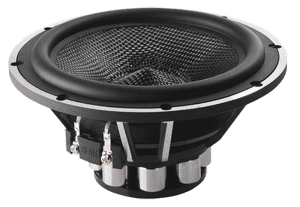 Let’s compare two popular 6.5-inch woofers, both intended for car audio applications. Speaker A is a conventional car audio woofer designed to be used with a tweeter and is intended for installation in the door of your car or truck. Speaker B is a high-efficiency pro audio style midrange and will also need a separate tweeter to play above 3,000 Hz.
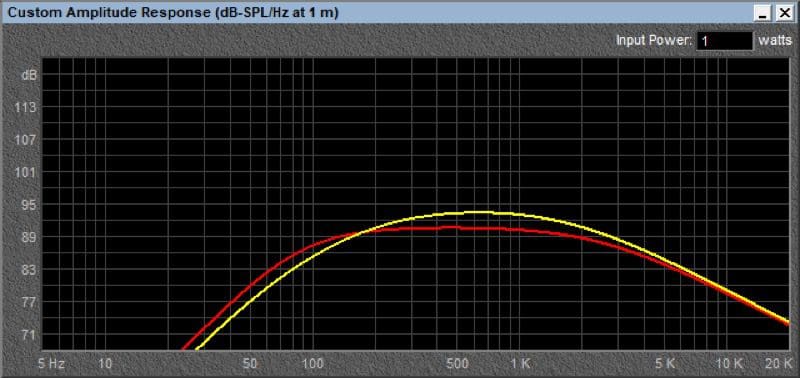
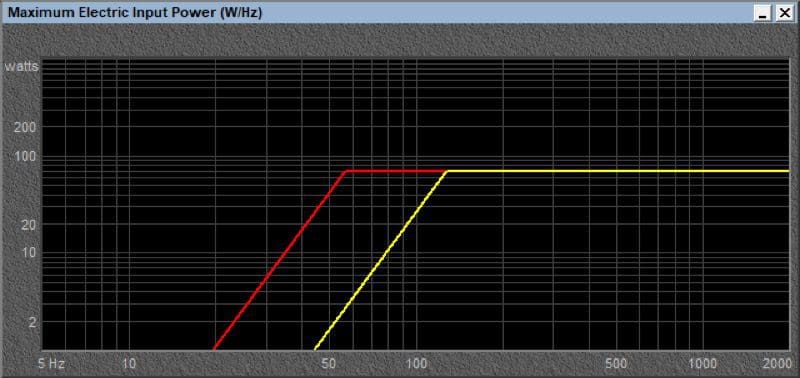
 If you have plans to add a dedicated woofer to the saddlebag or trunk on your bike, and can find one that will play up to 150 or 200 Hz without significant distorting, then pro-style high-efficiency speakers may be a good option if all that matters is how loudly the system will play.
 Did you know that in Europe, there aren’t nearly the number of qualified
 When you say the word subwoofer to someone, they often envision someone driving down the street with a wall of woofers, shaking windows and being otherwise annoying. The reality is, adding a subwoofer to even a premium