Perfectionist Auto Sound and Security

Alaska's Most Award Winning Auto Customizer

  • About Us
    • Why Choose Us
    • Meet Our Team
    • Our Awards
    • Virtual Tour
    • Community Engagement
  • Signature Products
    • DroneMobile
    • SoundShield®
  • Services
    • Remote Car Starters
      • Vehicle Security
    • Car Audio
      • Sound Deadening
    • Custom Fabrication
    • Driver Safety
      • Bluetooth
      • Blind Spot Safety Systems
      • Camera Systems
      • Navigation Systems
    • Laser And Radar Detectors
    • Lighting
    • Offroad and Marine
      • Motorcycle Audio
    • Custom Interiors
    • Performance
      • Tires and Wheels
      • Suspensions / Lift & Lower
    • PRO Commercial Division
  • Gallery
    • Photos
    • Videos
    • Wallpaper Downloads
  • Contact Us
    • FAQ
    • Feedback
    • Join Our Team

GPS Vehicle Tracking Systems

09/06/2020 By John Schwartz

GPS Vehicle TrackingDo you wish you could keep an eye on your kids when they borrow the family car or know where your fleet of work trucks are at any time? A GPS-based tracking system is an easy way to keep tabs on your vehicle. In this article, we’ll discuss some of the options for vehicle locating and tracking systems and, of course, explain how they work.

How Does GPS Vehicle Tracking Work?
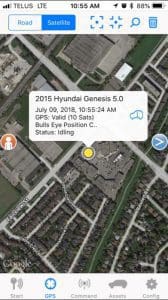
GPS Vehicle Tracking
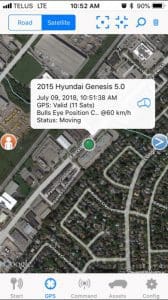
This image shows the location of a car in a small shopping plaza.
GPS Vehicle Tracking
A Google Satellite view of the same vehicle.

A tracking module contains three primary components. First and foremost, a CPU controls the system. The CPU runs software that communicates with the rest of the hardware on the device. The next important component is a GPS receiver and antenna. The GPS receiver provides the CPU with the location, velocity and altitude of the vehicle. Third is a cellular radio. The cellular radio communicates with a server to store information about the vehicle’s location and operation.

GPS tracking systems communicate with the server at predetermined intervals based on the service package you have chosen. These intervals could be one, three, five or 20 minutes, or on-demand as required. More frequent updates use more cellular data and are typically associated with more expensive tracking service packages.

Tracking Hardware Options

GPS Vehicle TrackingSome tracking systems include additional features such as inputs for seat belts and doors, accelerometers to log sudden acceleration and braking, RFID fob readers to identify drivers and A/V inputs so you can see and hear what’s going on in the vehicle. Some premium hardware solutions include a lithium ion backup battery so the system will continue to function even if the vehicle battery is disconnected or completely dead. Other systems with integrated solar panels are available for trailers or infrequently used equipment. If you need a solution that can handle getting wet or dirty, tracking hardware is available in an IP65-rated water- and dust-resistant enclosure.

Custom solutions are available for specific applications. If you operate a fleet of waste removal vehicles, you can log each time they lift a bin. The same logic applies to tow trucks, snow plows and, of course, delivery vehicles. Custom sensors and switches can interact with the logging system to store and log almost any conceivable function. Perhaps you have an armored car service and need a panic button – that’s an easy solution.

Tracking Interface Options
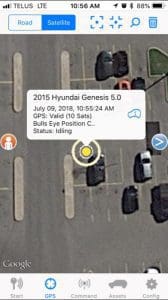
GPS Vehicle Tracking
The locating system pinpointed the vehicle to the first spot in the row.
GPS Vehicle Tracking
The actual location of the car in that plaza.

Two interface options are available, depending on your needs. For most consumers, an app on your smartphone is available to let you see the location of your vehicle. In most cases, the location is overlaid on Google or Apple maps so you can understand the vehicle location graphically. In most cases, the location is accurate to within about 25 feet of where the vehicle actually is. If the GPS receiver receives signals from enough satellites, the accuracy can be even better.

For clients using their tracking system for business applications, most services provide a web-based interface that can show you the location of your entire fleet and allow you to configure warnings and reports.

Software-Based Features for Consumers
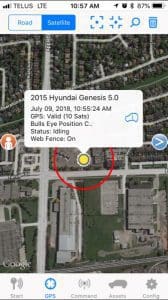
GPS Vehicle Tracking
A Geofence set up around the vehicle location. When the vehicle leaves this boundary, the owner will receive an alert.

Consumer tracking solutions typically offer five or six software-based features. These include geofencing and over-speed alert, as well as tow alerts and after-hours motion alerts. Geofencing is an alert option that will let the operator know when the vehicle enters or exits a particular geographical area. In most cases, this feature is configured by placing a pin or marker at a location and identifying a boundary radius in miles around that position. Depending on how it’s configured, a warning is displayed on the operator’s smartphone when the vehicle enters or exits this area. Over-speed alerts are easy to understand. The operator configures a maximum speed for the system and will receive a notification if that speed is exceeded.

Two advanced features are the tow and after-hours motion alerts. The after-hours alert will send a warning if the vehicle moves during a preset time. If you never drive your vehicle after midnight and are rarely up before 6 a.m., you can set an alert to let you know if your vehicle moves during that period. Tow alerts are another great feature that helps alert the operator to potential vehicle theft. You will receive a tow alert when the vehicle moves without the ignition being turned on.

Business Applications and Features

GPS Vehicle TrackingFor business owners, knowing how your vehicles are operated is as important as knowing their location. Many commercial solutions include accelerometers that log aggressive acceleration and abrupt stops. Smooth driving reduces wear on the vehicle and improves fuel economy. Many systems provide audible warnings to the operator to coach them in improving their driving habits. Commercial tracking solutions can typically generate reports that will identify idle time to reduce fuel consumption further.

Some tracking solution providers offer devices that comply with the Federal Motor Carrier Safety Administration’s Electronic Logging Device mandates. If you need to track Hours of Service or generate Record of Duty Status reports, several companies provide these services.

Benefits of Vehicle Tracking

GPS Vehicle TrackingFrom a business owner’s perspective, knowing where your vehicles are and how they are being used lets you manage your assets reliably. If your staff knows that they are being monitored, they typically drive more safely and waste less time on personal matters. Those savings alone can dramatically reduce your costs. You can generate usage logs based on distance traveled or hours of operation to schedule maintenance and streamline your operations. Research indicates that vehicles with GPS tracking where the operator knows you are logging the vehicle position are 7 percent more productive and use 8 percent less fuel. The same logic applies to letting your kids borrow your car. If they know you are keeping an eye on them, they are less likely to go places they aren’t supposed to.

Install a Vehicle Tracking System Today

Whether you want to log your mileage for your tax return, keep tabs on your son or daughter or monitor how your fleet of service vehicles is operated, your local mobile electronics retailer can help you choose a hardware solution that meets your needs.

This article is written and produced by the team at www.BestCarAudio.com. Reproduction or use of any kind is prohibited without the express written permission of 1sixty8 media.

Filed Under: ARTICLES, Navigation, RESOURCE LIBRARY

Dramatic Sound Upgrade Using SoundShield in a 2010 Volkswagen Golf

09/03/2020 By John Schwartz

2010 Volkswagen Golf

A customer recently came in looking to drastically improve the overall sound quality in their vehicle, a 2010 Volkswagen Golf. After talking with the customer, we decided that the best product for their needs was sound-deadening. Sound-deadening serves to keep road noise out of the vehicle, while ensuring that all of the sound from your speakers won’t escape.

Here at the shop, we use SoundShield, our very own sound-deadening product that was created by the owner of the shop, John Schwartz. It is a triple-layer mat that consists of butyl rubber, high-quality aluminum foil and closed-cell acoustic foam. For this vehicle, we used SoundShield on the two doors and floor, as well as extending it through to the trunk where a big portion of the road noise was coming from.

The customer was extremely happy with the difference that the sound-deadening made and was happy to be able to hear their music without the added distraction of road noise. If you (or anyone you know) are looking to reduce road noise and increase the quality of your sound system, stop by our shop or contact us here.

Filed Under: Car Audio, INSTALLATIONS Tagged With: 2010, Golf, Sound Damping, Sound Deadening, Soundshield, Volkswagen

Custom Truck Accessory Upgrade for Anchorage Ram 1500

09/02/2020 By John Schwartz

Ram AccessoriesThe owner of this 2016 Ram 1500 dropped by Perfectionist Auto Sound and Security in Anchorage to inquire about upgrading the vehicle with a new wheel and tire package, a lift kit, side steps and a new radio. Our Product Specialists worked with the client to choose solutions for each request that offered the features and, where appropriate, the appearance he wanted.

Ram 1500 Radio Upgrade

Ram Accessories
The backup camera was mounted on our exclusive mount.
Ram Accessories
The new radio allows for easy viewing of the backup camera.

Before we start any work, our team inspects each vehicle using our tablet-based check-in/check-out system, so we know that everything is in working order.

The project kicked off with the installation of a Pioneer AVH-220EX multimedia receiver. This radio includes a 6.2-inch display and built-in Bluetooth for hands-free calling and audio streaming capabilities. We added an interface that would allow the buttons on the steering wheel to control the radio remotely so the driver can keep his eyes on the road. We also added a USB extension so that it’s easy to connect and charge his phone.

Our technicians mounted a backup camera just above the license plate using a Perfectionist-edition SoundSkins backup camera bracket. The camera image will display automatically whenever the transmission is in reverse.

Wheel and Suspension Upgrades

Ram Accessories
The wheel and tire combo gave the truck a enhanced looks and performance.

After removing the stock wheels, our team set to work installing a ReadyLift 4-inch SST Lift Kit. The kit includes tubular control arms, strut and bump-stop extensions, sway bar drop brackets and rear coil spacers. Next, we mounted a set of 33×12.5-inch Toyo Open Country A/T III tires on chrome Moto Metal MO985 20- by 10-inch wheels. We used new TPMS sensors to ensure that the truck can display tire pressures. Once everything was installed, we made sure the suspension was aligned properly so the truck would drive straight and not wear out the tires.

Westin Side Steps

Ram Accessories
Running boards were added to aide in getting in and out of the truck.

With the 4-inch lift installed, the client requested that we install a set of Westin Chrome E-Series 3 nerf-bar style steps. These steps feature 3-inch diameter tubing and integrated step areas with a polymer pad for added safety. We bolted the steps to the cab using the supplied hardware and ensured that everything was aligned and secured properly.

Alaska’s Truck Accessory Experts

With the radio installed, wheels and tires upgraded and the step bars mounted, this truck accessory upgrade project was complete. When the client returned to Perfectionist Auto Sound and Security, a member of our team walked him through the basic functions of the radio and helped him pair the Bluetooth connection on the phone. He loved the way the truck looked with the new wheels and tires, the lift kit and the chrome steps. If you’re interested in upgrading your vehicle, drop by our shop or send our team an e-mail using our contact form. We’d be happy to put together a bespoke solution that delivers the features you want.

Filed Under: Backup Safety, Bluetooth, Car Audio, FEATURED INSTALLATIONS, Truck Accessories Tagged With: 1500, 2016, Backup Cameras, Moto Metal, Nerf Bars, Pioneer, Radios, Ram, ReadyLift, SoundSkins, Toyo

Every Vehicle Can Benefit From Sound Deadener

08/30/2020 By John Schwartz

Sound DeadenerOne product that most car audio retailers offer that can benefit anyone with a car, truck or SUV is sound deadener. If your vehicle is noisy inside, gets hot quickly or people have trouble hearing you during hands-free phone calls, applying sound deadening can help dramatically. In this article, we’ll explain how sound deadening works and talk about the key benefits of adding damping material to your car, truck or SUV.

What is Sound Deadener?

If you have ever had the opportunity to look under the carpet or trim panels inside your car or truck, you may have seen patches of rubber or strips of butyl adhered to the body panels. The addition of this material by the automobile manufacturer adds mass to the metal panel. This added mass makes it harder for noise outside the vehicle to vibrate the panel and transfer noise to the interior of the vehicle.

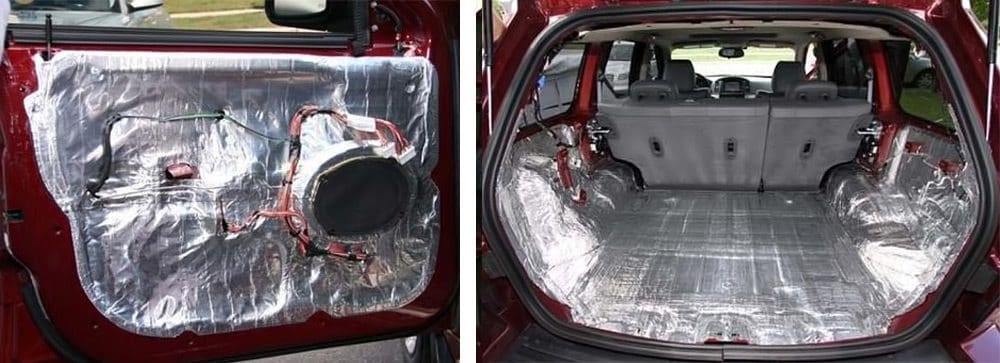
Sound DeadenerAftermarket sound deadening products work the same way. Most sound deadening is sold in sheets or rolls. The material is very dense and has one surface that includes a strong adhesive. Your installer can apply the material to flat metal surfaces like the doors, floor, roof, firewall, rear fenders and trunk of your vehicle.

Many damping materials like Dynamat Xtreme, Stinger RoadKill Expert, Wirez Premium Sound Deadening and Hushmat Ultra include a layer of aluminum on top of the flexible base layer. This aluminum adds strength to the damping material and allows it to span openings in door panels.

Some damping materials include a layer of closed-cell foam on top of the aluminum layer. Focal BAM and SoundSkins Pro are two common examples of damping materials with foam. Wirez, Dynamat and several other companies offer foam on its own as another option. This foam layer helps to reduce vibrations and rattles from objects touching the damping material. Under floors, it can prevent wire harnesses and cabling from buzzing. In doors, it prevents the rods that activate the door release mechanism and locks from rattling.

Another option for sound deadening is a spray-on solution. Cascade Audio Quiet Kote, Boom Mat Spray-On and bedliners like Line-X are a great way to add mass to flat metal surfaces.

Sound Damping Materials Make Your Vehicle Quieter

Several years ago, we took part in a test of the noise reduction capabilities of sound deadening material. The vehicle in question was a 2007 Jeep Grand Cherokee SRT with the 6.1-liter Hemi. The test started with three baseline measurements of the noise inside the vehicle. We took SPL measurements with the vehicle at idle and cruising at 40 miles per hour and 60 miles per hour. Happy with the measurements, we applied a layer of aluminum-backed damping material to the inner and outer door skins of the truck and repeated the measurements. Impressed by our findings, the last step was to treat the cargo area of the Jeep and repeat the tests once again. As you can see from the chart below, the results are impressive.

Condition Idle Cruise a 40mph Cruise at 60mph

No Deadening 88.5dB 99.0 dB 103dB

Doors 87.9dB 98.1dB 101.4dB

Doors and Cargo Area 84.7dB 94.3dB 98.7dB

Total Noise Reduction -3.8dB -4.7dB -4.3dB

Sound Deadener

Had we chosen a vehicle that came from the factory without a moderate amount of sound damping, the results would have been even more impressive.

How a Quieter Interior Improves Your Sound System

If you look at any of the sound deadening manufacturers’ websites, it will quickly become apparent that they all claim that adding sound deadening will improve the performance of your sound system. This is absolutely true and it helps in two unique and different ways.

Sound DeadenerFirst, by simply reducing the background noise in your car or truck, you improve the effective signal-to-noise ratio of your stereo. What does this mean? Having less background noise makes it easier for you to hear the quiet parts of your music. Imagine if you were listening to a track at a volume level of 100dB. If you have background noise level of 95 dB, any portion of the song that is around the 95dB level will have to battle with the background noise to be heard. If you can reduce the noise level in your car to 90 dB, you can hear more of your music.

The second and perhaps the most significant benefit of sound deadening is to improve the effectiveness of the speakers in your vehicle. In most cases, the doors of your car, truck or SUV have a hole in the inner skin for the speaker, and access holes for the window regulator, door handle and locking mechanism. A speaker produces an equal amount of sound from the front of its cone as from the back. If these two sound sources mix, they cancel each other out. This cancellation happens most often in lower frequencies, say below 300 Hz.

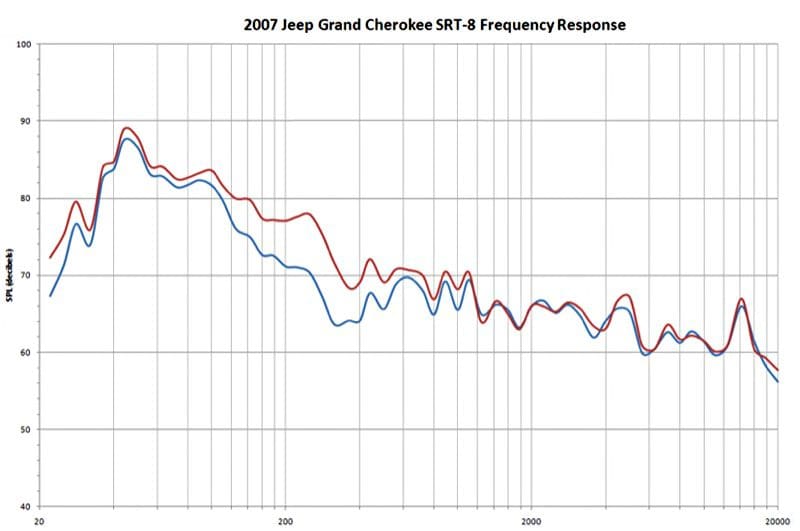
If you were to compare the in-car frequency response of a speaker mounted in the factory door location to that of a vehicle where a layer of sound deadening has been applied to the inner surface of the door, you would see a dramatic increase in bass output.

The graph below shows this very test in that 2007 Jeep Grand Cherokee. The effective output from the factory-installed 6×9 woofer increased by a jaw-dropping 8dB at 240Hz. The gains were visible for all frequencies below about 400Hz, which was, in this application, likely the upper crossover frequency of the speaker.

Sound Deadener

Another cool new product designed to help improve the performance of your sound system is Stinger’s RoadKill Fast Rings. These rings mount around the face of your door or rear parcel shelf speakers and seal up against the trim panel. The concept is that they help to channel all the sound from your speaker into the interior of the vehicle, rather than allowing it to bounce around inside the door. The rings also help reduce panel vibrations for better sound performance.

Sound Deadening Can Make Your Vehicle More Comfortable

Sound DeadenerIf you watch TV shows like “Detroit Muscle,” “Truck Tech” or “Overhaulin’,” you’ve undoubtedly seen the guys apply a thorough layer of sound deadening material to the floor of some of the coolest hot rods ever. Not only do these materials help keep your vehicle quiet, but they also help block heat from the road, engine, transmission and exhaust from heating up the interior of your vehicle. Dynaliner from Dynamic Control of North America, D-Mat from Design Engineering and the aptly named Heat Barrier from Thermo-Tec are specifically designed to prevent heat transfer into the interior of your vehicle.

What to Look For When Buying Sound Deadener

Most shops latch onto a particular brand of sound deadening material that they find effective and reliable. In most cases, you can trust their choice. If you want to get picky, the most important aspect of choosing a high-quality damping material is to select one that will stay adhered to your vehicle.

Sound DeadenerThere are two common problems that occur with damping materials. First, they simply may not have a strong adhesive or they require extensive surface preparation to stay adhered to a panel. Some damping materials will stick to slightly dusty surfaces without any problems. The second and more important concern is that the material itself is thermally stable. You don’t want the deadening to peel off when it gets hot in the summer. We’ve heard of many cases where vehicle carpets and headliners have needed to be replaced because damping materials turned to a liquid and contaminated them.

Install Comfort in Your Vehicle Today

If you want your car doors to close with a thud instead of sounding tinny, if you want to reduce the road and exhaust noise in your car or you want to improve the performance of your hands-free phone system, drop by your local mobile electronics specialist retailer and ask about having sound deadening installed in your vehicle. We know that you will be thoroughly impressed with the improvement.

This article is written and produced by the team at www.BestCarAudio.com. Reproduction or use of any kind is prohibited without the express written permission of 1sixty8 media.

Filed Under: ARTICLES, Car Audio, RESOURCE LIBRARY

Safer Driving With Dash Camera Systems

08/23/2020 By John Schwartz

Dash CameraHave you ever been driving along and witnessed something that you wish you could have captured on video? It could be a car accident, strange or reckless driving behavior or just something interesting you want to share on social media. We most certainly can’t drive around with our smartphones in our hand, and when something worth recording does happen, we’ve usually missed the opportunity to capture the moment. A dashcam system is the solution. Read on to learn everything you ever wanted to know about dash cameras and how they work.

What is a Dashcam?

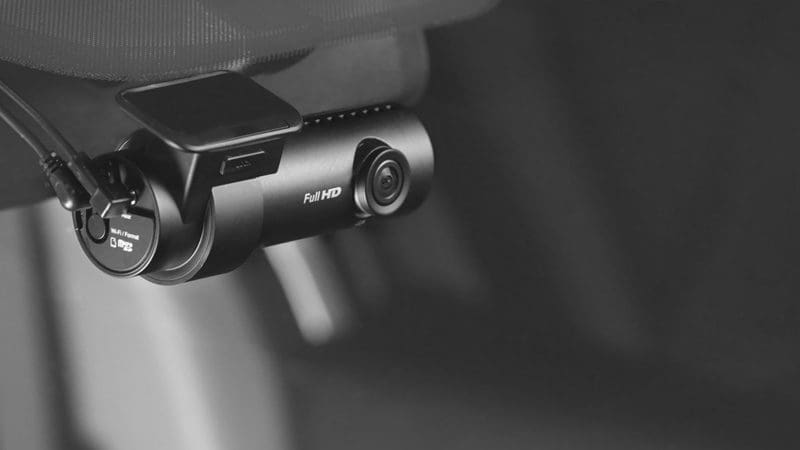
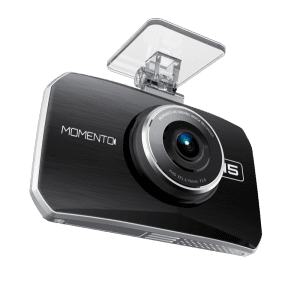
A dashcam is a compact audio and video recording system that is designed to mount to your windshield. The camera faces forward and includes a wide-angle lens that will capture almost everything that happens in front of the vehicle. Most cameras on the market include a built-in microphone, so you get the entire play-by-play of the event as it occurs.

Basic Dash Camera Features

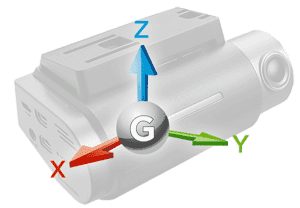
Dash CameraDash camera systems are typically wired into the ignition circuit of your vehicle and begin recording as soon as you start your car or truck. There is no need to remember to press a button. Most camera systems include an integrated accelerometer that records forces in all three axes along with the video. This information can be used to show acceleration and braking and cornering forces, as well as to detect impacts in the event of an accident.

The better camera systems on the market use an SD or micro SD card to store video information. These digital storage formats are compact and reasonably reliable. The small cards can be removed and connected to a computer in your home or office to view videos.

How Dash Camera Video Recording Works

Dash CameraAs mentioned, most cameras start recording as soon as the vehicle ignition is turned on. Options in the setup menu allow the installer to configure the length, frame rate and the resolution of the video. Typical video lengths are one, three and five minutes. These short lengths make it easy to pick out certain events while ignoring long periods of uneventful driving.

Normal videos are stored on the memory card in a specific folder called Videos or something similar. Once the folder fills up, the oldest video is deleted to make room for a new one. The number of videos stored on the card depends on the resolution and, subsequently, the size of the video files in relation to the total storage space available on the storage device.

Most systems have a secondary folder with a name like Event. The videos stored in this folder have been flagged for safekeeping. A threshold for the onboard accelerometer can be set to trigger an event recording. Sudden deceleration caused by slamming on the brakes or hitting an object are typical trigger events. Most systems also include a manual trigger button that will let you save a file to the Event folder.

Going Back in Time

We mentioned at the begging of this article that a dashcam is a great tool to record an event that has already taken place. While that sounds a bit like time-travel, it’s quite simple in operation. Allow us to explain.

Your dash camera is always recording and saving content to the memory card. In the event of an automatic or manual trigger, the dashcam saves five to 10 seconds’ worth of information from before the trigger and 30 to 60 seconds of video after to the file in the Event folder. You can witness a car accident, come to a full and safe stop, then press the trigger button to store the entire experience for later review.

Should My Dash Camera have a Screen?

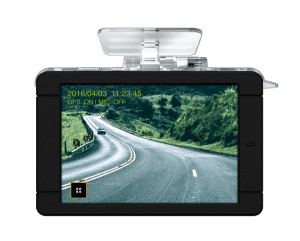
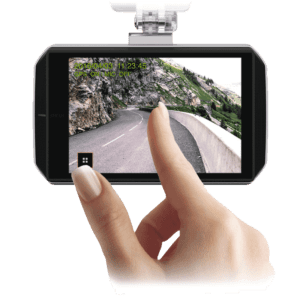
Dash CameraThere are two basic styles of dash cameras: with and without a display screen. The inclusion of a screen makes it much easier to install and aim the camera properly. Having a screen also allows you to play videos back right on the camera unit. The tradeoff is, of course, the size of the camera system. Including a screen will make the camera larger. Choosing a camera with or without a built-in screen depends on your application and personal preference.

Dash Camera Options and Accessories

Many dash camera systems include or have a provision for an optional GPS receiver. When equipped with GPS, the longitude, latitude and speed of the vehicle are stored along with the video files and accelerometer information. Many video playback software packages (available as a download from the camera manufacturer’s website) overlay the vehicle location on Google Maps during playback.

Dash Camera

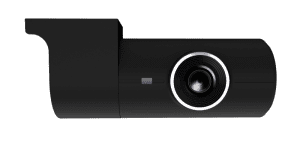
Another very popular option for dash camera systems is a second camera. This camera can be placed in the rear window to capture activity behind the vehicle, or placed inside the vehicle near the rearview mirror to record the interior of the vehicle. Taxi, Uber and Lyft drivers like the ability to record what’s going on inside the vehicle.

Another feature available in premium cameras is the inclusion of a Wi-Fi network hotspot. This network connection allows you to communicate with the camera system using your smartphone. Some interfaces allow you to download videos from the camera to your phone for sharing. Others include the ability to configure settings on the camera remotely. A few companies even include cloud-based image storage. When you arrive home, you can connect your dashcam to your home Wi-Fi to upload videos.

Parking Mode Recording

Dash CameraAnother popular camera option is called Parking Mode. When activated, the camera will operate even after the ignition is turned off. Parking Mode works in different ways for different cameras. Some record at a much lower framerate. Some monitor the image for changes (when a person approaches the vehicle, for example) and only start recording when a change is detected. Parking Mode is a great feature for people worried about someone breaking into or vandalizing their vehicle.

Battery management is an important consideration for dash camera systems that will continue to function after the ignition is turned off. The last thing you want is to have your camera run all night and drain your battery, making it impossible to start your vehicle the next morning. Some cameras have a built-in shutdown circuit that turns the camera off when the battery reaches a selectable voltage. A better solution is to add a dedicated battery for the camera system. A secondary unit reduces wear and tear on the main battery while providing excellent protection.

Let’s Talk About Image Quality

Dash CameraBeyond features, buying a dashcam is similar to buying any other video or still picture camera. The amount of information stored depends on the resolution of the camera system, the quality of the image sensor and the optics (lens quality) of the system. If you want a yes or no answer to who caused an accident, any recording system will work. If you are hoping to read a license plate or phone number from the side of a vehicle, you can never have too much resolution. It’s up to you to decide how much is right for your application.

In addition to resolution, consider image quality. Dash camera systems are hampered because the brightness and contrast required is always changing. The camera needs to function reliably when you are driving toward the sun or at night with only headlights lighting your way. The speed and accuracy with which the camera can adjust to these changes is an important factor in ensuring optimal image quality.

Finally, construction materials and quality are also a consideration. Does the lens assembly use inexpensive plastics that may distort when they get hot or turn yellow after prolonged exposure to the sun, or are the lenses made of glass? It can be very difficult to determine the quality of the internal components of a camera, so be sure to do your research.

Why You Need a Dash Camera

Dash CameraFinally, we should discuss just why it is a great idea to have a dash camera installed in your vehicle. There’s no doubt that a good public shaming on Facebook for someone who cut you off is great entertainment, but the need to protect yourself against fraud and false accusations is very real. You may have seen a news report of video of someone jumping on the hood of a vehicle stopped at red light and claiming the driver hit them. Believe it or not, this does happen. Another popular scam is for a driver to back their vehicle into a stopped car or truck while at a red light. The driver of the offending vehicle will claim that you drove into them. One of the latest scams involves drivers being flagged down by a person on the side of the road. The person will claim they are out of gas and offer supposedly expensive jewelry as collateral in exchange for some money to get gas. If you decide to stop, be sure to let the person know you have a dashcam recording everything, including their license plate.

Protect Yourself with a Dash Cam

Before you buy an inexpensive dashcam system online, drop by your local mobile enhancement retailer and ask about the features of the products they offer. More often than not, you will find much better performance and reliability from a premium product. You only get one chance to record an important event, so make sure you capture all the information you want or need.

This article is written and produced by the team at www.BestCarAudio.com. Reproduction or use of any kind is prohibited without the express written permission of 1sixty8 media.

Filed Under: ARTICLES, Driver Safety, RESOURCE LIBRARY

  • « Previous Page
  • 1
  • …
  • 22
  • 23
  • 24
  • 25
  • 26
  • …
  • 82
  • Next Page »

801 EAST 82ND AVE
ANCHORAGE ALASKA 99518
907-563-8112

Copyright © 2026 | Site design by award-winning creative agency D'zine Alaska , with site support by 1sixty8 Media and Modern Media Geeks.