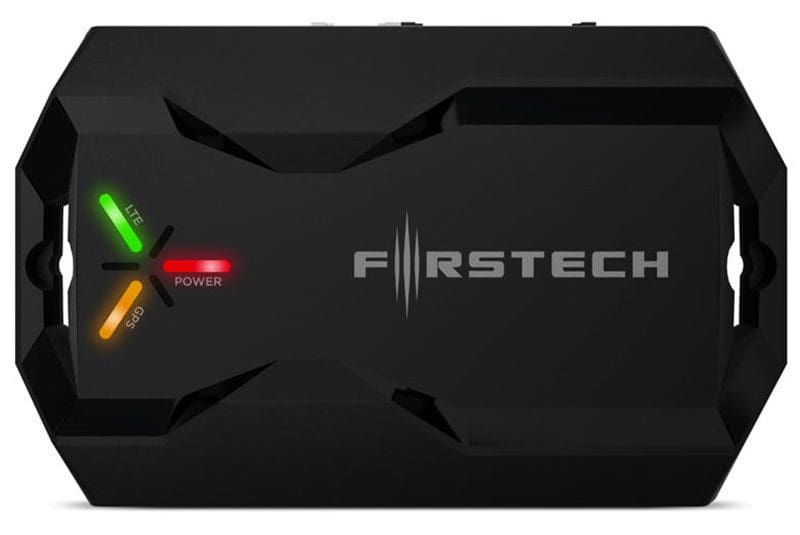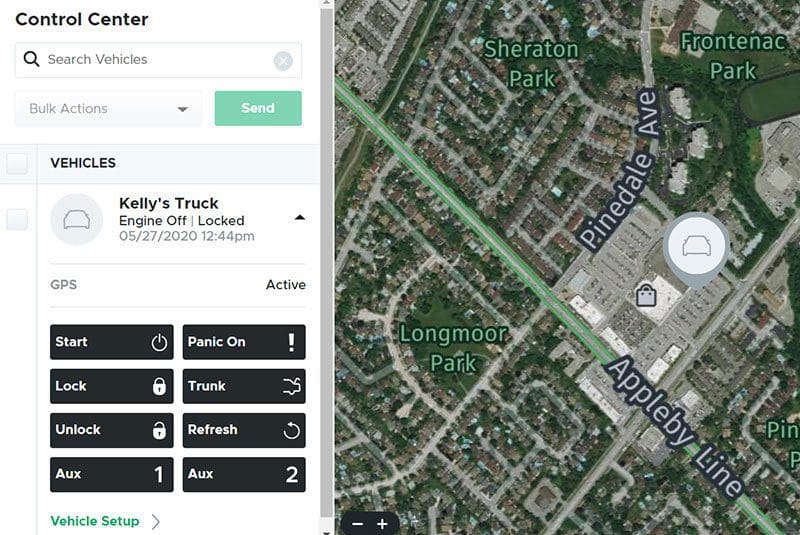
Whether you are a small auto parts store with two delivery vehicles or run a local courier or moving company with dozens of trucks, Drone is the perfect fleet management tool. Drone uses high-performance telematics technology to monitor the location and behavior of the vehicle it’s installed in. DroneMobile – the powerful web and smartphone interface – makes managing the information collected by Drone efficient, so you can optimize the operation of your company vehicles and increase safety.
Drone Fleet Management Packages
Depending on the specific needs of your company, Drone offers three tracking solutions for business owners. The Premium package logs individual vehicle trips, monitors for speed violations and includes four geofence and 10 point-of-interest alert options. You can look up a vehicle location in seconds using the DroneMobile app on your smartphone or the web interface.
Stepping up to the Premium Plus plan adds turn-by-turn and breadcrumb trail logging that updates every two minutes. Geofences and point-of-interest locations are unlimited on the Premium Plus and higher packages.
Finally, the Ultimate package increases breadcrumb trail logging to every 30 seconds and adds location-based alerts. All three options include Drone’s standard vehicle control features like locking and unlocking, as well as battery voltage and vehicle temperature monitoring.
The packages include maintenance reminders, and vehicle diagnostic trouble code information is also logged to help ensure that the fleet is operating reliably and efficiently.

How Fleet Tracking Saves Companies Money
As a business owner, understanding how your equipment is being used is paramount to your profitability. Ensuring that delivery routes are being followed can save money in reduced fuel expenses. Information about arrival time to each destination can be used to optimize itineraries to avoid traffic congestion or construction. Curfew alerts ensure that your vehicle fleet is being used for business purposes only.
Using the Trips feature (available on the DroneMobile app or at accounts.dronemobile.com on any web browser), managers can review up to six months of data for each vehicle and look for driving behavior issues like speeding, unnecessary stops and unscheduled detours.

The Activity Log function at accounts.dronemobile.com includes options to sort information by vehicle, date range and activity, enabling you to analyze operational status with impressive detail. Data from the Activity Log can be exported into a spreadsheet-compatible .CSV format with a single button-click to help create presentations and reports.

Additional Fleet Tracking Benefits
It’s been proven repeatedly that company drivers who know a tracking system has been installed on the company vehicle drive more safely and efficiently. Safer driving reduces fuel and vehicle maintenance expenses, and can also reduce insurance costs from reduced claims. Speaking of insurance, it would be worth asking your insurance company if they offer a discount for vehicles that have tracking systems.
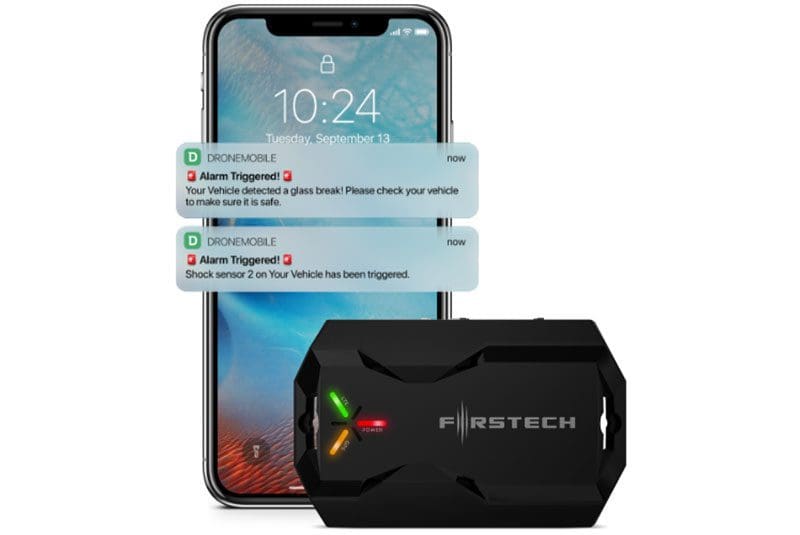
Drone hardware can be upgraded with security features to add another level of protection to your fleet. The Firstech DAS-II sensor monitors the vehicle for impacts, glass breakage, towing and motion. Likewise, sensors can be added to tool storage compartments or cargo loading doors. These alerts are not only logged in the activity report, but notifications are sent directly to the driver’s smartphone so he or she can contact law enforcement if the vehicle is being tampered with.

Accurate Data Makes Asset Management Easier
As a company owner with a fleet of vehicles, managing their expense can be a daunting task. From fuel and regular maintenance to insurance claims and damage repairs – your overhead can be thousands of dollars a year. Knowing where and how your vehicles are used is the first step to implementing policies that ensure their efficiency and safety. Drone can provide that information.

Contact your local Firstech retailer today to find out how you can equip your fleet with Drone Fleet Management solutions. You can find a dealer here. To stay up-to-date with the latest from Drone, be sure to follow them on Facebook, Instagram, and Twitter.
This article is written and produced by the team at www.BestCarAudio.com. Reproduction or use of any kind is prohibited without the express written permission of 1sixty8 media.
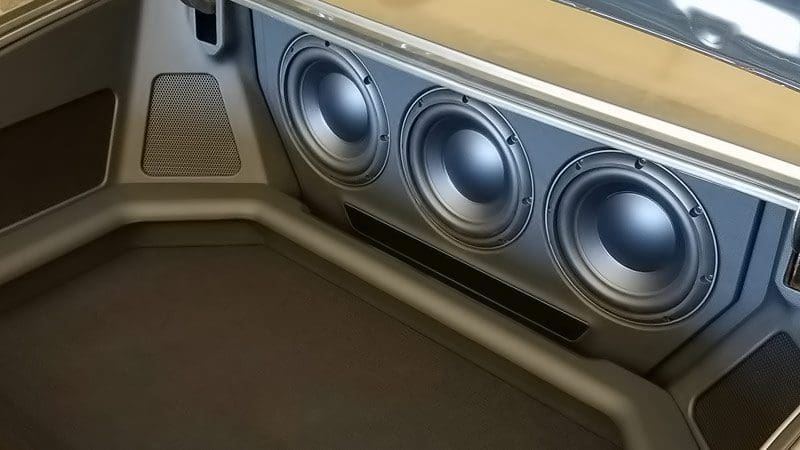 Beyond the features and design of a subwoofer, no single factor affects the performance of a subwoofer system more than

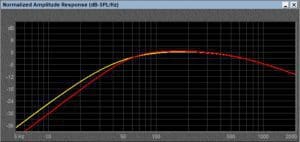 As you can see, above 60Hz, the smaller enclosure is a little bit louder but remains within a decibel or two. Below 50Hz is where things start to vary more. The larger enclosure is 2.15 dB louder at 35Hz and 3.35 dB louder at 25 Hz. While it might not appear dramatic, 3dB is the equivalent of having twice as much power driving the subwoofer. However, this increase in efficiency comes with no thermal power handling penalty.
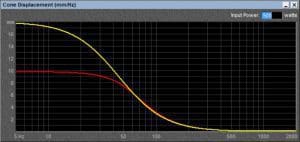 Once again, above 60Hz, there is minimal difference in the excursion between the two drivers. Below that, the larger volume of air in the big enclosure has less effect on the stiffness of the subwoofer system. The result is the subwoofer moves farther for each watt of power. If you compare the excursion graph to the frequency response graph, the efficiency levels are directly correlated.
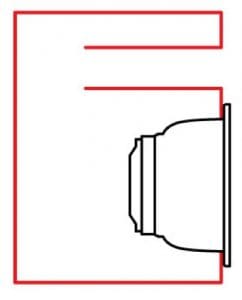 The second popular option for a subwoofer enclosure is a
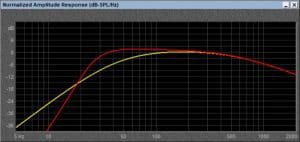 Now, while most vented enclosures are larger than their sealed brethren, the benefit is often an increase in output that is potentially more than having two subs in a sealed design. In fact, this vented design is louder from 20 to 60Hz than three identical subs in an enclosure that is 50% larger (1.8 cubic feet).
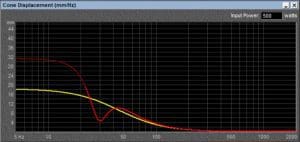 This reduction in cone excursion increases physical power handling and also reduces distortion – as long as you have designed and constructed the vent properly. Vents need to have a large enough area so that air velocity in the vent is kept to a minimum. The mouth of the vent also needs to have a large radius
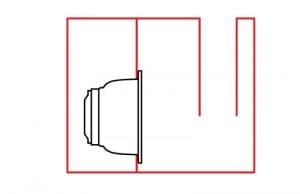 Bandpass enclosures are called that because they not only act as a high-pass filter but as a low-pass filter as well. A typical bandpass enclosure features two chambers. The woofer is mounted between these chambers. In a single-tuned enclosure (often referred to as a fourth-order bandpass or single- reflex bandpass), one of the chambers includes a vent from which all the sound is created. A benefit of this design is the ability to feed that vent through an opening in a rear parcel shelf or similar to ensure coupling with the interior of the vehicle.
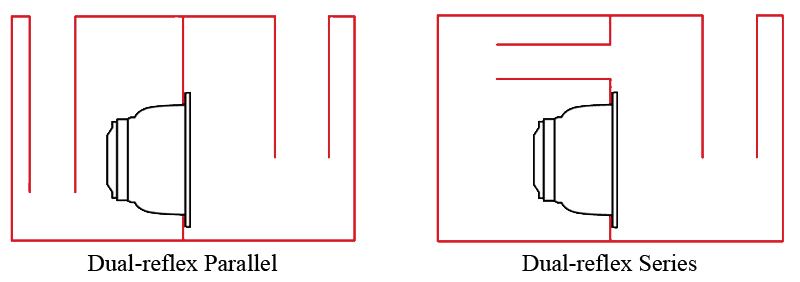 The second bandpass enclosure design is a Double-tuned design where both the front and rear chambers are vented. In a Series-tuned bandpass enclosure, the large rear chamber vent feeds into the front chamber. In a parallel-tuned design, the vents from each chamber feed directly into the listening area. Double-tuned bandpass designs are often referred to a sixth-order or dual-reflex designs.
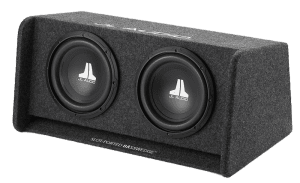 A quick note on “basic” subwoofer systems. Over the years, we’ve seen a LOT of retailers offer “bass packages” that include a sub, amplifier, enclosure and often a wiring kit. In the majority of these packages, the retailer has paired an inexpensive sub with an inexpensive amp and a sealed subwoofer enclosure to minimize the total cost of the system. When you are limited in
 No single upgrade to an audio system offers a larger improvement in sound quality than the addition of a
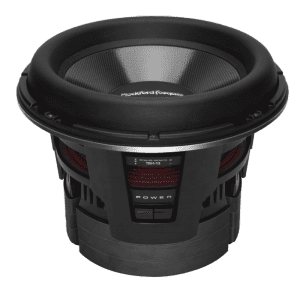 In the simplest of terms, a subwoofer is a large speaker designed to play frequencies below 100 Hz at relatively high output levels. Subwoofers are most commonly available in 10- and 12-inch sizes, but 6.5-, 8-, 13.5- and 15-inch subs are also readily available.
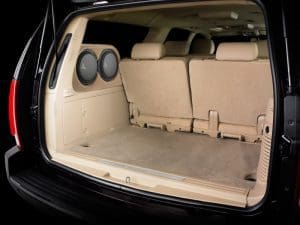 Picking “enough” subwoofer depends on several factors. How loud is loud enough? How much space can you afford to give the subwoofer system? How powerful of an amplifier can your vehicle’s electrical system support? It can be difficult to choose the right sub based on these criteria, especially since different vehicles offer different amounts of cabin gain. Would a single 10-inch sub in a sealed enclosure in the back of a Honda Fit be a suitable solution in a Cadillac Escalade or short-cab Ford F-150?
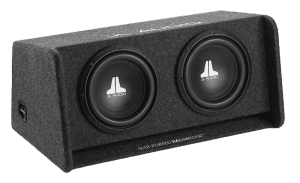 The next step is to decide
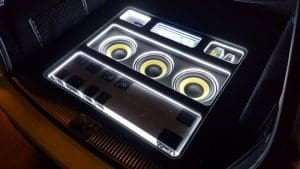 If you want something truly unique, then ask about including LED lighting in the enclosure. You can choose to have a Lexan or Plexiglas window added and illuminate the interior of the enclosure or add acrylic plastic accent pieces that light up. Upgrades at this level are often combined with enclosures finished with multiple materials – different colors of vinyl can provide amazing cosmetics.
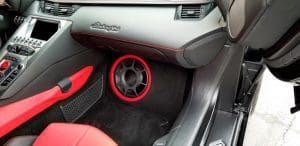 The next step, beyond a simple wooden
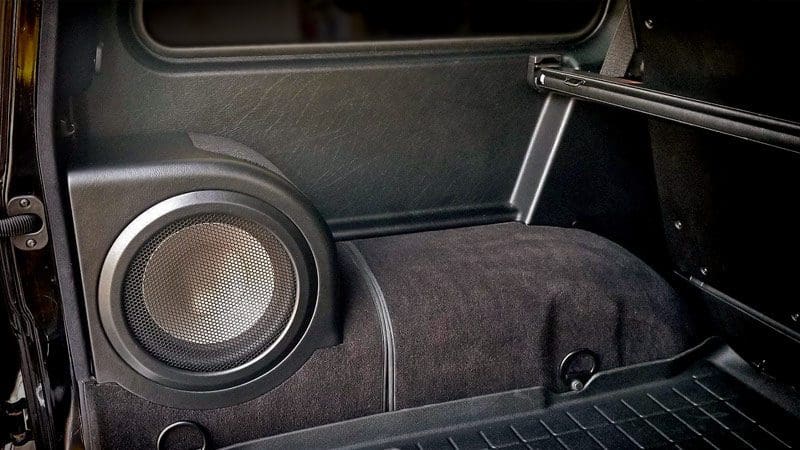
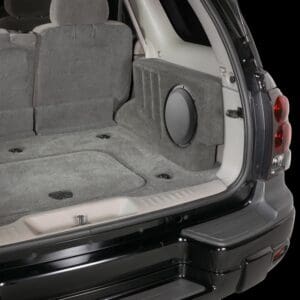 Companies like JL Audio, MTX and Kicker offer subwoofer systems designed for specific models of vehicles. These enclosures are designed to offer impressive performance while minimizing how much space they use. Some companies construct these enclosures from fiberglass in large molds, while others use thick plastics. In most cases, while these enclosures are visible once installed, they are available in materials that match the color of the vehicle interior. An application-specific enclosure is a great way to add amazing bass to a vehicle quickly and efficiently.
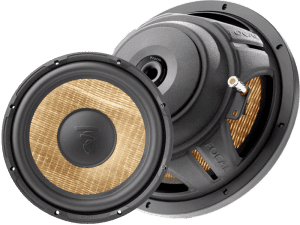 You’ll note that we haven’t discussed the specific features of subwoofers that differentiate one from another. This omission is quite deliberate because we will dedicate an entire article to that topic. In the meantime, it is worth discussing the difference between a conventional subwoofer and a shallow-mount design.
 The fabrication team at