Perfectionist Auto Sound and Security

Alaska's Most Award Winning Auto Customizer

  • About Us
    • Why Choose Us
    • Meet Our Team
    • Our Awards
    • Virtual Tour
    • Community Engagement
  • Signature Products
    • DroneMobile
    • SoundShield®
  • Services
    • Remote Car Starters
      • Vehicle Security
    • Car Audio
      • Sound Deadening
    • Custom Fabrication
    • Driver Safety
      • Bluetooth
      • Blind Spot Safety Systems
      • Camera Systems
      • Navigation Systems
    • Laser And Radar Detectors
    • Lighting
    • Offroad and Marine
      • Motorcycle Audio
    • Custom Interiors
    • Performance
      • Tires and Wheels
      • Suspensions / Lift & Lower
    • PRO Commercial Division
  • Gallery
    • Photos
    • Videos
    • Wallpaper Downloads
  • Contact Us
    • FAQ
    • Feedback
    • Join Our Team

Advanced Source Unit Integration

04/26/2020 By John Schwartz

Source Unit IntegrationIf you ask someone in the mobile electronics industry what “source unit integration” means, they’ll probably tell you about making an aftermarket radio fit into the dash of a vehicle and allowing it to send audio to the speakers. For decades, this has been the extent of the task.

Physical Source Unit Integration
Source Unit Integration
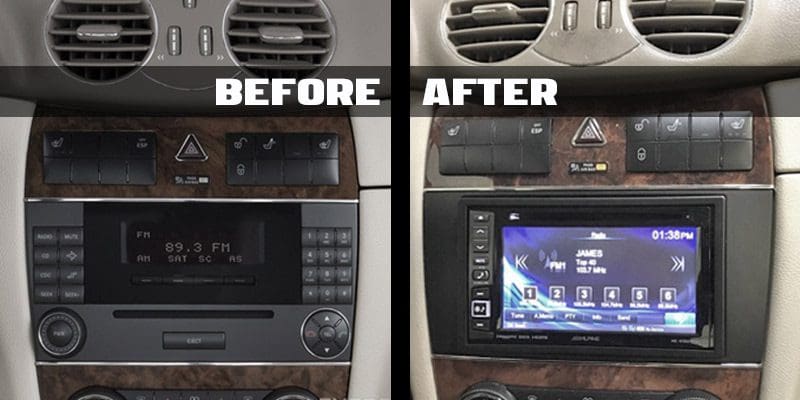
Extreme Audio Installed a radio in a Mercedes Benz CLK350 using a dash kit.

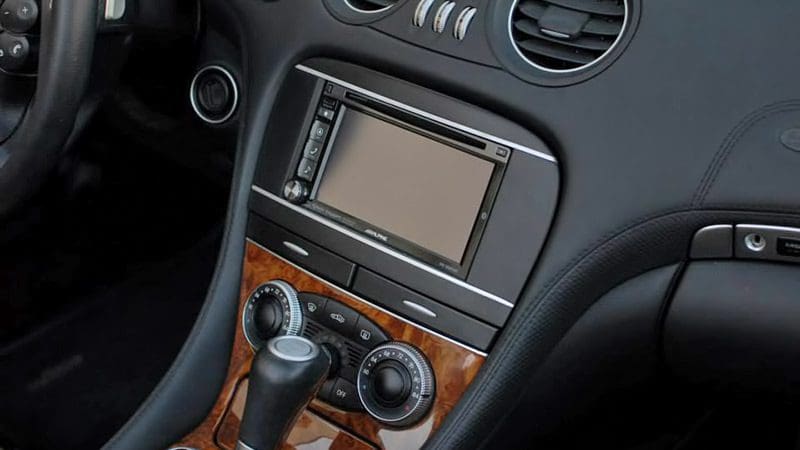
Mounting a new radio in the dash of most vehicles involves the purchase of a mounting kit. These kits are designed to accept a new radio and mount to the vehicle using factory fastener locations. Depending on the application, these kits can be as simple as a trim ring or set of panels for either side of the radio. In complex applications, the kit may include an entirely new trim panel and provisions to work with the factory climate controls, hazard switches, passenger airbag status displays and, of course, air vents.

Electrical Interface
Source Unit Integration
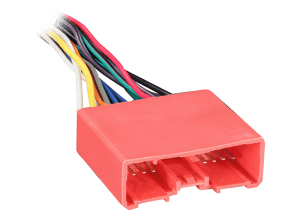
This wire harness is typical of a basic electrical integration interface.

Even the simplest of radio installations requires a wire harness adapter. These adapters include a plug that is a direct connection to the factory radio wire harness. Your installer will connect the plug to your new radio to provide power, ground, accessory and speaker connections.

In some more-complex applications, an interface is required to change the signal coming out of the radio into something that will work with a factory amplifier. Vehicles with factory-installed Bose sound systems are a common example of vehicles that need more-elaborate interfaces.

A second challenge is vehicles that use data communication with the radio to perform simple functions. Many Chrysler radios require a CAN bus interface to provide an accessory output to turn on an aftermarket radio.

Function Integration
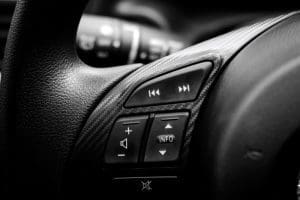
Source Unit IntegrationAs far back as the early 1980s (and maybe further), automakers started including buttons on the steering wheel that would mimic the volume, source selection and tracking functions of those on the radio. These buttons allow the driver to keep his or her hands on the steering wheel while adjusting the audio system. Of course, any feature that promotes ease of use and safety is adopted quickly across the industry.

In the mid 1990s, aftermarket radio manufacturers added a data input connection on the back of their radios that would allow an external interface to translate commands from the factory steering wheel controls into messages that the radio could understand.

Advanced Vehicle Integration Solutions

Source Unit IntegrationAs automakers evolve the functionality of their infotainment systems, the aftermarket has forged forward with ways to work with those features and technologies. Once climate controls, vehicle configuration settings and integrated entertainment solutions like Ford Sync, Chrysler Uconnect and OnStar became part of the “radio,” upgrading factory source units became exceedingly difficult.

iDatalink in Montreal, Quebec, recognized this challenge and set to work on creating an interface solution that would allow compatible aftermarket source units to work with these new technologies. In 2015, iDatalink launched Maestro in partnership with Kenwood. Shortly after, Alpine, Pioneer and JVC soon adopted support for this vehicle integration technology.

What is iDatalink Maestro?
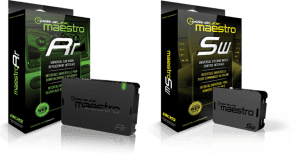
Source Unit IntegrationThe iDatalink guys are best known for their remote car starter systems and data interface solutions. Their expertise in working with vehicle data networks translates directly to integration with infotainment systems. Maestro launched with two product solutions: a steering wheel control interface called the SW and a data interface called the RR. SW stands for steering wheel and RR for radio replacement. The SW product is pretty straightforward, while the RR is quite complex. Let’s look at what RR offers.

Maestro RR – Radio Replacement Interface
Source Unit IntegrationThe Maestro RR is like a steering wheel interface on steroids. The system provides bidirectional communication with various vehicle functions. When an RR is used with a compatible aftermarket radio, factory entertainment systems like Sync and uConnect become part of the aftermarket radio. The driver can adjust vehicle settings, including keyless entry options, lighting controls, factory remote control functions, door lock functionality and more. The specific features and functions depend on the vehicle and the make and model of radio you choose.

The second part of the RR solution is integration with factory safety systems like parking sensors, collision avoidance systems, blind spot monitoring and cross-traffic alerts. The Maestro unit routes alerts from these systems through the factory-installed chime speaker. In some applications, the system directs alerts to an appropriate sound system speaker. Additional features include compatibility with factory backup camera systems and satellite radio receivers.

Additional Vehicle Information Features

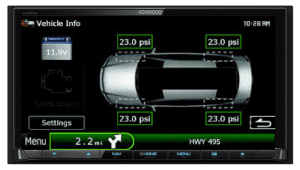
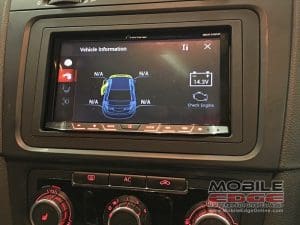
Because the Maestro RR communicates with the vehicle on the CAN data network, it has access to a massive amount of information. The RR includes a vehicle information screen that shows battery voltage, tire pressure sensor information, door status and even diagnostic trouble codes (DTCs for short). In most applications, the system can clear DTC codes as well.

Maestro RR includes a Performance Gauges screen that will show information like vehicle speed, engine RPM, air intake temperature, turbo or supercharger boost pressure, fuel levels, and more. You can configure up to five gauges for display at any time. A new Track Pack feature will record 0–60 times, ¼-mile times and braking distance. The Track Pack stores the last five runs, so you can compare your driving style or changes to the vehicle.

Applications and Compatibility
Source Unit Integration
Integration specialists like Mobile Edge can help educate you on the Maestro RR features available for your vehicle.

Keep in mind that, not every function we have mentioned is available for every vehicle. For example, if you don’t have a factory-installed tire pressure monitoring system, your new radio certainly won’t be able to display tire pressure information. Your local mobile enhancement retailer can help you choose a radio with the features and functions you want and let you know what compatibility is available from the Maestro RR.

Make Technology Work for You

If you have a vehicle that doesn’t have Apple CarPlay or Android Auto, visit your local mobile enhancement retailer and ask about upgrading to the latest infotainment technologies. They can provide you with details on everything required to integrate that new source unit into your vehicle and, of course, let you know what bonus features and functions a Maestro RR offers.

This article is written and produced by the team at www.BestCarAudio.com. Reproduction or use of any kind is prohibited without the express written permission of 1sixty8 media.

Filed Under: ARTICLES, Car Audio, RESOURCE LIBRARY

Car Audio System Design Considerations

04/19/2020 By John Schwartz

System DesignWhen you go shopping for a computer, it’s important that all the pieces work together to provide maximum performance and reliability. When you head out to upgrade your car audio system, your salesperson should ask you a series of questions that will help them identify the perfect solution for your needs and application. When it comes to car audio system design, there are many variables. In this article, we will look at a few upgrade considerations talk about some options to enhance the performance of your system.
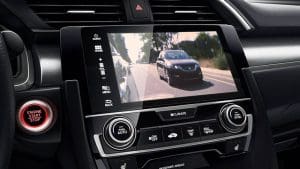
Heads Up!?

System DesignFor decades, car audio system upgrades have followed the recipe of a new radio, front and rear speakers, an amplifier and a subwoofer. Lately, it’s becoming difficult or impossible to remove the factory radio from many vehicles. In these situations, your mobile enhancement retailer should be able to provide you with options to make use of the signal from the factory source unit or amplifier, then upgrade the performance of the system with new speakers, a subwoofer and an amplifier.
Adding a subwoofer to your system is always a great idea. A subwoofer should be the first thing you upgrade in any vehicle. Once you have a speaker dedicated to reproducing low-frequency information, the smaller speakers in the car or truck can focus on mid-bass, midrange and high-frequency duties.

Regarding the overall listening experience, having a new amplifier and new front and rear speakers should let your system play a lot louder with less distortion. Having rear speakers playing as loudly as the front speakers will wrap the sound around you as though you are listening to a set of headphones. A system like this is unlikely to offer any improvement in staging or imaging unless you invest in a digital signal processor of some sort. Listening to a system with great staging is like sitting in the audience at a concert or in front of a set of home stereo speakers.

The Front Stage Upgrade

System Design
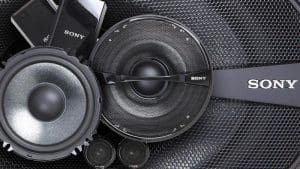
Speakers like the Sony GS series reviewed in one of our Product Spotlights make a great upgrade.

If you are interested in recreating your music with a sense of realism regarding placement, your system design will need to change. Instead of upgrading the rear speakers, a better option might be to invest your speaker budget in a set of good component speakers for the front of your vehicle. You can choose an amplifier with a built-in DSP that allows your installer to tune the system. If you pick a five- or six-channel amplifier, your installer can wire the tweeters and midrange drivers to dedicated channels, then connect the subwoofer to the rear or subwoofer channels.

Once configured properly, a system like this reproduces your music from an imaginary stage that spans the width of your dashboard. If the tune is really on-point, you should be able to pick out individual instruments and identify their locations on this soundstage. With careful tuning, the sound from the subwoofer will seem to come from the dash, rather than the rear of your vehicle. Finally, high-quality speakers can handle more power and produce less distortion than moderately priced OEM-replacement options.

The Front Stage Mistake

To maximize the features and capabilities of a DSP, each speaker should have its own amplifier channel. If you use a two-channel amp and a set of components with passive crossovers, your installer won’t have full control over the tweeter level relative to the midrange. He can’t change the crossover slopes between the mid and tweeter or adjust the signal delay to each driver.

The Balance of Power

System Design
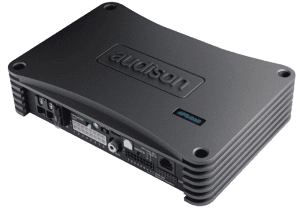
The Audison AP8.9 Bit offers plenty of power and onboard DSP.

Picking the right size amplifier for your system is important. If you listen at high volumes, then power is very important. That said, you’ll need to choose speakers that can handle those high power levels in order for the system to be reliable. Even though a manufacturer prints a huge number like 250 or 350 watts on the box, it’s unlikely the speakers can handle that amount of power for any significant amount of time. Always look for the continuous power handling numbers, no peak or maximum ratings.

If you like a lot of bass, then you have some choices to make about subwoofers. Do you pick a single sub that can handle, say 1,000 watts of power? What about two subwoofers that can handle 500 watts? The proper choice depends on your budget, but also on the capabilities of the subwoofers themselves. Can the 1,000-watt subwoofer move as much air as the pair of 500-watt subwoofers? The answer will depend on some computer modeling and requires some consideration as to how much space you can afford to provide for the subwoofers. Two subs are going to require a much larger enclosure.

The Recipe Book for System Design

System DesignShopping for an audio system upgrade is like cooking: You need to determine what you want long before you head to the grocery store. Do you want loud? Do you want incredible accuracy? Do you want something that does not affect the cargo capacity of your vehicle? What is your budget for the project? Do you want to do everything at once? Only once you have a plan in place can you get an accurate quote to upgrade your vehicle. You may learn or experience something new as you do your research. It’s certainly OK to change your plan.

Drop by your local mobile enhancement retailer today and ask some questions. Let them know what you like about your existing car audio system, and what you would like to improve. If they have a demo vehicle, ask for a demonstration. Hearing someone else’s vehicle can be an eye-opening experience. Listen to their advice about system design and don’t be afraid to ask questions. Take your time with the system design plan and you’ll end up with great results.

This article is written and produced by the team at www.BestCarAudio.com. Reproduction or use of any kind is prohibited without the express written permission of 1sixty8 media.

Filed Under: ARTICLES, Car Audio, RESOURCE LIBRARY

Unlimited-Range Smartphone-Controlled Remote Start for 2019 Ram 1500

04/16/2020 By John Schwartz

2019 Ram 1500
2019 Ram 1500
2019 Ram 1500
2019 Ram 1500
2019 Ram 1500

Remote Starter with Unlimited Range

A customer recently came in with their 2019 Ram 1500, looking for an autostart. Since this customer travels a lot, he knew he wanted a remote with a long range to start his vehicle from the airport. We agreed on installing the Compustar Drone, a two-way remote start that you use from your phone with virtually unlimited range, as long as you and the vehicle are within cell service.

The customer also requested we add a kill switch to his vehicle so that he could turn the autostart off if he plans on leaving for a couple of weeks. We installed the kill switch near his steering wheel, which will give him the ability to turn the autostart module on and off easily.

Our customer was over the moon when he came to pick up his vehicle, knowing that he had a reliable remote start that will guarantee he stays warm all winter long, and can even cool down his vehicle on hot summer days.

Professional Remote Start Installations by Perfectionist Auto Sound and Security

If you or anyone you know is in need of an autostart, our team here at Perfectionist Auto Sound is experienced and can accommodate all of your needs.

Filed Under: INSTALLATIONS, Remote Car Starters, Smartphone Integration Tagged With: 1500, 2019, Compustar, DroneMobile, Ram, Two-Way Remotes

Product Spotlight: SoundShield Sound Deadening

04/16/2020 By John Schwartz

SoundShield Deadening

Car audio enthusiasts have been using sound deadening products to improve the comfort of their vehicles and the performance of mobile audio systems for decades. SoundShield is the newest name in the game, but the technology and team behind the products are a step above the rest. Read on to find out more about this innovative sound control material and the people who brought it to market.

Who’s Behind SoundShield?

SoundShield DeadeningIndustry legends John Schwartz and Bryan Schmitt are partners in SoundShield. John is the owner of Perfectionist Auto Sound and Security in Anchorage, Alaska. This prestigious car audio retail location has won the Retailer of the Year award not once but twice and has been recognized as the #1 Compustar retailer in the world every year since 2005. John is the chief executive officer of SoundShield.

Bryan Schmitt is the owner of the world-renowned Mobile Solutions car audio training facility and solution provider in Tempe, Arizona. Bryan is considered one of the top car audio and custom vehicle interior fabricators in the world, and his training services have elevated the quality and creativity of car audio technicians in every corner of the globe. Bryan is the vice-president of sales for SoundShield and is a managing partner in the company.

Bryan saw a need for a premium sound deadening solution that would provide world-class damping and sound absorption properties. Knowing that John had all the connections needed to bring the plan to fruition, these moguls combined their expertise to create SoundShield. The brand launched at the KnowledgeFest mobile electronics industry conference in August 2019.

What Is SoundShield Sound Deadening?

SoundShield DeadeningUnlike some asphalt- and vinyl-based products, SoundShield takes a three-pronged approach to improving the performance of your car stereo system while increasing the comfort in your car, truck or SUV. The base layer is 1.5 mm-thick butyl rubber. This layer adds mass to the panels it’s adhered to, making it more difficult for sound energy to be transmitted. The butyl features a high-tack adhesive to ensure it stays in place in even the hottest and coldest conditions.

The middle layer is an aluminum foil sheet. The foil acts as a thermal barrier and serves as a second structural component to further reduce sound energy transfer. The strength of the aluminum allows SoundShield to span openings in door panels to help transform them into a speaker enclosure.

The top layer of SoundShield is 3 mm of closed-cell foam. This foam absorbs additional sound energy that may radiate through the mounting service for better performance. More importantly, the foam prevents wire harnesses, door lock and door handle actuator rods and trim panels from buzzing and rattling caused by high-power aftermarket audio systems. The choice of closed-cell foam ensures that the material won’t hold water, which could lead to mold and mildew issues.

Why Do You Need SoundShield?

SoundShield DeadeningModern vehicles are designed to be as light as possible to reduce fuel consumption. Thin carpets, less underpadding and flimsier trim panels allow more wind and tire noise into the cabin. You can dramatically improve the comfort of your vehicle by having your local authorized SoundShield dealer install their damping material on the floor, firewall, trunk and cargo area, roof and both the inner and outer door skins. Reductions in road noise of 10 dB or more aren’t uncommon.

The primary benefit is that your car is, quite simply, quieter. You can hear more of the music from your existing stereo and wring out every last ounce of performance from a speaker or subwoofer upgrade. Because the vehicle interior is quieter, Bluetooth and voice-recognition technologies like Apple CarPlay and Android Auto will be more accurate.

If you’re looking for better performance from your audio system, having the openings in a car or truck door sealed will dramatically improve midbass response to bring your car stereo to life. The performance improvement realized by adding SoundShield can be more significant than that of purchasing better speakers, making it an excellent value.

Improve Your Vehicle with Premium Sound Deadening

SoundShield is available in 11-square-foot rolls. This is usually enough material to treat the inner and outer skins of a typical car door. If you’re interested in improving the performance of your car audio system, or are planning a new speaker purchase and want to maximize their performance, drop by your local authorized SoundShield retailer and ask about having your vehicle treated. To learn more about the product, visit the www.soundshieldusa.com website. Be sure to follow the company on Facebook and Instagram to see the latest projects created using SoundShield.

This article is written and produced by the team at www.BestCarAudio.com. Reproduction or use of any kind is prohibited without the express written permission of 1sixty8 media.

Filed Under: ARTICLES, Car Audio, PRODUCTS, RESOURCE LIBRARY Tagged With: Soundshield

What is Stereo Imaging and How is it Achieved it in a Vehicle?

04/12/2020 By John Schwartz

Stereo ImagingIf you talk to someone who is truly passionate about the accuracy of their sound system, then terms like tonal balance, soundstage and stereo imaging are bound to be part of the discussion. Each of these terms describes a different aspect of how your audio system reproduces music. For the listening experience to be truly magical, each element needs to be realistic. Let’s look at stereo imaging in detail.

What You Hear at a Live Performance

Stereo ImagingListening to a band in a small club is very different from a performance in a stadium or outdoor setting. When the performance requires a great deal of amplification, it’s up to the person behind the mixing console to determine where the sounds from each performer come from. In most cases, there are two large banks of speakers, one on each side of the stage. If the sound technician decides that the sound from the guitarist on the left side of the stage should come primarily from the left speakers, and the sound from the bassist on the opposite side of the stage should come from the right speakers, there will be some sense of realism to the performance. If everything is mixed in mono so that the music is as loud as possible, well, it might sound great, but you won’t be able to discern where each performer is on the stage from the sound alone.

At a small live performance, especially one with minimal amplification, the instruments themselves are responsible for what you hear. A choir or an orchestra are great examples of unamplified performances. Don’t let the stereotype of “fancy music” fool you; every genre of music, save for maybe dance and EDM, has opportunities for live, acoustic performances. How does the listening experience differ?

Stereo ImagingIn an acoustic performance, the sound you hear from each instrument originates at the instrument. The sound could be that of a guitar, an upright bass or a set of drums. Drums are a great example. In most configurations, the high-hat and snare drum are to the left of the drummer, the ride cymbal and the floor tom are on the right. The small and medium toms and the bass drum are usually centralized. If you are listening to a drummer, you can see and hear each cymbal and drum as he or she plays it.

The introduction to Dire Straits’ “Money for Nothing” is a great example of a drum kit recorded in stereo. Maybe the size of the kit is a little large relative to the rest of the performance, but you can certainly get a sense of where each drum or cymbal is on the soundstage relative to one another. Being able to pick out the placement of each instrument in the listening environment is known as stereo imaging.

Locations for Excellent Stereo Imaging

Stereo ImagingPut on a set of headphones and listen to your favorite recordings. Whether it’s a live performance or computer-created effects in the latest pop music, using different amounts of information in the left and right channels has the effect of placing sounds in different locations from left to right. Many audiophiles strive to perfect the accuracy with which their sound systems reproduce and focus sounds on the soundstage. A sound system with great imaging will be able to isolate instruments and performers very accurately. When a system has excellent imaging, each sound is often described to have a sense of space around it. This space separates one sound from another.

Stereo Imaging in Your Vehicle

When it comes to creating excellent stereo imaging in a car, several significant challenges need addressing. First and foremost, without some amount of signal processing, the driver is going to hear the speakers on the left side of the vehicle before the speakers on the right, simply due to his or her proximity to them. For the same reason, those speakers will seem to be louder. These issues wreak havoc with our ability to create a realistic soundstage and accurate imaging. So, what solutions are available?

Stereo ImagingUsing a Digital Signal Processor (DSP), your installer can apply a delay to the speakers closest to the listener so that the sound of each speaker in the vehicle arrives at the listening position simultaneously. Likewise, the installer or tuner can reduce the output level of these speakers so that all the speakers have the same relative volume level at the listening position. Now, sounds that are equal in both channels will come from a location between the speakers, and everything will be distributed nicely across the soundstage.

How Can Imaging Be Improved?

If you are looking for incredible realism and accuracy, the next step is to apply equalization to each channel of the system so that we hear the same amount of information from the left and right speakers. Once executed properly, sounds will become more focused on the soundstage and seem to be more stable. The result is impressive and awe-inspiring.

Are There Any Drawbacks to DSP Tuning?

Stereo ImagingThe process described above is called a “one seat tune.” This configuration means that each speaker in the system is optimized for a single seat in the car or truck. If you sit in the passenger seat, the tonal balance will be mediocre and all the sound will seem to come from the far right speaker. Is there a solution? Well, at the time of writing, not really. But, there will be very soon. Several companies have signal processors coming to market very shortly that include an upmixer. These processors analyze the content in the stereo recording and then output a left, center and right signal that can place sounds accurately for both the driver and the passenger in the vehicle. Using an upmixer does require that the vehicle has a center channel, and the tuning process is much different to make these systems work. The result is that everyone in the car can enjoy a realistic listening experience from any seat, even in the back.

Experience Your Music with Amazing Detail

If you haven’t heard a car audio system with excellent imaging and staging, visit your local mobile enhancement retailer today and ask for a demo. Most shops have a demo vehicle or two that are set up to show you what they offer. Once you hear a car with amazing imaging, you’ll want your sound system to be the same. Ask the sales team what options are available for your vehicle.

This article is written and produced by the team at www.BestCarAudio.com. Reproduction or use of any kind is prohibited without the express written permission of 1sixty8 media.

Filed Under: ARTICLES, Car Audio, RESOURCE LIBRARY

  • « Previous Page
  • 1
  • …
  • 28
  • 29
  • 30
  • 31
  • 32
  • …
  • 82
  • Next Page »

801 EAST 82ND AVE
ANCHORAGE ALASKA 99518
907-563-8112

Copyright © 2026 | Site design by award-winning creative agency D'zine Alaska , with site support by 1sixty8 Media and Modern Media Geeks.