Perfectionist Auto Sound and Security

Alaska's Most Award Winning Auto Customizer

  • About Us
    • Why Choose Us
    • Meet Our Team
    • Our Awards
    • Virtual Tour
    • Community Engagement
  • Signature Products
    • DroneMobile
    • SoundShield®
  • Services
    • Remote Car Starters
      • Vehicle Security
    • Car Audio
      • Sound Deadening
    • Custom Fabrication
    • Driver Safety
      • Bluetooth
      • Blind Spot Safety Systems
      • Camera Systems
      • Navigation Systems
    • Laser And Radar Detectors
    • Lighting
    • Offroad and Marine
      • Motorcycle Audio
    • Custom Interiors
    • Performance
      • Tires and Wheels
      • Suspensions / Lift & Lower
    • PRO Commercial Division
  • Gallery
    • Photos
    • Videos
    • Wallpaper Downloads
  • Contact Us
    • FAQ
    • Feedback
    • Join Our Team

Anchorage Client Gets Kia Sedona Remote Starter With DroneMobile

07/06/2017 By John Schwartz

Kia Sedona remote Start

A local Anchorage client came to us recently for a 2015 Kia Sedona remote start. We installed a Compustar Drone remote start system that gives them unlimited amount of  range. DroneMobile is an app downloaded to their phones that provides the ability to start, lock and unlock the vehicle from the phone. This gives the client the ability to start the vehicle from many places as long as they have WiFi or cell service. They can start it when they are out to dinner, at a shopping center, at work and much more!

If you are interested in a remote start system for your vehicle, check out our remote start section our website or contact us here for more information.

Filed Under: INSTALLATIONS, Remote Car Starters, Smartphone Integration Tagged With: 2015, Compustar, DroneMobile, Kia, Sedona

Anchorage 2008 Honda CRV Backup Camera And Radio Upgrades

07/04/2017 By John Schwartz

Honda CRV Backup Camera

A client from Anchorage came to Perfectionist Auto Sound & Security in search of new a 2008 Honda CRV backup camera and new Pioneer 4200-NEX. Our team spent time with the client, getting to know them better and how they used the 2008 CRV, and looking it over with them. Then we spent time on looking at products that we thought best suited their needs. We worked up a proposal for the client that they liked, so we set an appointment to do the work.

Our team installed a Pioneer AVH-4200NEX DVD player in the dash to replace the original unit. We used a camera that frames the entire license plate, placing it on the top center of the frame. After finishing the installation, we went over the operation of the products with the client, and they were pleased with how it worked.

If you would like to add a backup camera to your vehicle or upgrade the stereo system, we invite you to stop by Perfectionist Auto Sound & Security or contact us here.

Filed Under: Backup Safety, Bluetooth, Car Audio, Collision Avoidance, INSTALLATIONS Tagged With: 2008, CRV, Honda, Pioneer

Hot Rod, RestoMod, and Restoration Source Unit Options

07/02/2017 By John Schwartz

Hot Rod, RestoMod, and Restoration Source Unit OptionsThe stereotypical image of a “Woody” station wagon with a surfboard on the roof is missing one critically important element to make it part of the perfect day on the beach: an audio system. In the 1960s, the aftermarket car audio scene was weak. Compared to now, there weren’t any options for source units, speakers or amplifiers, and certainly nobody had a subwoofer. All of that has changed. Today, aftermarket car audio upgrades can transform your daily driver or project car into something stunning. Let’s think back to our mental image of a ’60s Chevy Woody wagon, but update it with modern speakers, amplifiers and – of course – a new source unit. This article discusses some of the source unit options available to people who are restoring a classic car, building a hot rod or doing anything in between.

Modern Convenience and Performance

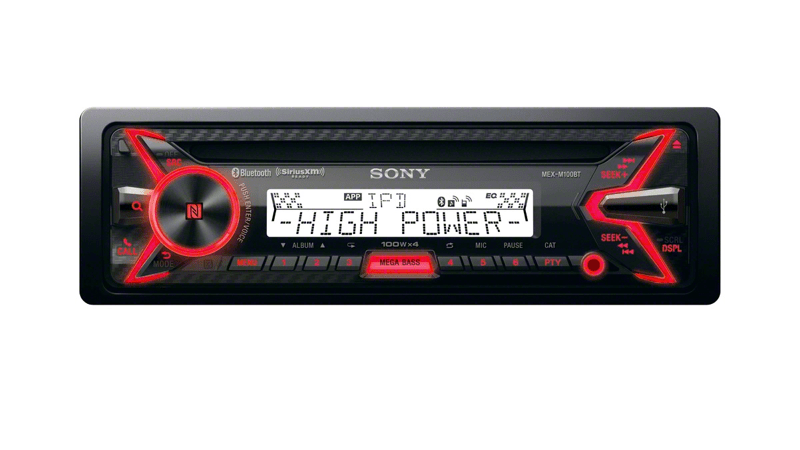
Source Unit OptionsIf you are building a street rod or are willing to take some liberties with the look of your dash, then cutting an opening for a single-DIN radio or making a console for a double-DIN radio provides you with an excellent opportunity to have all the latest features and technologies right at your fingertips.

Bluetooth hands-free calling is essential to your safety when on the road. Audio streaming will let you play music from your smartphone or a streaming service wirelessly to your radio. Digital media file playback provides you with a way to access your modern MP3 music collections. Finally, navigation systems can help get you where you want to go quickly and safely.

Many modern radios have the ability to change the color of the controls and the display. You can match the color of your radio to a set of incandescent bulbs in the gauges of a ’30s roadster or the blue glow of a set of new digital gauges. Some people set the radio to match the color of the car.

Contemporary Performance and Classic Style

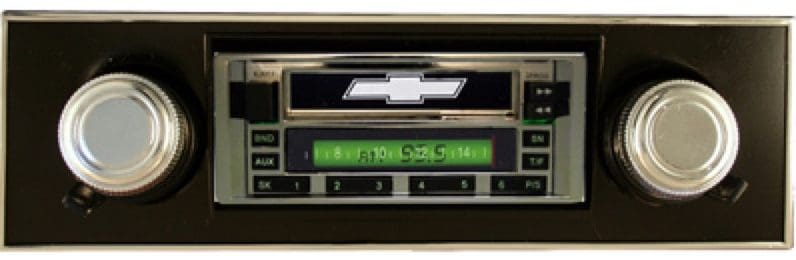
Several manufacturers produce modern radios with traditional twin-shaft mounting systems. These radios include features like USB ports for your digital media collection or your Apple iPod or iPhone. Bluetooth audio streaming and hands-free calling functions are standard on many models, and SiriusXM satellite radio connectivity will let you enjoy genre-specific programming from coast to coast.

These radios feature vintage styling with simple LCD and LED displays where the old analog tuner used to be. Multi-function knobs on either side of the primary display handle controls for volume, tuning and source selection functions. These radios include between 18 and 25 watts of power from the built-in amplifier and have pre-amp outputs for adding external amplifiers.

Connectivity with the latest devices may not be as up to date as with a modern aftermarket radio, but these vintage radios can conceal themselves well in your dash.

The Hidden Radio Solution

Source Unit OptionsIf you are working hard to keep the interior of your vehicle looking original, then your best bet is not to show off a new radio at all. Some people will mount an aftermarket radio in the glove box or under the front seat. These radios are still accessible while you’re driving, but not as easily.

For several years, the hot ticket was to install a marine radio in the trunk or a storage compartment. The driver would have access to a wired remote control to change the volume or source. These marine remotes often include small displays to let you know what station or track you are enjoying.

Modern marine source unit remote solutions include IR and RF remotes, as well as iPod or iPhone remotes that use WiFi for communication. You can use your radio quite easily without being able to see it at all.

Custom Remote Control Solutions

One “trick” that people often forget about is to use an OEM steering wheel audio control interface with a set of custom switches to control the radio. Your installer can program a set of switches with unique resistor values to perform almost any function you want. A spare four-way power window rocker switch makes a great volume and track selection control. You could use power window and power lock switches on a door to perform similar functions. The options for custom remote controls are nearly endless.

“Radio? We Don’t Need No Stinkin’ Radio!”

Source Unit OptionsThe modern smartphone has started to replace radios altogether in some projects. Being able to stream radio stations over the Internet or use services like Pandora or iHeartRadio makes your cellphone and its wireless Bluetooth connection the only source you may need.

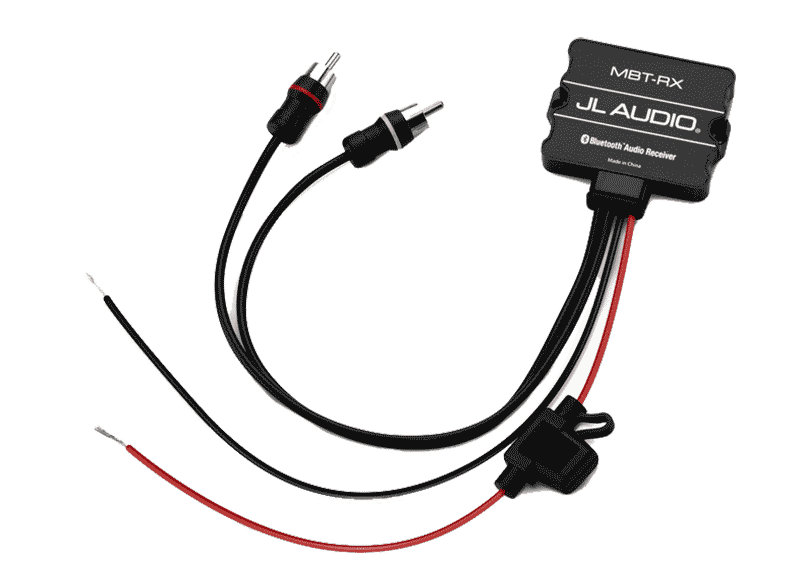
In the most basic of applications, your installer can connect a stand-alone Bluetooth receiver to a small amplifier and new speakers. The volume control on your smartphone will serve as the master volume control for the sound system. The system will power up as soon you connect to the Bluetooth module and start streaming audio.

If you are after a better-sounding system, then you may want to look at a signal processor with an optional Bluetooth streaming module. Several digital signal processors (DSPs) on the market can stream high-quality audio directly without the need for a source unit. The audio processing functions of the DSP will allow your installer to maximize the performance of each speaker in your system and create an amazing sonic experience.

Shop Local for Your Source Unit Options

Before you get too deep into your restoration or project build, contact your local mobile enhancement retailer today to discuss suitable source unit options for your vehicle. They will be able to explain the benefits of each system and provide you with all the information the restoration shop you are working with will need to bring the concept to fruition. No matter what source unit option you choose, having great speakers and amplifiers in your classic car or hot rod will make going for a cruise much more enjoyable.

This article is written and produced by the team at www.BestCarAudio.com. Reproduction or use of any kind is prohibited without the express written permission of 1sixty8 media.

Filed Under: ARTICLES, Car Audio, Classic Car Audio, RESOURCE LIBRARY

Product Spotlight: Sony WX-GS920BH

06/29/2017 By John Schwartz

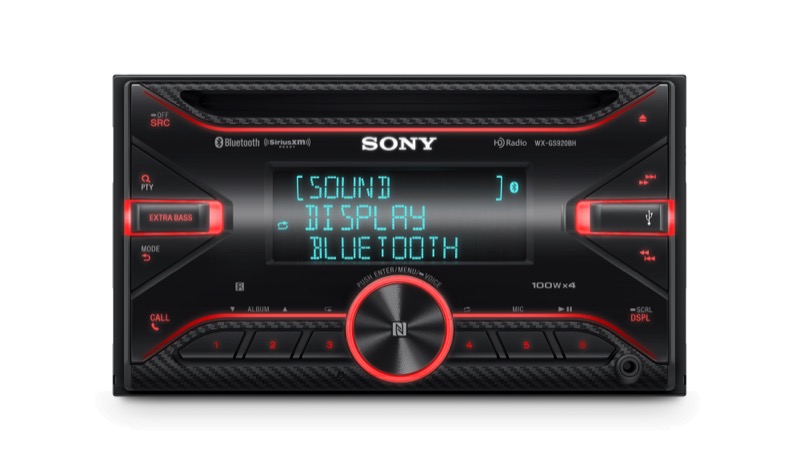
WX-GS920BHSony has just introduced the Double-DIN WX-GS920BH CD receiver, offering a beautiful, high-end solution with multiple ways to get your digital music into your dashboard while still providing the ability to play your classic CD tracks. With the popularity of smartphones and streaming audio solutions, CD sales have taken a back seat to digital entertainment delivery, but in the market for this type of head unit, the option must be there. Sony has loaded the WX-GS920BH with every feature you could want. Let’s take a closer look.

The Platform

WX-GS920BHWhy reinvent the wheel when you already have a garage full of race cars? The chassis for the WX-GS920BH is from one of their single-DIN receivers, but Sony has grafted a Double-DIN front panel to it. The space afforded by the single-DIN chassis can dramatically simplify installations by allowing the installer to tuck integration devices and adapters underneath the chassis.

Industry-leading Power to Spare

One of the highlights of the WX-GS920BH is the integrated high-power amplifier. Sony has been redefining the capabilities and expectations of what a head unit can achieve regarding powering a set of speakers. Most radios are capable of producing between 15 to 20 watts per channel. The Sony WX-GS920BH includes a built-in Class D amplifier that delivers more than 45 watts per channel of continuous (RMS) power. The result is a source unit that can dramatically outperform all others on the market and exceeds the capabilities of even some small amplifiers.

The Well-connected Gentleman

WX-GS920BHThe WX-GS920BH includes an AM/FM receiver with built-in HD radio, front and rear USB ports, and front and rear auxiliary inputs that also is SiriusXM-ready. The USB ports are compatible with a memory stick containing MP3, WMA, AAC, WAV and FLAC files. The front USB port can provide 1 amp of current for charging a phone, while the rear can provide 1.5 amps. Both USB ports support iPhone and Android phone music playback.

The built-in Bluetooth 3.0 transceiver supports hands-free calling, as well as A2DP audio streaming with AVRCP version 1.5 support. The WX-GS920BH supports two active Bluetooth connections, allowing one to play music and the other for phone calls or media.

An important safety feature included in the WX-GS920BH is Siri Eyes Free and Android voice recognition activation. Pressing and holding the volume control for more than 2 seconds activates your smartphone’s voice recognition capabilities. You can make phone calls, ask the unit to play music, or listen to incoming SMS messages and reply by simply talking.

The WX-GS920BH supports Pandora over a Bluetooth connection to any smartphone. You have the option of giving thumbs-up or down feedback to refine your musical tastes further.

The rear panel of the WX-GS920BH includes front, rear and subwoofer RCA outputs rated at 5 volts. Sony includes connections for a steering wheel control interface, as well as the included external Bluetooth microphone, and the compact RM-X231 IR remote control with the WX-GS920BH.

Handsome and Intuitive Interface

WX-GS920BHThe front panel of the WX-GS920BH includes a large three-line display. The illumination of the screen and the controls can be adjusted separately from almost 36 thousand different colors. A large rotary volume control and over-sized buttons make using the WX-GS920BH possible when wearing gloves.

Signal Processing Suite

WX-GS920BHThe WX-GS920BH includes Sony’s EQ10 10-band graphic equalizer and several built-in signal delay presets. The positioning system includes options for subwoofer placement as well – something unique in a standard receiver. You can choose from near, normal and far positions to further fine-tune the system.

Sony has been generous with the built-in crossovers. The front and rear RCA outputs and the internal power amplifier have crossover frequency and filter slope options. Since the WX-GS920BH has a lot of power built in, Sony has included a function called Subwoofer Direct Mode. You can connect a 2 ohm subwoofer directly to one rear speaker output of the WX-GS920BH to power it from the head unit itself, eliminating the need for a separate small amplifier. This wiring configuration provides more than 120 watts of power to the subwoofer and can provide plenty of great sounding bass for most users.

Sony WX-GS920BH Digital Media Receiver

If you are in the market for an amazingly well-appointed double-DIN receiver, then the Sony WX-GS920BH checks off everything that matters regarding a feature list. Visit your local authorized Sony retailer for a price to install the WX-GS920BH in your vehicle, including a wire harness adapter, steering wheel interface and appropriate dash kit.

This article is written and produced by the team at www.BestCarAudio.com. Reproduction or use of any kind is prohibited without the express written permission of 1sixty8 media.

Filed Under: Car Audio, PRODUCTS, RESOURCE LIBRARY Tagged With: Sony

Automotive Battery Science: How Batteries Work

06/25/2017 By John Schwartz

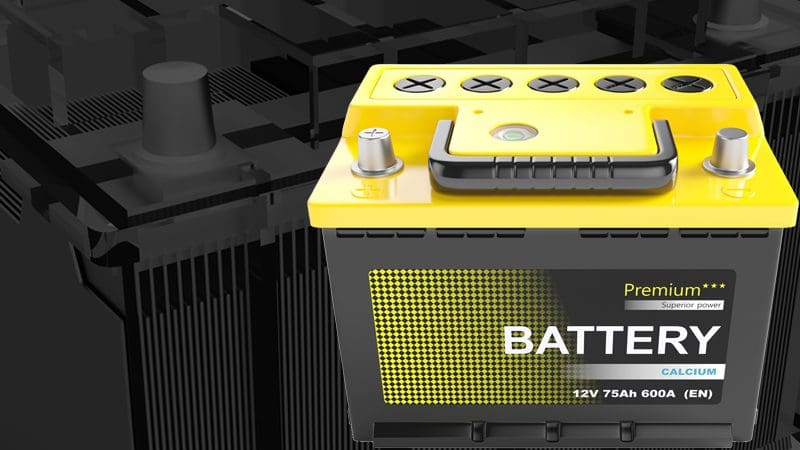
Automotive BatteryYour automotive battery is one of the most important, and most often overlooked, electrical components in your vehicle. If your battery is not in good condition, you can be stranded, and other components in your vehicle may be damaged. This article discusses how batteries work and how to take care of them.

What is Inside an Automotive Battery?

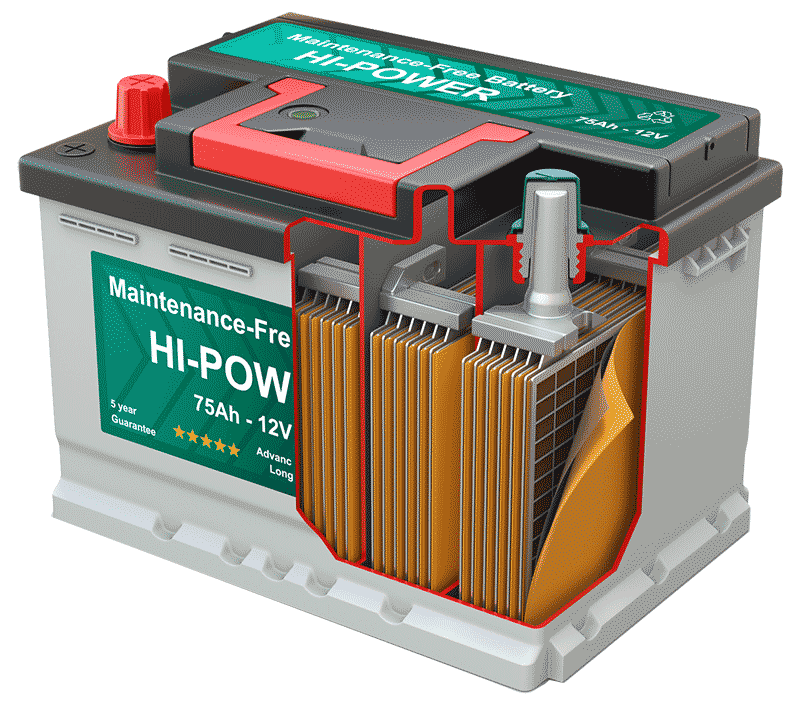
Automotive BatteryInside a typical car battery are six smaller energy-producing components called cells. Each cell contains a series of electrodes or plates. The positive plate of the battery is lead [eroxide (PbO2). The negative plates of the battery are pure lead in a soft, sponge-like state. The plates within each cell are arranged in alternating layers for a total of 16 components. All of the positive plates in a cell are wired in parallel, as are all of the negative plates.

Each cell produces roughly 2 volts of electricity. The six individual cells are wired in series with one another so the voltage generated by each cell adds together. The result is 12 volts.

Are You Ready for the Chemistry?

A diluted solution of sulfuric acid (H2SO4) surrounds the plates. The ratio of acid to water (H2O) is typically in the region of three parts of water to one part of acid.

When we connect a load to the external terminals of the battery, a chemical reaction starts to take place. Our diluted sulfuric acid mixture comprises H2SO4 and water (H20). As the reaction commences, the sulfuric acid splits into positive hydrogen ions (2H) and negative sulfate Ions (SO4).

Automotive BatteryWhen the hydrogen ions reach the lead peroxide plate, they absorb electronics from it and become a hydrogen atom. This process attacks the lead peroxide to produce lead oxide (PbO) and water (H2O). The lead oxide reacts with the sulfuric acid to form lead sulfate (Pb SO4) and water (H2O).

Negative sulfate ions move freely within the solution. As they reach the pure lead plate, they give up their extra electron and become what is known as a radical sulfate. As a radical sulfate cannot exist on its own, it will attack the pure lead plate to produce lead sulfate (PbSO4).

The action of positive hydrogen ions taking electrons from the lead peroxide plate, and the negative sulfate ions giving electrons to the pure lead plate produce an electron imbalance. These electrons flow through the external load to try and balance themselves. This process is how the battery provides power to our load (light, amplifier, heater or computer).

The Chemistry behind Battery Charging

Automotive BatteryWhen we apply an external DC source to the battery, we reverse the process. An external DC source such as an alternator or a battery charger feeds electrons to our positive lead sulfate-covered lead peroxide plate and the negative lead peroxide-covered lead plate. During the charging process, the density of the sulfuric acid solution falls, but we still have positive hydrogen ions and negative sulfate ions.

The positively charged hydrogen Ions more toward the negative terminal of the external DC source. Each hydrogen ion takes one electron from the negative plate to become a hydrogen atom. These hydrogen atoms attack the lead sulfate to produce lead and sulfuric acid.

The negative sulfate ions move toward the positively charged plate. When they get there, they give up their extra electron to become radical sulfates. This radical sulfate reacts with the lead sulfate, and forms lead peroxide and sulfuric acid.

We Can Simplify that a Lot!

In a nutshell, the negative terminal of a lead-acid battery has an over-abundance of electrons. When you connect a load to the battery, the electrons scramble through the load to get to the positive terminal. This electron flow is what allows the battery to provide energy to do work.

When we apply a voltage to the battery that is higher than its resting voltage the electron flow reverses. The sulfate layers on the plates are converted back to lead and sulfuric acid.

Battery Charging: Calm Down – What’s the Rush?

About the worst thing you can do to a car battery is to rush the charging process. If you rush the recharging chemical reaction, the lead sulfate will heat up and adhere permanently to the lead and lead peroxide plates. Once it is stuck there, we can no longer use that area of the plate to flow electrons, and we have reduced the effective size of the battery.

Automotive BatteryYou probably have heard the expression “a battery is never the same after it has been killed.” This statement is very true if the battery is not charged gently and thoroughly.

When you want to recharge your battery properly, keeping the process slow will allow the chemical reaction to take place at a controlled rate. If you are using a high-quality, computer-controlled charger (and you should be!) there are two major charging stages. The first stage is called bulk charging. The charger will maintain a constant current flow to the battery by adjusting the applied voltage.

How do you know if you are charging a care battery too quickly? Standard flooded batteries should not exceed roughly 120 degrees Fahrenheit during charging. We suggest that slower and cooler is always better. An absorbed glass mat (AGM) or gel battery should not exceed 100 degrees.

Once approximately 80% of the used energy has been returned to the battery, the charger will switch to the absorption stage. At that stage, the charger provides a constant voltage to the battery and the current flow diminishes as the battery reaches full charge.

How to Calculate Maximum Battery Charging Rates

A relatively large car battery may have a capacity of 70 or 80 amp-hours. This specification means that under ideal conditions, you can draw 1 amp of current from the battery for 70 or 80 hours. After that time, the battery will be considered dead.

To find the ideal charging rate for our 70 amp-hour battery, we divide this specification by 10 to get seven amps. The battery should be able to accept 7 amps of charging current without overheating. It is worth noting that, if the battery is completely discharged, it will take 10 hours to charge it. Remember, slower is better when it comes to charging batteries.

Taking Care of Your Car Battery

Automotive Battery
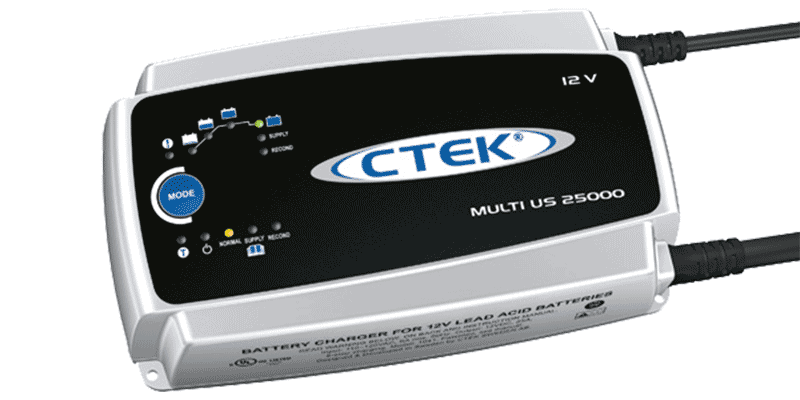
The CTEK charger is a great charger to keep your battery operating at its potential.

Some of us who are more fanatical about the care and maintenance of our car batteries will connect them to intelligent battery chargers several times a year. One rule of thumb is to charge your battery fully after each oil change, or four times a year. You should increase this frequency if you make short trips that do not provide adequate charging time. Likewise, time spent playing your audio system with the engine off can drain a battery very quickly. If you have been out with friends and your car battery has been depleted, put it on a high-quality charger overnight.

If you can access the acid solution in your battery, ensure that it is at the proper level, or at the very least, is covering the lead plates completely. A hydrometer should be used to confirm the specific gravity of the solution, but if it is low, adding distilled water is better than doing nothing. That little green “eye” included in some batteries is a hydrometer. When it disappears, the chemical balance within the battery is off and it needs to be charged.

Your local mobile electronics retailer may have a battery load tester that they use before every remote car starter they install. If you are concerned about the condition of your battery, ask them to check it. Being stranded due to a dead battery when the temperatures get cold is frustrating if you are trying to get home or to work.

Ensure the battery terminals and connections to your vehicle are clean and secure at all times. A loose connection can have a dramatic adverse effect on the functionality of your electrical system.

If you need a new battery, check with your local mobile enhancement retailer first. They often have extensive experience in upgrading batteries and can help you choose a solution that will ensure your car is ready to go every time you turn the key.

This article is written and produced by the team at www.BestCarAudio.com. Reproduction or use of any kind is prohibited without the express written permission of 1sixty8 media.

Filed Under: ARTICLES, Car Audio, RESOURCE LIBRARY

  • « Previous Page
  • 1
  • …
  • 43
  • 44
  • 45
  • 46
  • 47
  • …
  • 82
  • Next Page »

801 EAST 82ND AVE
ANCHORAGE ALASKA 99518
907-563-8112

Copyright © 2026 | Site design by award-winning creative agency D'zine Alaska , with site support by 1sixty8 Media and Modern Media Geeks.