Perfectionist Auto Sound and Security

Alaska's Most Award Winning Auto Customizer

  • About Us
    • Why Choose Us
    • Meet Our Team
    • Our Awards
    • Virtual Tour
    • Community Engagement
  • Signature Products
    • DroneMobile
    • SoundShield®
  • Services
    • Remote Car Starters
      • Vehicle Security
    • Car Audio
      • Sound Deadening
    • Custom Fabrication
    • Driver Safety
      • Bluetooth
      • Blind Spot Safety Systems
      • Camera Systems
      • Navigation Systems
    • Laser And Radar Detectors
    • Lighting
    • Offroad and Marine
      • Motorcycle Audio
    • Custom Interiors
    • Performance
      • Tires and Wheels
      • Suspensions / Lift & Lower
    • PRO Commercial Division
  • Gallery
    • Photos
    • Videos
    • Wallpaper Downloads
  • Contact Us
    • FAQ
    • Feedback
    • Join Our Team

Basics of OEM Integration in Your Newer Vehicle

04/09/2017 By John Schwartz

OEM IntegrationInstalling a mobile audio system involves much more than just hooking up some wires and driving in a few screws. Almost all vehicle manufacturers have realized that some amount of audio system tuning will dramatically improve their customers’ experience. When you decide it’s time to upgrade your factory audio system, we need to take into account any tuning that may have been done by the factory. It’s not easy, but at the same time, it’s not impossible. This article provides a brief look at what is involved in connecting a new amplifier and speakers to your factory source unit or amplifier, or as it is called, OEM integration.

It’s Not Flat

No, we aren’t talking about the Earth. One of the first steps in designing a premium audio system upgrade is to measure the electrical signal that is being sent to each of your speakers. Why? As we mentioned, more and more factory source units and amplifiers include advanced signal processing. Even some of the most basic audio systems with only four speakers have custom equalization for each speaker. Once our installers know what they are dealing with, they use that information in designing your new system.

OEM IntegrationThe signal measurement process should be done before system design. If the signal is flat (no equalization), then the system design may take a different direction from when the signal is equalized. Compensating for factory equalization requires that some kind of equalizer be installed in the new system. Either way, we have to allot time to measure the acoustical response of the new system and make appropriate adjustments.

Think of this process as though your installer were a surgeon preparing to solve a medical problem for you. The surgeon will order x-rays, scans and many tests long before you’re on the operating table. Nobody wants to start work on a project without knowing what they are dealing with. Modern car audio systems are no different.

Front and Center
OEM IntegrationAutomobile manufacturers strive to make all their customers happy – within a certain budget. This goal includes providing an enjoyable audio experience for everyone in the vehicle. Many mid- and high-level factory audio systems use a center channel to help create a listening experience that is enjoyable for both occupants of the front seats. Configured properly, a center channel can help create a realistic soundstage from both seating positions. Trust us when we say that some of the people who tune these factory audio systems have a lot of experience doing what they do.

When we want to upgrade the audio system in a vehicle with a center channel, we have to reverse-engineer how that speaker is functioning. Is it a mono signal that is the sum of the left and right signals? Is it an up-mixed signal that plays sounds that are not reproduced by the left and right speakers? It could also be a little bit of both. Your installer will have to do some tests to decide what is happening and how to deal with it.

Do We Undo or Up-do?
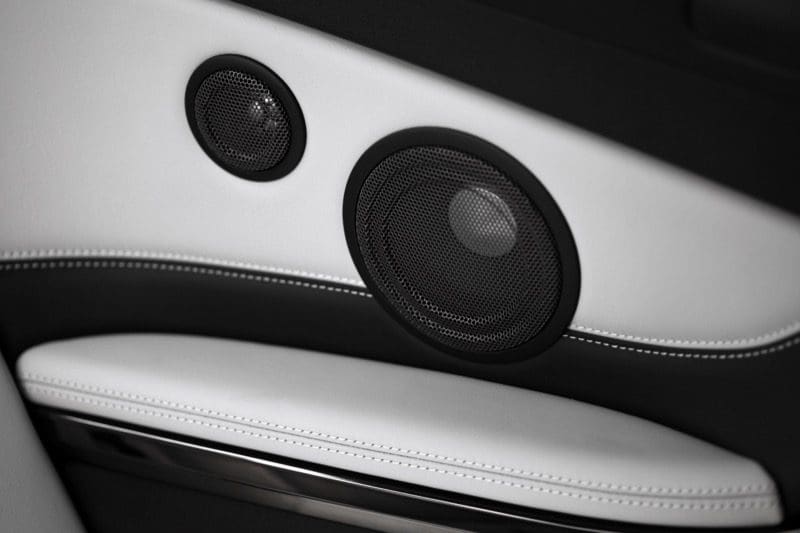
OEM IntegrationIf you have a vehicle with a genuine up-mixed center channel, one of the best ways to upgrade the audio system is to leave the processing alone and add better speakers, amplifiers and signal processing. With this method, we can create a sound system that sounds amazing from both the driver and passenger seats.

The basic concept is to take the left, center and right signals; recombine any frequency filtering; then send those three signals to whatever speakers you choose for each side of the vehicle and the new center channel. Often, the new system will be a three-way speaker set in the doors and maybe the A-pillars, and a two-way system in the center. We will most certainly use a digital signal processor and/or an integration processor to do the signal filtering and tuning for the new system.

How We Undo What They Do
OEM Integration
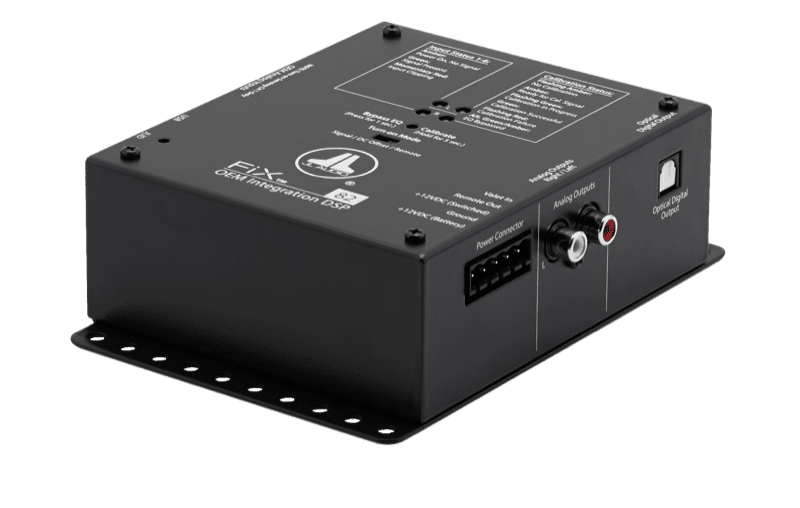
The JL Audio Fix 82 can “fix” a number of factory signal problems.

Several processors on the market can sum filtered channels together and undo factory equalization and time alignment. Some of these processors require manual adjustments and some work automatically with a custom setup track. After using one of these processors to provide a full bandwidth signal, we can then use digital signal processing to set up the new system and compensate for the vehicle acoustics. Just as the vehicle manufacturer chose to equalize the signal going to each speaker, we need to do this to maximize the performance of your new system.

What if We Don’t Undo What They Did?

Imagine a simple scenario: You have a car, perhaps a Nissan Altima. Even the base model audio system has equalization in this vehicle. Equalization is based on the speaker that is being used, location of the speaker and acoustic effects of the vehicle on the signal from that speaker relative to the listening position. If we change the speaker to one that is better, the factory equalization can – and most likely will – work against us. That nice new speaker may sound worse than the cheap factory speaker. After all, the manufacturer tried to make what was likely a low-quality speaker sound OK.

Trust Your Local OEM Integration Experts

When it comes time to upgrade the audio system in a fairly new vehicle, make sure you are working with a mobile electronics retailer that knows how to evaluate the existing audio system properly. If you are changing the source unit, then it’s no big deal. But if you are using the factory radio and/or amplifier, proper testing is crucial. Don’t be scared or discouraged. A well-trained retailer can transform any audio system into something truly amazing! Drop in and see what they can do for you.
This article is written and produced by the team at www.BestCarAudio.com. Reproduction or use of any kind is prohibited without the express written permission of 1sixty8 media.
Filed Under: ARTICLES, Car Audio, Integration, RESOURCE LIBRARY

Why are Speakers Different Sizes?

04/02/2017 By John Schwartz

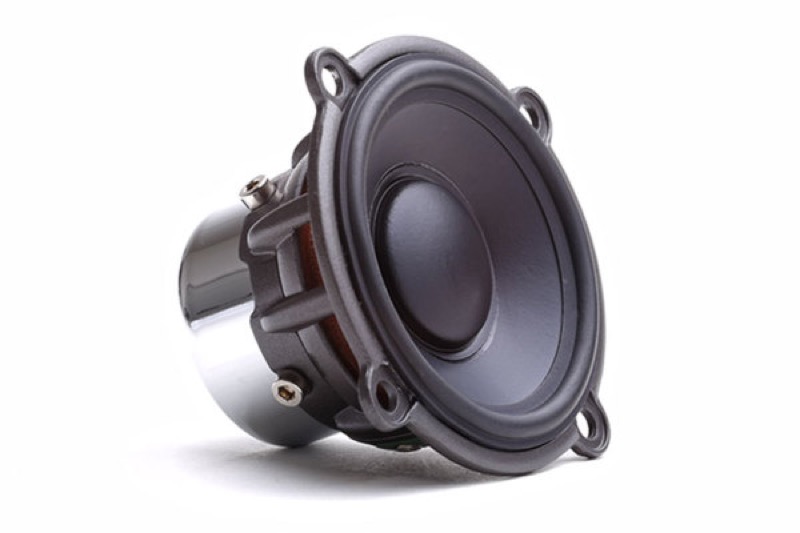
Speakers Different SizesWhen you head to your local mobile electronics specialist in search of new speakers, there are a few criteria to keep in mind. Choosing a speaker size can go one of two ways: You can pick something that fits a specific mounting location or you can choose based on the characteristics of the speaker relative to its size. Are you interested in knowing why speakers come in different sizes? Good! You’ve come to the right place.

What Does a Speaker Do?

It is the job of a speaker to convert the electrical signal from your amplifier into motion. The motion of the speaker cone excites the air around it. As the cone moves forward, the air in front of the cone is pressurized. As the cone moves rearward, the air is rarefied. These pressure waves extend out from the speaker and our ears detect these minute changes in pressure as sound. Pretty simple, isn’t it?

Things to Consider in Terms of Reproducing Sound

Speakers Different SizesWhen it comes to reproducing sounds, the lower the frequency, the harder it is to produce the sound. For every doubling of frequency, the speaker cone has to move a quarter the distance to produce the same level of output. As example, if your subwoofer has to move 2 mm to produce 95 dB of output and 40 Hz, it only has to move 0.5 mm to reproduce 95 dB at 80 Hz. To reproduce 95 dB of output at 160 Hz, the cone only has to move 0.125 mm.

The size of a speaker cone affects how much sound the speaker will create for a given amount of input signal. Let’s generalize things a little (because a lot of external factors affect this statement): A 12-inch speaker cone has to move twice as far as a 15-inch speaker cone to produce the same amount of output at a given frequency. That also means the 12-inch speaker requires more power to produce the same sound as the 15-inch.

Bigger is Always Better, Right?

Based on this logic, you should simply select the biggest possible speaker for every application, right? Well, it’s not quite that easy. When we get into midrange and high frequencies, the speaker cone has to move back and forth very fast. A 1,000 Hz tone requires that the speaker move forward and backward 1,000 times a second. A 10 kHz tone requires 10,000 of these same motions per second. If we use a big speaker with a relatively heavy cone, it’s very hard to keep up with the input signal. Why? Inertia.

Speakers Different SizesLet’s use an analogy to help explain this. Imagine that you are at a parade and waving a flag. The pole is 6 feet long and the flag on the end is 3×5-foot. You wave the flag back and forth as fast as you can. Even if you are really strong, the fastest you can wave it back and forth is once, maybe twice a second. Now, look at the little kid standing beside you at the parade. He has a little paper flag that’s 2×3 inches on a 5-inch-long plastic stick. His little hands can wave that flag back and forth five or six times a second.

Speaker engineers have to balance several characteristics to achieve specific goals for a given design. Let’s compare the weight of a speaker cone for a 10-inch subwoofer to that of a 10-inch midrange used in concerts and public address systems. A typical 10-inch sub that is designed to play frequencies below 150 Hz has a cone assembly (cone, voice coil, former, half the spider and half the surround) that weighs around 150 grams. A 10-inch speaker designed to be used for midrange frequencies (150 to 1 kHz) has a cone mass assembly of around 40 grams.

Clearly, the lighter assembly can move faster and keep up with the reproduction of higher frequencies.

Is Lighter Better?

Now we face the conundrum of balancing low- vs. high-frequency output. A lighter cone will move faster and is capable of producing extended high-frequency output. A heavier cone has a lower resonant frequency and thus, can produce more low-frequency output. Combine these generalizations with electrical issues affecting voice coil inductance, and we further hinder high-frequency output. It starts to become clear that we need different-sized speakers for different applications.

Subwoofers

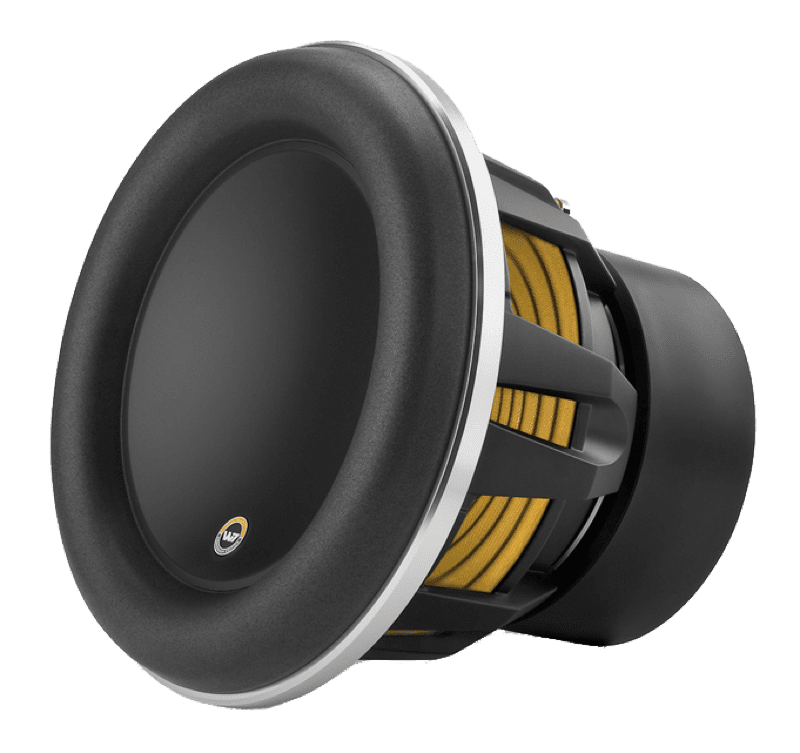
Speakers Different SizesMost subwoofers are sized from 8 to 18 inches. Since subwoofers are designed to play frequencies below 100 Hz in car audio applications, they need a lot of excursion capability and a low resonant frequency. This means subwoofers will have relatively heavy cones. At high excursion levels, cones are exposed to significant stresses, so the cone has to be strong, and this further contributes to their weight. Subwoofers have to handle a lot of power. This power allows us to move the cone over relatively large distances. Power handling requires bigger components in the form of large-diameter voice-coil formers and windings.

Midbass Drivers

Speakers Different SizesA dedicated midbass driver is typically designed to play from around 50 to 500 Hz. Sizes are typically 6.5 to 8 inches in size, but some people have used 10- and 12-inch drivers. The cone has to be heavier than that of a midrange, but not heavy enough to slow it down for higher frequencies.

If you look at the frequency content of a performer, you will see that many voices extend down to 100 Hz. Accuracy in speed is important in this frequency range. Resonances and non-linear behavior causes harmonic distortion. This is often perceived as “warmth” in the midbass region. We do not want anything extra in our music, so accuracy is what matters.

Midrange Speakers

Speakers Different SizesMidrange speakers become a balancing act of several different characteristics. Of course, the cone has to be relatively light, but managing linearity and distortion becomes an even higher priority. It’s easier to hear distortion at midrange frequencies. The cone has to balance mass, damping and strength to prevent deforming and cause harmonics. The suspension has to be very linear.

Managing inductance also becomes a more significant issue because it can reduce high frequency output. Midrange drivers for typical car audio applications vary in size from 6.5 inches and 6×9 inches on the large side down to as small as 2.5 inches. Many midrange drivers try to do double-duty as midbass drivers for use in two- or three-way audio systems. While this is a minor compromise, it is a necessity. We consider midrange speakers to cover the range from 100 Hz to 3,000 or 4,000 Hz.

Tweeters

Speakers Different SizesTo reproduce frequencies above 2.5 kHz, tweeters need very light cones. Tweeter cones don’t move very far, so they don’t require much excursion, but there still has to be a suspension. Resonances in the cone can wreak havoc with frequency response. Premium tweeters may make use of features like ferrofluid in the gap to improve power handling. Premium tweeters may also include a copper pole-piece cap to reduce inductance and distortion.

Directivity Considerations

Another consideration when choosing speakers is that all speakers above a certain frequency start to become directional. Directivity refers to a reduction in high-frequency output as you move off-axis to the speaker. If you choose your speakers and design your system carefully, you can minimize the effect of directivity. The only real consideration would be to have your tweeters pointed at you.

The Balancing Act

The applications for the information in this article vary, depending on your overall goal for your audio system upgrade. A simple set of coaxial replacement speakers will be chosen by the size application. If you are building a high-end audio system with multiple amplifiers, channels, digital signal processing and custom speaker mounting locations, then choosing the right speakers in terms of their quality and intended application becomes more important.

Learn More about Speakers and Their Different Sizes at Your Local Retailer

Your local mobile electronics specialist retailer can help you choose the right speakers for your application and performance goals. Drop in at a local shop today and have a listen to their demo board or demo vehicle. It’s an amazing experience!

This article is written and produced by the team at www.BestCarAudio.com. Reproduction or use of any kind is prohibited without the express written permission of 1sixty8 media.

Filed Under: ARTICLES, Car Audio, RESOURCE LIBRARY

Product Spotlight: Sony XAV-AX100 Media Receiver

03/28/2017 By John Schwartz

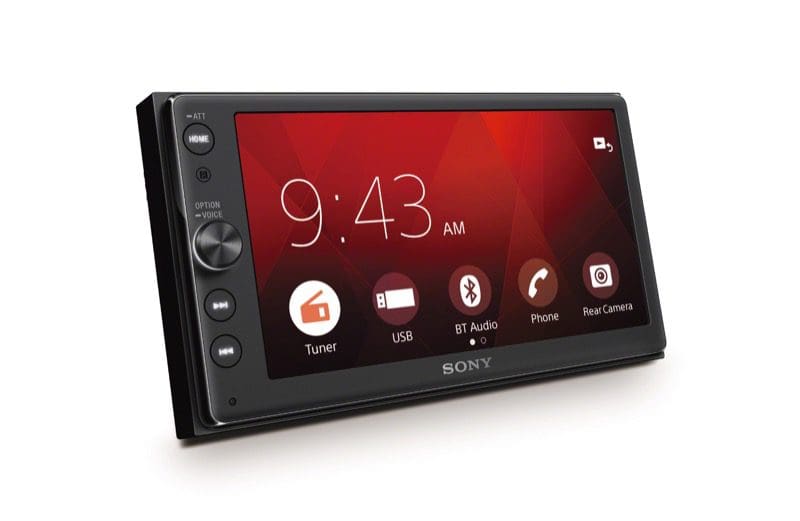
Sony XAV-AX100Sony, one of the industry leaders in the design and manufacture of car audio products, recently launched their XAV-AX100 Media Receiver with Bluetooth. The XAV-AX100 is Sony’s first head unit with Apple CarPlay and Android Auto. Let’s see what makes this Double-DIN such a major success.

Design and Interface

The XAV-AX100 features a double-DIN front panel with a large (6.4-inch) touchscreen. Sony has chosen a premium-quality display for the XAV-AX100 that offers excellent anti-glare properties and bright backlighting. This screen selection has made the XAV-AX100 a popular selection for convertibles and vehicles with bright interiors.

A rotary volume control and mechanical track selection buttons on the left side of the screen provide users with an intuitive interface. Above those controls is a Home button to make menu access equally quick and easy. Sony includes an IR remote control with the unit to let your back-seat passengers have control over the music.

The styling of the XAV-AX100 is simple and understated. There are no flashing lights that make it stand out once installed. It looks like an OEM radio, and that is a feature that some buyers appreciate.

Sony XAV-AX100 Features

Sony XAV-AX100The XAV-AX100 includes an AM/FM radio receiver with RDS support. The rear-mounted USB connection works with both Android and Apple iPhone smartphones, or a memory stick for multimedia files. Supported multimedia formats include MP3, WMA, AAC, WAV and FLAC audio files, as well as MPEG-4, WMV, FLV, AVI and MKV video files. Maximum video file playback resolution is 720×576 pixels. The USB port on the rear of the chassis can supply up to 1.5 amps of current to charge phones quickly.

The XAV-AX100 includes Bluetooth communications for hands-free calling, as well as A2DP audio streaming. The Bluetooth profiles include AVRCP remote control functionality and PBAP phonebook access.

CarPlay and Android Auto

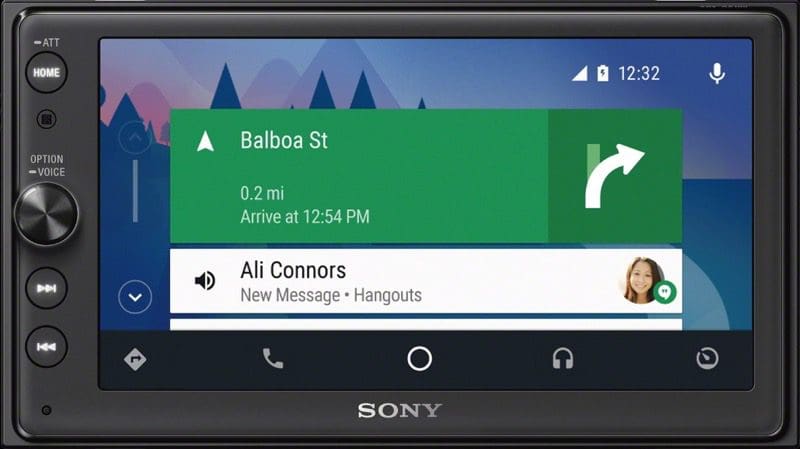
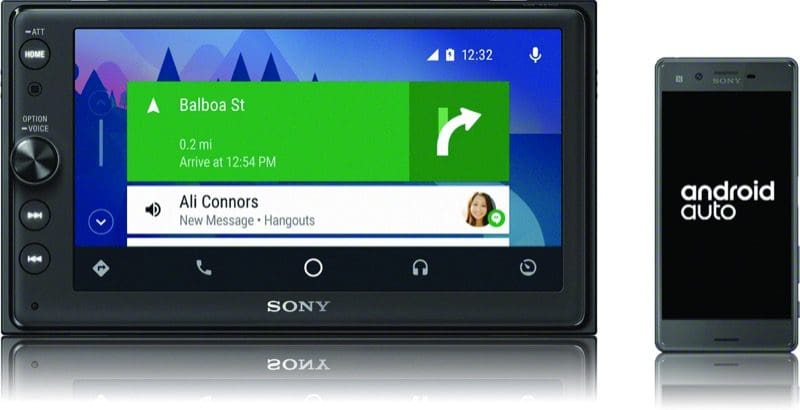
Sony XAV-AX100The highlight of the XAV-AX100 is, of course, its smartphone integration capabilities. Once you connect your phone, accessing information and staying in touch are as easy as saying “Hey, Siri,” “OK, Google,” or pressing a button and talking to the radio. Sending and receiving text messages, making phone calls, or choosing the music you want to enjoy is as simple as asking for it. You can even get turn-by-turn navigation thanks to Apple Maps or Google Maps. Both platforms will provide traffic flow information to help make your time behind the wheel safe and efficient.

Sony XAV-AX100Users can connect their iPhone for Apple CarPlay or Android phone for Android Auto without the need to make any menu or setting adjustments. Owners of the XAV-AX100 who have both iPhone and Android phones appreciate being able to switch between the two quickly and easily

External Connectivity

The XAV-AX100 has a dedicated input for an OEM steering wheel control interface, as well as the new Axxess InfoLink interface. The InfoLink interface allows the XAV-AX100 to integrate with vehicles from Ford, GM, Chrysler, Audi, Mercedes, Volkswagen, Mazda and Toyota. InfoLink supports functions such as steering wheel audio controls, HVAC controls and display, audio signal interfacing, and much more.

The XAV-AX100 is also compatible with the new Sony XA-NV400 add-on navigation module for a seamless interface and directions regardless of cellular connection. If you are traveling across the border, this onboard navigation system can keep you on the right road without incurring roaming charges on your cellphone. The XA-NV400 runs TomTom navigation software, which is easy to learn and use.

Sony has included a backup camera video connection and a trigger wire. As soon as you select reverse, the camera image appears on the screen to make backing up safer and easier.

System Configuration

Sony XAV-AX100The XAV-AX100 has a built-in four-channel amplifier that will provide 20 watts per channel of continuous output and up to 55 watts max per channel. Three sets of RCA output jacks are on the rear of the chassis and assigned to the front, rear and subwoofer functions. The front channels have selectable frequency high-pass filters, and the subwoofer output has low-pass filters. The preamp outputs are rated to provide 2V RMS of signal. Connections for dimming, reverse and the parking brake are also par for the course for your installer.

The XAV-AX100 is the first unit in this new series of source units for Sony. We can expect that new models will appear over the next year with more features. If you are looking for an aggressively priced smartphone integration solution, it is hard to ignore the Sony XAV-AX100. With classic and elegant styling, an easy-to-view screen, and an intuitive interface, it doesn’t have much competition. Visit your local authorized Sony car audio retailer today check out the XAV-AX100 or yourself.

This article is written and produced by the team at www.BestCarAudio.com. Reproduction or use of any kind is prohibited without the express written permission of 1sixty8 media.
Filed Under: Bluetooth, Car Audio, Integration, PRODUCTS, Smartphone Integration

Why Buy A Bigger Amplifier?

03/26/2017 By John Schwartz

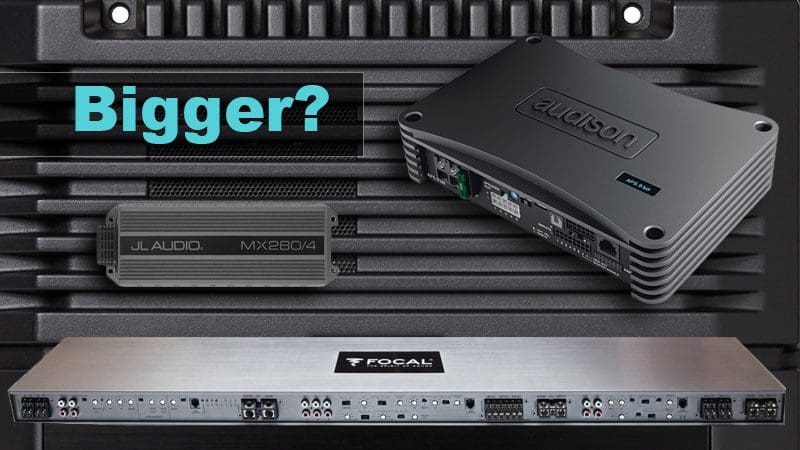
AmplifierWhen an audio enthusiast goes shopping for an amplifier, the question of “how much power do I need?” comes up almost every time. There are a few factors to take into consideration when answering this question. This article looks at those factors and provides some technical background to help support your decision.

Why Do We Need Power?

AmplifierQuite simply, when you send more power to a speaker, it moves farther and produces more output. Two limiting factors within the speaker itself control how much power it can handle. At higher frequencies, the limit is heat. Speakers are notoriously inefficient. The best convert about 2% of the energy sent to them into sound and the rest is converted to heat. When you send 60 watts of power to a speaker, most of that energy heats up the voice coil and the components around it. Eventually, those components will reach a temperature where they will fail. The speaker will usually stop working at this point, or shortly after.

The second limiting factor is how far the speaker can move. Inexpensive midrange speakers may be able to move back and forth about half an inch without creating massive distortion. Higher-end speakers have as much as twice as much cone excursion capability. (Speakers don’t sound the same at high volumes as they do at low. Audition your speakers at the volume you will be using them.)

Power vs. Output

Power works like this: When you double the power going to a speaker, the output increases by 3 dB. That is not a large amount. In fact, it is the smallest change in amplitude that is perceivable across the audible frequency range. (1 dB is the smallest perceivable change in amplitude where our hearing is most sensitive – 1 to 2 kHz).

Perceived volume is a different beast. An increase of 10 times the power sent to a speaker produces a doubling of perceived volume.

Speaker Efficiency

Another consideration in choosing an amplifier is the efficiency of your speakers. An inexpensive conventional midrange speaker may produce an average output of 91 dB when measured 1 meter away from the speaker cone and when driven with 1 watt of power. A high-quality speaker will likely be less efficient, but capable of playing over a wide range of frequencies. A measurement of 85 dB efficiency at the same distance and power level is not uncommon.

How Loud Do We Need it?

AmplifierA typical RMS sound pressure level for an orchestra, when you’re seated three or four rows back from the musicians, is around 100 dB. If we use our analogy of the 85 dB efficient speaker, we need 31.6 watts to get that speaker to play 100 dB. The problem is that this is the average power, not the peak power. Perhaps the performance crests at 110 dB? In that case, we need a peak power level of 316 watts. Just keep in mind that the speaker components are likely to melt if you keep this effort up for any significant amount of time.

We don’t suggest buying any speaker based on its efficiency. Criteria like linearity, lack of distortion, application limitations and frequency range are far more important. If you need it loud, buy more speakers, or larger speakers.

Distortion Happens

What happens if we run out of power in an amplifier? We get distortion. This distortion creates all sorts of high-frequency harmonic content. That increased high-frequency energy is what causes tweeters to fail. We need to choose an amplifier that will allow our speakers to play loudly enough without running out of power.

You are better off buying a 100 watt per channel amplifier and only using 50 watts than you are buying a 50 watt amplifier and occasionally causing it to distort. Remember, those 50 extra watts only result in an increase in output of 3 dB – assuming the speaker can handle it.

It Takes Power to Make Power

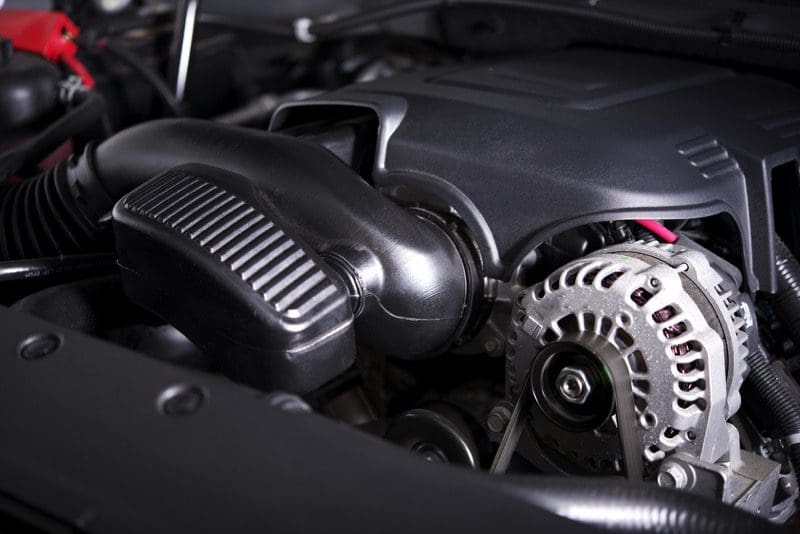
AmplifierA consideration that many people overlook is the ability to supply an amplifier with the power it needs to produce the power you want. Modern vehicles have electrical systems with reduced power production capabilities. Smaller alternators, smaller batteries and smaller wiring save weight. Reduced weight transforms into better fuel economy for the vehicle.

As a general rule of thumb for power consumption calculations, you can assume that every 100 watts of power from an amplifier will require about 10 amps of current from your electrical system. Yes, some amplifiers are more efficient than others, but this serves as a good, quick guideline.

If you want to purchase a 650 watt amplifier to power your subwoofer, then your electrical system (battery and alternator) has to be able to provide it with about 65 amps of current. This power requirement is on top of what is required to run the vehicle. The computers, lights, ignition system, radio and heater all consume power as well. On a modern compact car, it would be no surprise if you only had 30 to 40 amps of power left over for an amplifier.

You can get away with a big amplifier – but you can’t play it indefinitely, even with the vehicle running. Once you have exceeded the power delivery capabilities of the amplifier, the battery will start to supply current. You can kill a car battery, even with the vehicle running. Once you shut the car off, you may not have enough energy in the battery to restart it.

Blowing up Amplifiers

AmplifierAmplifiers do not like to be starved for power. When you run out of power to drive your amplifier, in most cases, the amplifier rail voltage starts to drop. Power starvation causes the maximum undistorted power production of the amplifier to decrease. We are back to the same scenario: Distortion causes harmonics, and harmonics can damage fragile speakers.

If you have had an amplifier fail, and the failure was because the power supply section of the amp self-destructed, chances are you were not able to feed the amp properly.

How Much Amplifier Power Do You Need?

The solution: Buy as much as power as you can afford. Buy the biggest that will physically fit in your application. Get the highest-performance amplifier you can. Make sure your installer uses properly sized wiring to install the amplifier. Upgrade your car battery to a high-performance, high-capacity unit if you need more reserve power.

For more information, visit your local mobile electronics specialist retailer. Be honest about your needs and expectations for your audio system. They will be able to suggest a solution that sounds fantastic and will offer years of reliable performance.

This article is written and produced by the team at www.BestCarAudio.com. Reproduction or use of any kind is prohibited without the express written permission of 1sixty8 media.

Filed Under: ARTICLES, Car Audio, RESOURCE LIBRARY

Perfectionist Offers Leather Upgrades for our Anchorage Clients

03/25/2017 By John Schwartz

Leather UpgradesPerfectionist Auto Sound and Security in Anchorage offers Katzkins leather upgrades for cars, trucks and SUVs.

When you go to buy a new vehicle, did you notice that leather seating often means buying thousands of dollars in options that you may not want? It can also put the vehicle at a price that is out of your budget. Fortunately, we have you covered.

Leather Upgrades Don’t Have to Cost a Fortune

Now that you know you can have the vehicle you have always wanted and add leather, why drive a vehicle with a cloth interior? We all know how leather feels to the touch. The scent alone is inviting. When you factor in how long a leather interior will last when cared for properly, it is a logical investment.

More Color Options and Styles

Leather UpgradesWhen you look at the options for leather on many vehicles, they are often limited to a single color. What if we told you that Perfectionist Auto Sound and Security could offer you multiple colors, not just one? To make it even more appealing, we often have two-tone packages for the seating to make whatever you drive to look more exotic. For some vehicles, we even have contrasting stitching or piping to give you an even more unusual look.

Improve the Resale Value

At some point, it is going to be time to sell your ride and move on to something new. All things being equal, a vehicle with leather interior will be worth more money than something done in cloth – and you will likely find it sells faster as well.

If Car Dealers Trust Us, So Can You

Car dealers all around Anchorage know that offering leather upgrade packages to their clients will help them sell more vehicles. Whom do they call? Why, us, of course. If they can trust us with their valued customers, you can trust with your vehicle.

Add Heated Seats as the Final Touch

Leather UpgradesWhile we are installing your leather interior upgrade, ask us about adding heated seats to your vehicle. If you have ever been in a vehicle that has these, you already know they are wonderful. The heat not only warms your body, but also soothes your back and relaxes your muscles.

See What We Can Do For You

The next step in upgrading your vehicle interior with leather is to come see Perfectionist Auto Sound and Security in person. Our team will look over your vehicle and listen as you explain your goals for the upgrades. Our staff will offer expert advice and help you design the best solution for your needs. Let us show you why we are one of the most-awarded retailers in all of North America.

You can also click HERE for more information about any of our products and services.

Filed Under: ARTICLES, Leather Interiors Tagged With: Heated Seats, Katzkins

  • « Previous Page
  • 1
  • …
  • 48
  • 49
  • 50
  • 51
  • 52
  • …
  • 82
  • Next Page »

801 EAST 82ND AVE
ANCHORAGE ALASKA 99518
907-563-8112

Copyright © 2026 | Site design by award-winning creative agency D'zine Alaska , with site support by 1sixty8 Media and Modern Media Geeks.