Perfectionist Auto Sound and Security

Alaska's Most Award Winning Auto Customizer

  • About Us
    • Why Choose Us
    • Meet Our Team
    • Our Awards
    • Virtual Tour
    • Community Engagement
  • Signature Products
    • DroneMobile
    • SoundShield®
  • Services
    • Remote Car Starters
      • Vehicle Security
    • Car Audio
      • Sound Deadening
    • Custom Fabrication
    • Driver Safety
      • Bluetooth
      • Blind Spot Safety Systems
      • Camera Systems
      • Navigation Systems
    • Laser And Radar Detectors
    • Lighting
    • Offroad and Marine
      • Motorcycle Audio
    • Custom Interiors
    • Performance
      • Tires and Wheels
      • Suspensions / Lift & Lower
    • PRO Commercial Division
  • Gallery
    • Photos
    • Videos
    • Wallpaper Downloads
  • Contact Us
    • FAQ
    • Feedback
    • Join Our Team

Product Spotlight: Compustar Two-Way R3 with LTE

12/17/2019 By John Schwartz

Compustar 2-way

For 2020, Compustar, the world leader in remote car starter solutions, has upped its game by including a DroneMobile X1-LTE module with all of its two-way remote bundles. For this spotlight, we are going to look at the RFX-P2WR3-SS Pro two-way R3 with LTE package that features a single-button, long-range remote control and one of the new DroneMobile interfaces as a secondary way to control the starter system.

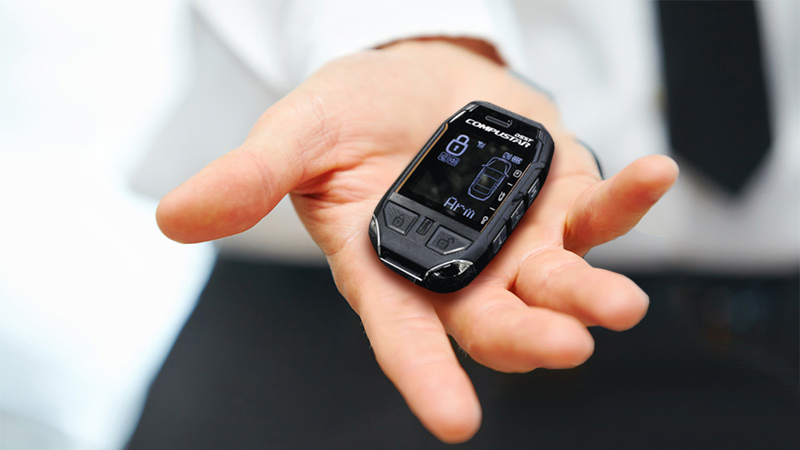
Compustar Two-Way R3 Remote Control

Compustar 2-wayThe radiofrequency (RF) remote included in this kit features a compact, one-button design that provides intuitive control over door locking and unlocking, as well as remote start functionality. A quick tap of the button locks the doors and, when equipped with optional security features, arms the alarm. Tapping the button twice in less than a second unlocks the doors and disarms the alarm. To remote start your car or truck, press and hold the button for three seconds. If you want to stop the engine, press and hold the button again for three seconds.

The Pro two-way R3 remote uses digital spread-spectrum technology to provide up to 2 miles (3.2 km) of range under ideal conditions. This amazing performance helps ensure that you can start your vehicle while inside a shopping mall, an apartment tower or office building where electrical interference and concrete and metal stud walls reduce the efficacy of radio-frequency communication. The strong signal transmission power means there’s no need to wait until you are outside to start your vehicle, and it will have more time to warm up.

Compustar 2-wayAfter each button press, an LED on the remote will flash to indicate that the command has been sent to the vehicle. Once the command has been executed by the system, the remote will beep, and an LED will flash. Unlike other products on the market, confirmation of remote starting is provided only once the engine is running. This two-way communication ensures that you always know the status of the vehicle.

Compustar Pro-Series remote controls are backed by an industry-leading three-year warranty against manufacturing defects. All of the remotes have a water-resistant design and feature a durable injection-molded plastic case that shrugs off day-to-day use and abuse.

DroneMobile Smartphone Control

DroneMobile is Compustar’s smartphone remote control interface. The RFX-P2WR3-SS package includes one of the new DroneMobile X1-LTE interfaces as a companion to the RF remote. The X1-LTE module uses a cellular data connection to communicate with the DroneMobile app on your smartphone to provide an effectively unlimited range. DroneMobile allows you to start your vehicle from anywhere that your smartphone has internet access. You can check the status of your vehicle while you’re in another country for business or vacation. As a bonus, if you’ve asked your retailer to add security features like the DAS II shock/motion/tilt sensor to your remote starter, the DroneMobile app will provide nearly instant alerts if the alarm is triggered.

DroneMobile ModuleWhile the R3 remote is ready to control your remote starter out of the box, the DroneMobile service requires a subscription. Compustar includes 30 days of DroneMobile Premium service for free when you activate your account. After 30 days, you can pick from one of three service packages to ensure that you are always in touch with your vehicle. Compustar includes a key tag and hangtag to make it easy to remember the interface serial number when it comes time to register the system at DroneMobile.com.

The service packages include the Basic option that provides car control — locking, unlocking, trunk release (if installed) and remote start — as well as alarm alerts and vehicle status information. The popular Premium package adds GPS-based warnings, geofencing, and point of interest and curfew alert functionality. If you’re a business owner, you may want to opt for the Premium Plus package that adds trip reporting in CSV format and idling alerts.

Never Get into an Uncomfortable Vehicle Again

If you dread cold winter mornings or scorching summer afternoons, visit your local authorized Compustar Pro dealer and ask about the new RFX-P2WR3-SS Pro R3 two-way with LTE remote package to make your car, truck or SUV more comfortable. For more information about Compustar products or to find a retailer near you, visit www.compustar.com. To keep up with the latest from the world’s top remote starter brand, follow Compustar on Facebook, Twitter, Instagram and YouTube.

This article is written and produced by the team at www.BestCarAudio.com. Reproduction or use of any kind is prohibited without the express written permission of 1sixty8 media.

Filed Under: ARTICLES, Car Audio, PRODUCTS, RESOURCE LIBRARY Tagged With: Compustar

Premium Audio and Radar Upgrade for Anchorage Porsche Cayman

12/16/2019 By John Schwartz

Porsche StereoA long-time client of Perfectionist Auto Sound & Security in Anchorage recently dropped by the store to inquire about upgrading the stereo system in his 2007 Porsche Cayman. He wanted the audio system in the Cayman to play louder, deliver smoother frequency response and produce more bass. The client also wanted a high-performance radar detector and laser defense system. After a thorough inspection of the vehicle, our team put together a bespoke solution that would meet the client’s expectations.
Porsche Cayman Stereo System Upgrade

The first step was to remove the majority of the interior from the vehicle so our technicians could run Stinger speaker cables and Digital Designs interconnects. Once the wiring was in place, we treated the floor, cargo area and doors of the vehicle with sound deadening to reduce noise transfer and improve the performance of the stereo.

Next, we installed a Pioneer AVIC-W8500NEX multimedia receiver in the dash. This premium source unit features a 7-inch capacitive-touch display and includes both Apple CarPlay and Android Auto smartphone integration. The smartphone features allow the client to use the voice recognition technology built into his phone to make calls, send text messages and choose from dozens of entertainment options.

Audiofrog Speaker Upgrades

The most-important part of an audio system upgrade is the front speakers. This client chose a set of Audiofrog GB60 woofers and GB10 tweeters for the system. Our fabrication team created custom mounting adapters out of HDPE plastic to attach the new speakers to the factory mounting point in the door. A set of Morel Tempo Ultra Integra 5.25-inch speakers in the rear speaker locations helps wrap the sound around the driver.

System Subwoofers and Amplifiers

Porsche Stereo
The custom Porsche crest was integrated into the enclosure.
Porsche Stereo
The small enclosure size required by the Audiomobile subwoofers was perfect for this installation.
Porsche Stereo
Our technicians created a custom acrylic label for the access panel.
Porsche Stereo
An access panel was created to allow filling of fluids.
Porsche Stereo
The excellent work of our fabricators resulted in a stock-looking installation.
Porsche Stereo
The electronics were mounted in the front boot.

After building a shallow enclosure for a pair of Audiomobile GTS-Series 10-inch subwoofers, the guys set to work on the custom trim panels. They mounted the woofers to a panel that is wrapped in perforated gray vinyl. Our team used our Glowforge laser to create a Porsche emblem in a piece of acrylic plastic. The emblem is centered between the subwoofers, and we built up the area around the emblem for a smooth, finished look.

The trim panel around the subwoofers features a pair of inserts at the rear of the vehicle that mimic the accent lines on the factory plastic panels. To continue the theme, we added raised sections to the rear edge of the panel to match those in the aluminum trim at the back of the cargo area. We also added a removable panel with a custom laser-etched badge to make it easy to access the engine oil and coolant fill points.

The sound system in this Porsche is powered by a pair of Digital Designs amplifiers and a digital signal processor. A D6.500 six-channel amp powers the woofers and tweeters in the doors and the rear speakers, while a DM1000a monoblock feeds each of the subwoofers with 500 watts of power.

A Digital Designs DSI-2 signal processor handles dividing the audio signal from the Pioneer radio into appropriate frequency ranges for each speaker. We also set the signal delays and equalization for each channel to produce smooth and natural sound with excellent imaging.

K40 Radar Detector

Porsche Stereo
Our careful installation of the radar and laser system resulted in a completely stock-looking exterior.
Porsche Stereo
The rear bumper cover was removed to install the rear radar receiver.
Porsche Stereo
Laser Defusers were added to the front corners of the car.

Our team integrated a K40 RL360i radar detector and laser defense system into the Porsche to protect the driver from getting speeding tickets. We mounted the front and rear radar antennae to the chassis of the vehicle, using custom aluminum brackets. We concealed the radar antennae behind the plastic bumper covers and mounted a pair of Laser Defusers just above the outside air inlets in the front bumper. These Defusers prevent officers from measuring the vehicle speed using LIDAR until the client can confirm speed and cancel the scrambled laser signal transmission.

European Car Upgrade Specialists

With the upgraded stereo system dialed in and the radar and laser system tested, it was time for the owner of this cool Porsche Cayman to return to Perfectionist Auto Sound & Security to pick up the vehicle. The client was happy with the upgrades and anxious to get out on the road to try them out.

If you are interested in a radar detector or upgraded audio system for your car, drop by our store, give us a call or click here to send us an e-mail.

Filed Under: Car Audio, FEATURED INSTALLATIONS, Radar Detectors Tagged With: 2007, Android Auto, Apple CarPlay, Audiofrog, Audiomobile, Cayman, Digital Designs, K40, Morel, Pioneer, Porsche, Processors, Speakers, Stinger

Will Upgrading My Speakers Make My Stereo Sound Better?

12/15/2019 By John Schwartz

Upgrading My SpeakersWhen it comes to reproducing an audio signal, your speakers are the most important component in the food chain. You could have the best source unit and amplifiers known to man, but if your speakers are mediocre, then the listening experience will suffer. That said, the world of car audio has changed over the years. With all of the changes in new cars lately, a question that often comes up is “Will upgrading my speakers make my stereo sound better?”.

Factory Audio Complexities

Upgrading My Speakers
Factory speakers are built to fit a budget.

Spurred by the efforts of companies like Harman and Bose, factory audio systems sound better than ever. Does that mean they sound great? Not necessarily. OEM audio systems have amazing technologies and elaborate tuning, but they are often missing a crucial component – excellent speakers. Why go to all that trouble and not use the best speakers possible? In most cases, the answer is cost. Building an inexpensive speaker may cost $20 or $30. Building one that is “really good” can cost more than 10 times as much, and it goes up from there. These prices don’t include packaging, shipping, marketing, training or warranty costs. When you consider that most cars with premium sound systems have somewhere between 12 and 20 speakers, with a few having more than 30, implementing truly excellent speakers would have a dramatic effect on the final cost of the vehicle.

How About Just Upgrading My Speakers?

Upgrading My SpeakersIf you had a high-end, two-channel home audio system, upgrading your speakers would be one of the easiest ways to improve the clarity, detail and accuracy of your audio system. If you have a simple stereo system in your car, the same philosophy holds true.

There is a problem, though. More and more factory audio systems, even systems without elaborate amplifiers, include signal processing to make the inexpensive speakers they use sound better. Let’s look at an example.

Chrysler is well known for its use of a woofer in the front door of its vehicles and a small midrange driver on the dash. In most applications, this midrange driver has no tweeter. The amplifier in the car or truck is tuned to increase the high-frequency information sent to that speaker. The result is that you hear high-frequency content in a relatively good balance with the midrange information.

Let’s say we upgrade those dash speakers with a good quality midrange speaker with a coaxial tweeter. The high-frequency signal boost from the amplifier or source unit now results in far too much treble information in the system. Yes, we upgraded the speakers, but now the system sounds worse. In fact, it may be unlistenable.

The same issue exists with any speaker we want to upgrade. Adding a subwoofer, better door speakers or new speakers in the back of the car can all result in a system that doesn’t sound as good as the factory system. Every speaker has different efficiencies, frequency response characteristics and frequency limits. Assuming you can swap one for another will lead to problems.

How Do We Upgrade Our Sound Systems?

Upgrading My SpeakersWithout getting into the complexities of sound systems with upmixers and other elaborate processing, the simplest method of upgrading is to include a digital signal processor and amplifier into the system. Here’s how this works.

Your mobile electronics retailer will install a digital signal processor, a new amplifier and your new speakers. He or she can then measure the output of each new speaker using a real-time analyzer and adjust the processor it so that it produces smooth and natural frequency response. The process should take just an hour or two, but it results in a significant improvement how the system sounds. Proper tuning is as important as the choice of speakers and their installation.

With most DSP units on the market, the tuning process can improve the frequency response of the system – and where the sound comes from. Ensuring that both left and right speakers sound the same at the listening position is crucial to creating the feeling that your music is coming from a soundstage right in front of you.

It’s Not Just Your Stereo

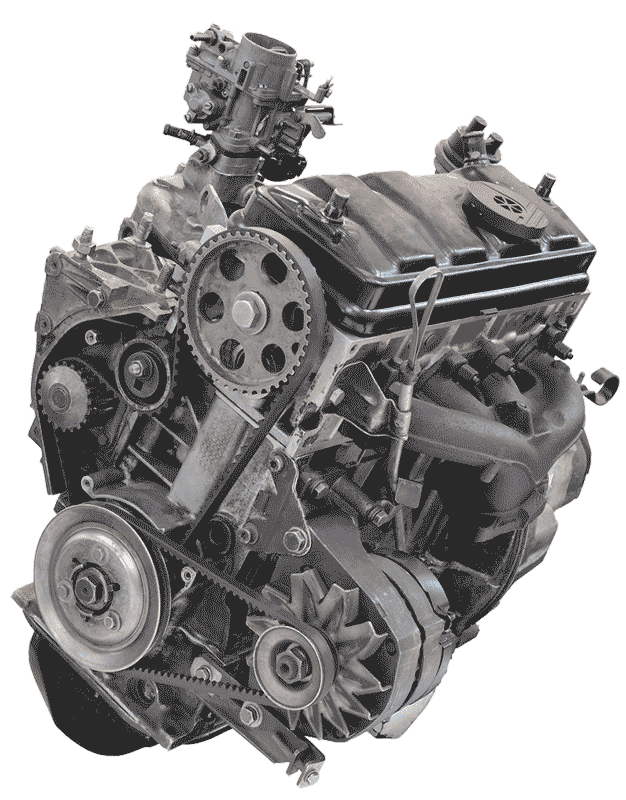
Upgrading My SpeakersYour speakers are not the only part of your vehicle that has become more complicated to upgrade. Decades ago, a set of headers and a large diameter, free-flowing exhaust could unleash a noticeable increase in performance. Your mechanic could fine-tune a carburetor to increase engine performance based on the efficiency improvements you chose.

With modern computer-controlled engine management systems, you can’t change anything. If you decide to modify the intake or exhaust, the computer may not like the changes and turn on a Check Engine light. The solution? A programmer can be purchased to recalibrate the engine management system for the modifications you have made. Do you see the parallels?

Upgrade for Better Sound

The answer to the question of whether upgrading your speakers will make your stereo sound better is a resounding yes. But the overall system design needs to be taken into consideration for the upgrade to be successful.

If you’re on the fence about upgrading your audio system, drop into your local mobile electronics retailer and listen to their demo vehicle or a set of high-end speakers on their display board. Ask if they can demonstrate how digital signal processing can improve the performance of a mobile sound system. Once you’ve heard how amazing a well-installed and properly tuned car stereo can sound, we think you’ll be hooked.

This article is written and produced by the team at www.BestCarAudio.com. Reproduction or use of any kind is prohibited without the express written permission of 1sixty8 media.

Filed Under: ARTICLES, Car Audio, RESOURCE LIBRARY

10 Things You Didn’t Know You Could Do with a Remote Car Starter

12/12/2019 By John Schwartz

Remote Car StarterWith summer coming to an end and frost in the forecast, there’s no better time to add a remote starter to your car, truck or SUV. Most of us know that our remote starter systems can also control the power locks in our vehicles, but many systems are full of additional advanced features that add convenience and improved comfort to our vehicles. Let’s look at 10 things you may not know your remote starter can do.

Before we dive in, we should let you know that the functions we are going to describe are dependent on the model of remote starter you choose, the remote you choose and the vehicle you own. Talk to your local mobile enhancement retailer about these options and any associated costs.

1. Rear Window Defroster Activation

You may know about this one, since it is probably the number-one option people add to their remote starter systems. If the interior of your vehicle is below a certain predetermined temperature when the car is remote started, the remote starter system can automatically activate the rear window defroster to help you see clearly when it is time to go. Even a few minutes of warm-up time can make clearing the rear window quick and easy before you get in the car. Likewise, some cars have sideview mirror defrosters tied to the rear window heating system for added convenience.

2. Trunk/Hatch Release

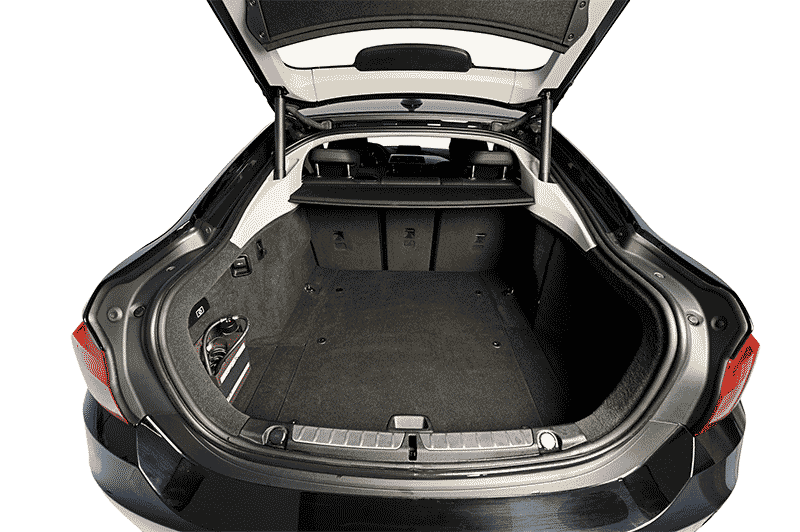
Remote Car StarterTrunk or hatch release from a multi-button remote isn’t all that exciting, but it sure is convenient. If your vehicle doesn’t happen to have a trunk release button, ask your retailer about adding a solenoid. Yep, they can add the power trunk function to most vehicles.

3. Remote Start Your Car from Your Phone or Apple Watch

Several different options for telematics systems use an application on your iPhone or Android phone to lock, unlock and remote start your vehicle. Several of these apps are compatible with the Apple Watch, so you can press a button on your wrist to warm up your vehicle.

4. Start Automatically When the Weather is Cold or Hot

Many remote starter systems can be programmed to start automatically when the internal vehicle temperature drops below or rises above a predetermined temperature. Temperature start will ensure the temperature does not get too extreme.

5. Start Every Few Hours or Daily

Some systems offer the ability to start every few hours. When the temperature outside is frigidly cold, keeping some warmth in the engine, fuel system and coolant is useful. You can toggle this function from most remote controls.

6. Protect Your Vehicle

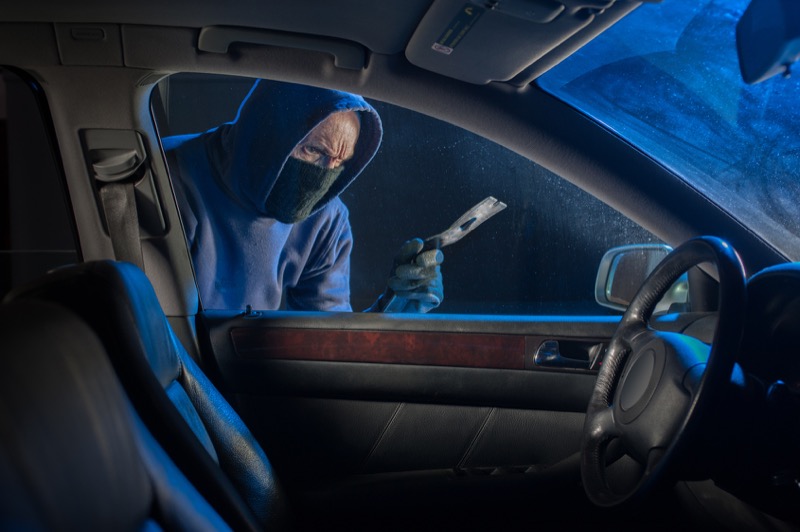
Remote Car StarterA remote starter system can often be upgraded with security system functions. Starter kill, a siren and a multi-stage shock sensor help to ensure that would-be thieves are sent packing if they start messing with your vehicle. If you have a two-way remote control or a smartphone telematics system, you will be alerted as soon as the alarm goes off.

7. Control Power Sliding Doors

If you drive a van with motorized sliding side doors, your mobile enhancement retailed can often add control for those into your remote started. Most system includes one or two auxiliary outputs that can be used to open or close doors or power tailgates.

8. Control Power Windows and Sunroof

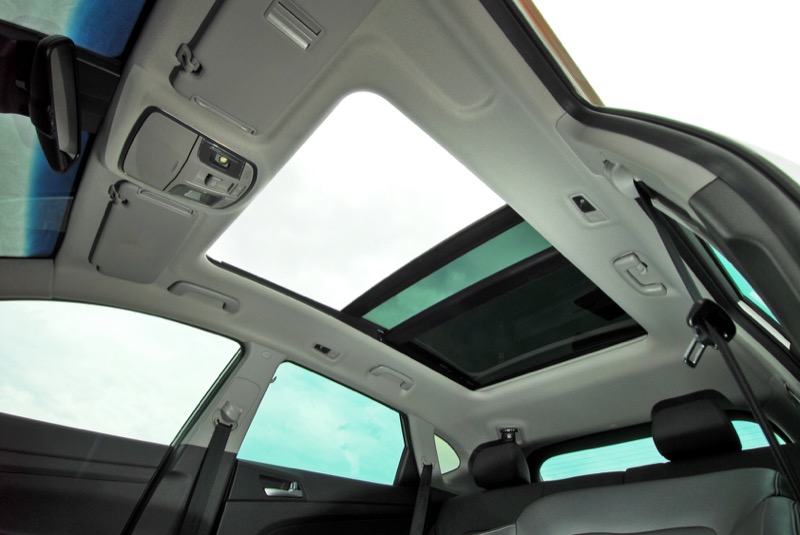
Remote Car StarterRemote starters are just as useful when the weather is hot as they are when it’s cold. In many applications, we can add a module that allows you to roll your windows up or down, and open or close your sunroof. Imagine arriving at your destination with your windows down and sunroof open. You get out of the vehicle and start walking away. When you press the lock button on your remote, all the windows roll up, and the sunroof closes automatically. It’s not only a convenient feature, but it’s kinda cool, too!

9. Control Multiple Vehicles

Remote Car StarterIf there are two vehicles in your family with similar remote starter systems, you can often control both from a single remote control. Depending on your remote, you can toggle between vehicles, or control the second vehicle using an extra button press before the function you want to activate.

10. Extend the Life of Your Engine

Remote Car StarterPerhaps this should be the first item, because it’s one of the most important features a remote starter offers. Most people think they are buying a remote starter to make the vehicle more comfortable for them. While this is true, letting your engine warm up before you start driving can extend its life dramatically.

The oil in your engine is responsible for preventing metal-on-metal contact. When the engine is cold, the oil is thicker and has a harder time flowing. If you start your car and start driving right away, the oil may not be able to protect the engine. Even 2 minutes of warm-up time when it’s 40 degrees out can help warm up the oil and get it flowing. (Always be gentle on the gas until the engine has warmed up fully – remote started or not.)

Remote Car Starters Add Convenience

Even if you just want a head start on warming up your vehicle, a remote car starter is an excellent way to save time and improve your comfort. Talk to your local mobile enhancement retailer about the options that are available for your vehicle.

This article is written and produced by the team at www.BestCarAudio.com. Reproduction or use of any kind is prohibited without the express written permission of 1sixty8 media.

Filed Under: ARTICLES, Remote Car Starters, RESOURCE LIBRARY, Vehicle Security

Why Does My Car Have Surround Sound?

12/11/2019 By John Schwartz

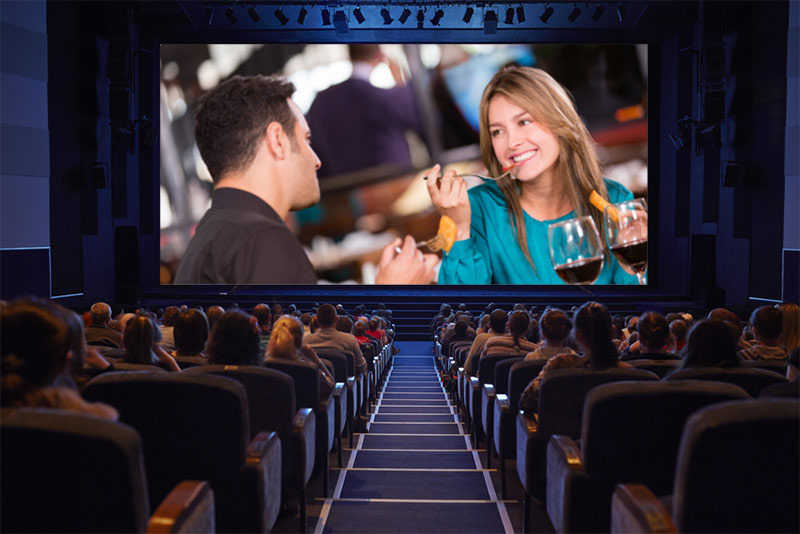
Surround SoundIf you have ever been to a movie theatre, you have probably experienced what is known as surround sound. There are at least five discreet audio tracks encoded into the film you are watching, and most also include a Low-Frequency Effects (LFE) channel. The purpose of these audio channels is to allow the source of each sound to be directed to a particular location in the theater so everyone can enjoy a realistic experience, no matter where they are sitting.

This is what has brought about the introduction of surround sound processing to the automotive world. It is relatively easy for an audio system designer to set up a realistic listening experience from a single listening position using equalization, precise output level adjustment and signal delay. Even when you sit much closer to one speaker, careful tuning can make the music appear to come from an imaginary speaker array all across the soundstage.

The Front Stage

For mobile audio enthusiasts, much of our efforts in system design and tuning go into the creation of the front stage. This term describes the speakers that are installed in front of us and their locations. We can use signal processing to adjust the output of each speaker so the music sounds as if it is coming from the center of the dash, even though you are sitting on the left side of the vehicle. The problem with these adjustments is that they only work for one seating location. The passenger often suffers with less-than-ideal frequency response and most of the music seems to emanate from the right side of the dash. For realism, this is less than ideal.

Sound-steering Technology

Surround SoundMost movie theaters have dedicated left, center and right speakers behind the main screen. Including the center channel allows the audio producer to fix the position of voices and effects in a specific location relative to the screen. If someone is being interviewed and is centered in the image, their voice will most likely be reproduced by the center speaker only. If they move across the picture, the level of their voice decreases in the center and increases in one of the left or right speakers relative to their position. Even if you are sitting on the far right side of the theatre, voices and sounds are steered for incredible realism.

Surround Sound in Cars and Trucks

Surround SoundThink about how well the ability to steer sound works in a theater when you are in a less-than-ideal seating position. Now think about your vehicle. You are sitting much closer to the left-side speakers. You will hear sound from them before anything from the right speakers, and those sounds will be louder. Your music will seem to come from the door or left side of the dash.

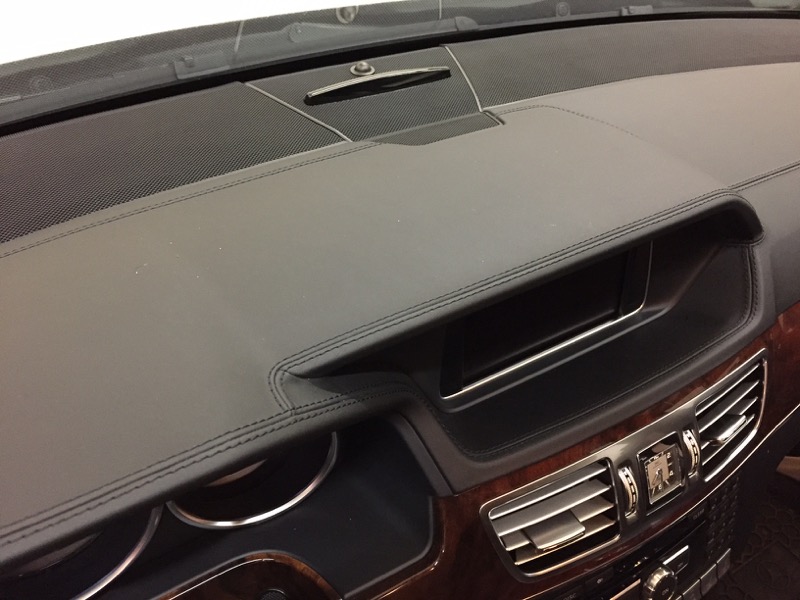
By including a center channel in the middle of the dash, the system designer can route audio signals that are equal in amplitude in both left and right channels to the center speaker. To improve the accuracy of the system a step further, those signals are also removed from the left and right speakers. The result is a system that reproduces music evenly across the dash from both the left and right seat. Music sounds great from the back seats as well.

Rear and Side Speakers

Surround SoundIn our movie theater, the rear or side speakers are primarily used for special effects. A helicopter or plane flying into the scene from behind us is a good example. In modern movie production, that information is hardcoded into the surround channels.

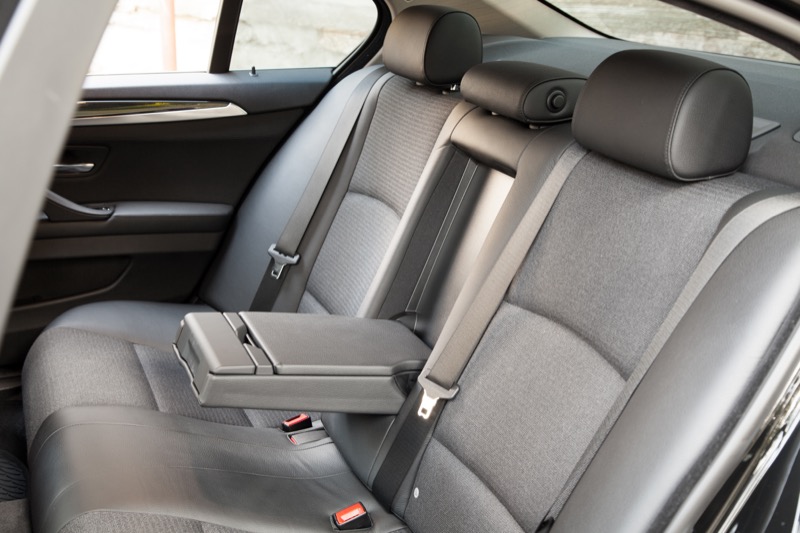
Because we are only listening to two-channel audio (left and right) in our vehicles, there is no opportunity for the music producers to direct specific sounds to rear channels. However, complex signal processors from companies like Bose and Harman do an excellent job of extracting audio information that is suitable for the rear speakers. Sophisticated algorithms can also produce an increased sense of soundstage width in systems with speakers in the rear doors. Rear deck speakers add a sense of ambiance and room size to the performance. How they analyze the relative phase and amplitude of signals within the stereo recording is simply amazing. So, too, are the results of their efforts. Your music can appear to come from spaces beyond the boundaries of your vehicle.

Mix it Up

OK, we admit that the title of this article is click bait. We are talking about upmixers here. An upmixer, by definition, takes a number of audio channels (in our case, two) and turns them into a greater number of channels (usually six). If we feed an upmixer left and right signals, it can generate left, center, right, left rear, right rear and subwoofer output signals. Some upmixers provide eight channels: left, center, right, left side, right side, left rear, right rear and subwoofer. Many OEM systems use these 7.1 systems with great success!

You sold me! Gimme, Gimme, Gimme!

Surround SoundWhen it comes to the aftermarket, the options for upmixers are limited. Some people have mucked around with using computers or tablets with external sound cards, but the interface is clunky and frustrating. On top of that, you don’t get a radio tuner, there is no backup camera input and you can’t add SiriusXM. Tablets look cool, but they are not ideal for use in vehicles.

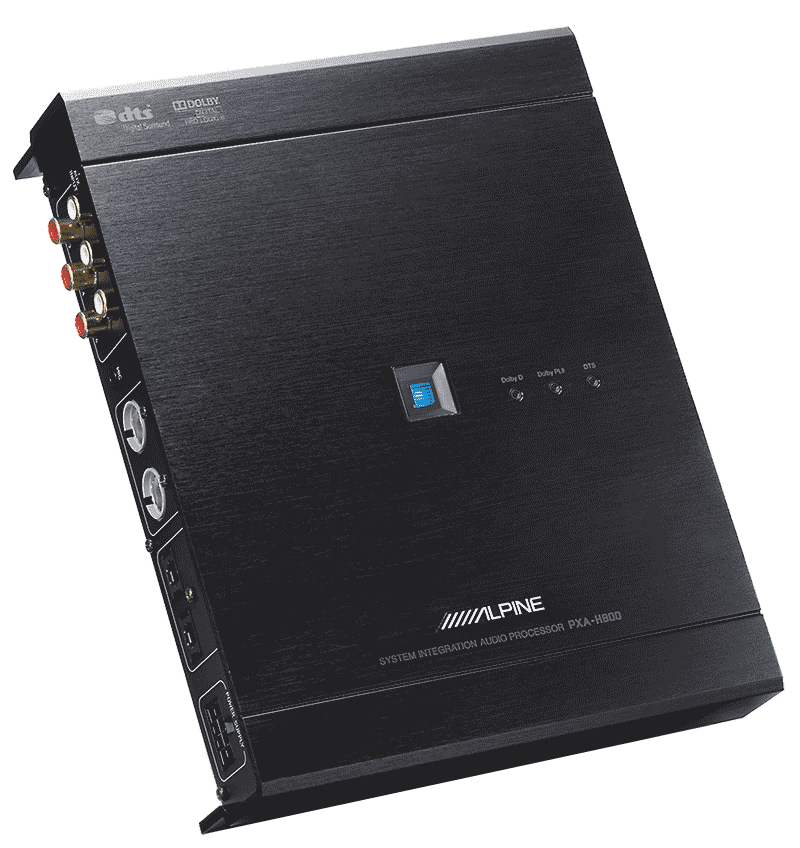
The Alpine PXA-H800 processor (and companion RUX-C800 controller) includes Dolby Digital, Dolby Pro Logic II and DTS Digital Surround decoding. This processor will generate a genuine center channel signal with audio information that is removed from the left and right channels.

Audiofrog hasn’t been shy about the fact that they are working on a new signal processor that is specifically designed to create a realistic center channel and surround channels. The solution is called Multiseat Stereo. Unlike most systems that use versions of DTS or Dolby Digital, Audiofrog has partnered with PerfectSurround to create a system that is free from phase artifacts.

Confused? Don’t be. In a nutshell, PerfectSurround does a better job of steering sound than other processing systems. The results are more realistic and provide better bass focus in the front of the vehicle. There is no firm release date as yet, due to patent applications and all that business stuff, but keep your eyes peeled.

The Future of Great Mobile Audio for Everyone

If you and your co-pilot both love great car audio, then a mobile sound system with a correctly processed center channel is an easy way for both of you to enjoy a realistic performance from any position in the vehicle. If your car or truck came with a surround sound system, visit your local mobile enhancement retailer to find out how they can upgrade it with better speakers, more power and tuning that matches your listening preferences.

If you are designing a new system, then keep an eye out for new processors to arrive on the market. The future of mobile entertainment that sounds realistic for everyone in the vehicle will be based on upmixers.

This article is written and produced by the team at www.BestCarAudio.com. Reproduction or use of any kind is prohibited without the express written permission of 1sixty8 media.

Filed Under: ARTICLES, Car Audio, RESOURCE LIBRARY, Uncategorized

  • « Previous Page
  • 1
  • …
  • 35
  • 36
  • 37
  • 38
  • 39
  • …
  • 82
  • Next Page »

801 EAST 82ND AVE
ANCHORAGE ALASKA 99518
907-563-8112

Copyright © 2026 | Site design by award-winning creative agency D'zine Alaska , with site support by 1sixty8 Media and Modern Media Geeks.